
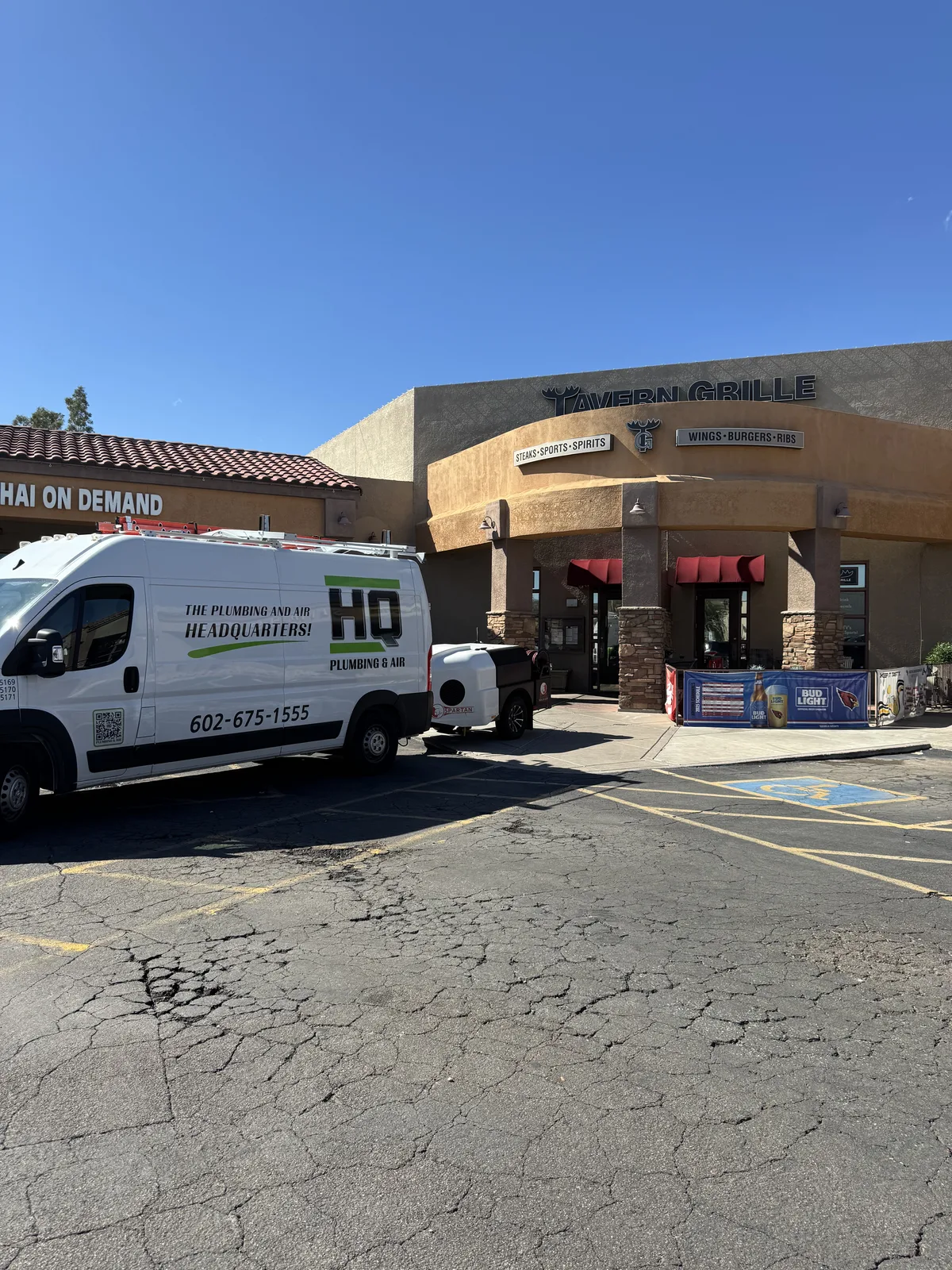
Restaurant Plumbing in Phoenix and the Valley
The grease, health code and backflow rules your kitchen is inspected against, city by city, and a crew that keeps the line open during service.
A Valley restaurant's plumbing answers to three rulebooks. Your city's grease program sets the interceptor type, pumping schedule and records. Maricopa County's health code sets hand sinks, indirect drains and hot water. Backflow rules cover soda carbonators and the building's water service. Miss one and inspections, backups or water shutoffs follow.
The rules that apply
Each rule links to the official text we read it from. Cities change these, so check the source before a big decision. Last checked 2026-09-29.
Grease interceptor required
PhoenixEvery food service establishment that prepares food on site needs a grease interceptor. Up to four fixtures can use an indoor hydromechanical trap; a disposal or dishwasher, or more than four fixtures, requires an outdoor gravity interceptor.
Source: Phoenix FOG BMP ManualPumping schedule
PhoenixHydromechanical traps are fully pumped and cleaned every 30 days (never more than 90 days, and only with a variance). Gravity interceptors at least every 3 months. Clean sooner once grease and solids reach 25 percent of capacity.
Source: Phoenix FOG BMP ManualMaintenance records
Phoenix, Scottsdale, SurpriseKeep interceptor cleaning and repair records, including the pumper's invoices, at the restaurant for at least 3 years and show them on request.
Source: Phoenix City Code 28-15 (in the FOG manual)Also: Scottsdale City Code 49-95Also: Surprise City Code 58-306No enzymes or grease dissolvers
PhoenixChemicals, enzymes, bacteria, solvents and emulsifiers that temporarily dissolve grease are prohibited as a substitute for pumping.
Source: Phoenix FOG BMP ManualIndirect waste and air gaps
Maricopa CountyDish machines, ware washing and prep sinks, ice machines, soda fountains, steam tables and walk-in condensate drain indirectly, with at least a 1-inch air gap above an approved floor sink or drain.
Source: County Plan Review Construction GuideHand sinks
Maricopa CountyA hand sink within about 25 feet of every workstation, prep area, bar, wait station, ice machine and ware washing area, with nothing (not even a door) in the way.
Source: County Plan Review Construction GuideWater heater size
Maricopa CountyFood service needs at least a 50-gallon water heater with 100 percent recovery, or 75 gallons with a mechanical dishwasher. Tankless units need prior county approval.
Source: County Plan Review Minimum RequirementsSoda carbonator backflow
Maricopa CountyA reduced pressure backflow preventer (or another approved testable device) goes between the water line and the carbonator, with its relief valve drained through an air gap to a floor sink.
Source: County Plan Review Construction GuideService backflow and annual test
PhoenixRestaurants need an air gap or RP assembly on the water service. Every assembly is tested at least once a year and results go to the city; keep the records 3 years.
Source: Phoenix City Code 37-143 and 37-144Grease interceptors: the rule that shuts kitchens down
Grease is the reason restaurant plumbing is its own trade. Fats, oils and grease (FOG) cool in the line, grab food solids and close the pipe a little more every shift. Cities treat it seriously because a blocked city sewer sends sewage out of manholes and into the street, and the city can bill the restaurant that caused it.
Phoenix requires every food service establishment that prepares food on site to have a grease interceptor. There are two kinds:
- Hydromechanical trap (the small indoor unit, often under a sink). Allowed for up to four fixtures, with no garbage disposal and no dishwasher connected. Sized by fixture count: one fixture 20 gpm and 40 pounds of grease capacity, up to four fixtures at 50 gpm and 100 pounds.
- Gravity interceptor (the big outdoor tank). Required with more than four fixtures, or with any disposal or dishwasher. Phoenix's smallest allowed size is 500 gallons, and units of 750 gallons and up need three manways.
Want the actual number for your kitchen? Our grease interceptor sizing calculator runs Phoenix's formula and Chandler's chart from the cities' own worksheets. Other cities differ, so check the Valley grease trap rules by city.
Pumping schedules and the 25 percent rule
Phoenix sets a floor, not a target. Hydromechanical traps get a full pump-out and cleaning every 30 days. Gravity interceptors at least every three months. Most interceptors stop working well once grease and solids take up 25 percent of the space, so a busy fryer kitchen may need service more often than the minimum.
A few things inspectors look for every time:
- 1The records. Three years of pump-out invoices and service records, kept on site.
- 2The interceptor itself. Missing baffles, broken tees and rotted concrete all get written up.
- 3The fixture count. The inspector counts sinks, floor sinks, floor drains, disposals and dishwashers to see if the interceptor is still big enough. Add a prep sink and you may have outgrown a small trap.
- 4Outside. A clean tallow bin area with no oil on the ground.
Enzyme and bacteria drain treatments don't count as maintenance in Phoenix; the city's manual prohibits them. Grab our free printable grease trap maintenance log to keep the record straight between visits.
Health code plumbing: what plan review checks
Maricopa County Environmental Services reviews restaurant plans before you build or remodel, and its inspectors check the plumbing against the same guide afterward. The items that trip up most openings:
- Indirect waste. Dish machines, prep and ware washing sinks, ice machines, soda fountains, dipper wells, steam tables and walk-in condensate lines can't connect straight to the drain. Each one drains through at least a 1-inch air gap above a floor sink. That's why kitchens have so many floor sinks.
- Hand sinks. One within about 25 feet of every workstation and ice machine, with no door in between, plus a splash guard when it sits within 24 inches of food surfaces.
- Hot water. At least a 50-gallon water heater with 100 percent recovery, 75 gallons with a mechanical dishwasher. Undersized heaters show up as lukewarm sinks at the dinner rush. Here's how commercial water heaters differ.
Planning a remodel? Start with the county plan review plumbing checklist before you move a single sink.
Backflow: soda machines and the water service
A soda carbonator ties a pressurized carbon dioxide system to your drinking water line. Maricopa County's guide calls for an approved reduced pressure backflow preventer (or another approved testable device) between the water supply and the carbonator, with its relief valve drained through an air gap to a floor sink. The fittings between the preventer and the carbonator can't be copper or brass, and the preventer has to be certified with a test report.
The building's water service needs protection too. Phoenix lists restaurants among the facilities that need an air gap or a reduced pressure (RP) assembly, and every assembly gets tested at least once a year with the results filed with the city. Not sure which assembly you have? Here's RPZ vs double check.
Gas lines in the kitchen
Ranges, fryers, woks and water heaters mean a lot of gas pipe in a small room. New appliances, moved cooklines and bigger equipment usually need a permit and a pressure test, and the pipe has to be sized for the total load or burners starve at full tilt. A gas smell during service is an emergency: get everyone out, don't flip switches or touch appliance controls, and from outside call 911 and Southwest Gas at 877-860-6020. See gas smell in a restaurant and whether you need a gas leak inspection.
How HQ works with restaurants
We clear kitchen lines with hydro jetting, service and repair grease traps and interceptors, install and replace water heaters, run gas lines and fix backflow assemblies. We're available 24/7, and you get an upfront price before work starts. Most of the time the goal is simple: keep the kitchen open through service and fix it right after close.
Services and tools
Codes and permits
- Valley grease trap and interceptor rules by city
- Phoenix: grease trap vs gravity interceptor by fixture count
- Phoenix City Code 28-12: when interceptors are required
- Phoenix grease interceptor replacement plan review
- Chandler grease interceptor sizing chart
- Chandler food service FOG device requirements
- Phoenix Chapter 28 FOG program
- Phoenix Chapter 37 cross-connection control
Questions we've answered
- How often should a restaurant grease trap be pumped?
- What size grease interceptor does my restaurant need?
- Can a commercial dishwasher drain into a grease trap?
- What are the plumbing requirements for a restaurant health inspection?
- Where must a restaurant hand sink go in Maricopa County?
- Does a restaurant need a mop sink by code?
- What's the difference between a floor sink, floor drain, and mop sink?
- Why does my restaurant smell like sewer?
- Why does my commercial kitchen drain keep overflowing?
- Are enzyme or grease-dissolving drain treatments allowed for Phoenix restaurants?
- Does my Phoenix restaurant have to comply with the FOG (grease) program?
- What must a Scottsdale restaurant document for grease?
- How often must a Tempe restaurant clean its grease trap?
- What FOG records must a Chandler restaurant keep?
Sources
- City of Phoenix FOG Best Management Practices Manual (2024)
- Maricopa County Environmental Services, Plan Review Construction Guide
- Maricopa County Environmental Services, Plan Review Minimum Requirements
- Phoenix City Code 37-143, customer backflow duties
- Phoenix City Code 37-144, facilities that need backflow prevention
- Scottsdale City Code 49-95, interceptors
- Surprise City Code 58-306, interceptors
Other industries we serve
Arizona landlord plumbing duties, kitchen stack clogs, water heaters, planned shutoffs, backflow testing and sewer laterals.
Shared grease interceptors, strip center backflow, tenant improvement permits, vacant suite odors and the records cities ask for.
Plumbing Help for Restaurants
Talk to a real dispatcher who knows commercial work. Upfront pricing before work starts, 24/7 for emergencies.