
Brewery and Bar Plumbing in Phoenix and the Valley
The backflow, sewer discharge and county bar rules your brewhouse and taproom answer to, and a crew that keeps floor drains and bar lines flowing.
A Valley brewery or bar answers to its city's sewer and backflow codes and to Maricopa County's food code. Phoenix and Mesa list breweries for an RP assembly or air gap on the water service. Phoenix bans sewer discharges below pH 5.0 or above 10.5 and hotter than 150°F, and the county sets carbonator backflow, indirect drains and hand sinks.
The rules that apply
Each rule links to the official text we read it from. Cities change these, so check the source before a big decision. Last checked 2026-09-29.
Brewery water service backflow
PhoenixBreweries are a listed industrial facility and need an air gap or a reduced pressure (RP) assembly. Beverage bottling plants may use an air gap, RP or double check.
Source: Phoenix City Code 37-144Breweries and restaurants
MesaBreweries, beverage bottling plants, and restaurants and convenience stores all need a reduced pressure principle backflow prevention assembly (RPA) at each service connection.
Source: Mesa City Code 8-1-8pH and temperature limits
PhoenixNo discharge to the sewer with a pH below 5.0 or above 10.5, or hotter than 150°F. Diluting waste with extra water to meet a limit is also prohibited.
Source: Phoenix City Code 28-8Class A wastewater permit
PhoenixClass A industrial wastewater permits go to users running federally regulated processes, companies discharging an average of 25,000 gallons per day of process wastewater, and those whose effluent could affect the treatment plants.
Source: Phoenix Wastewater Discharge PermittingNondomestic discharge permit
TempeDischarging nondomestic wastewater to the city sewer is prohibited without a permit from the Public Works Department. The same section bans discharges below pH 5.0, above pH 10.5 or above 150°F.
Source: Tempe City Code 27-10Carbonator backflow
Maricopa CountyAn ASSE 1022 or other approved device is the minimum protection between the water line and the carbonator, with a written annual inspection policy if it is the only protection. The county highly recommends a testable reduced pressure (RP) preventer. No copper or brass downstream of the preventer.
Source: County Plan Review Construction GuideIndirect waste at the bar
Maricopa CountyWare washing sinks, soda fountains, ice machines, ice bins and dipper wells drain indirectly, with at least a 1-inch air gap above an approved floor sink or drain. A beverage-area dump sink drains to a dedicated indirect line.
Source: County Plan Review Construction GuideHand sinks at bars
Maricopa CountyA hand sink within about 25 feet of every bar, wait station, ice machine and ware washing area, with no door or other obstruction in the way.
Source: County Plan Review Construction GuideBackflow: why breweries sit on the city's list
Phoenix names breweries among the industrial facilities that need an air gap or a reduced pressure (RP) assembly on the water service. Mesa goes further and calls for an RP assembly at breweries, beverage bottling plants, restaurants and convenience stores. The reason is simple: a brewhouse ties the drinking water line to tanks, pumps, glycol loops, hoses and cleaning chemicals, and any of them can push water back toward the street if pressure drops.
A bar that serves food usually falls under the restaurant listing. For anything a list doesn't name, Phoenix lets the Planning and Development Director decide the protection case by case.
Every assembly in Phoenix gets tested at least once a year by a certified tester, and the results go to the city on its forms. Keep the records for three years. Not sure what's on your wall? Here's RPZ vs double check, and the Phoenix Chapter 37 cross-connection rules in full. Phoenix City Code 37-143 also requires any repair of an assembly to be done by a certified repairer following ASSE Standard 5130. We replace assemblies that fail; the annual test goes to a certified tester.
What a brewery can send down the drain
Brewing wastewater is hot, sugary and full of yeast, and cleaning cycles swing it between caustic and acid. Phoenix City Code 28-8 draws hard lines: nothing below pH 5.0 or above 10.5, and nothing hotter than 150°F. It also bans watering a discharge down to meet a limit. Tempe's code sets the same pH and temperature limits and adds that any nondomestic discharge needs a Public Works permit.
Size matters too. Phoenix issues Class A industrial wastewater permits to companies that discharge an average of 25,000 gallons per day of process wastewater, to federally regulated processes, and to anyone whose effluent could affect the treatment plants. Most taprooms never get close to that number. A production brewery should read the Phoenix industrial wastewater permit page before it expands. Phoenix also wants construction drawings for industrial manufacturing facilities reviewed by its Industrial Pretreatment Program before they go to the Planning and Development Department.
What that means for the floor: plan where the hot caustic goes before it hits the drain. Neutralizing and cooling are the brewer's call and the engineer's design. Our part is keeping the drain lines, cleanouts and floor sinks open and sound.
The bar: sinks, glass washers and indirect drains
Maricopa County's plan review guide is the rulebook for the front of house. Ware washing sinks, soda fountains, ice machines, ice bins and dipper wells can't tie straight into the drain. Each one drains indirectly through at least a 1-inch air gap above a floor sink. A dump sink in a beverage area needs its own indirect drain line. That's why a good bar has floor sinks under its sinks and ice wells. See floor sink vs floor drain vs mop sink.
Hand sinks go within about 25 feet of every bar and wait station, with no door in between. Glass washers that sanitize with chemicals need a wash solution of at least 120°F, and the county approves NSF glass washers that use iodine at bars. Outdoor bars can't have 2- or 3-compartment ware washing sinks at all; the county limits them to enclosed commercial glass-wash machines.
Opening or remodeling? Start with the county plan review plumbing checklist.
Carbonators, beer lines and trench drains
A soda carbonator puts carbon dioxide under pressure right next to your drinking water. Maricopa County's plan review guide sets an ASSE 1022 or other approved device as the minimum protection between the water line and the carbonator. Those devices can't be tested, so if one is the only protection, the county wants a written policy for inspecting it every year. The guide highly recommends a testable reduced pressure (RP) preventer instead, with its relief valve drained through an air gap to a floor sink, and the fittings downstream can't be copper or brass.
Overhead beer and soda lines have to be labeled, and sewer and waste lines can't run above potable water or beverage lines. Worth checking before you hang a new glycol trunk line.
Trench drains are where breweries get into trouble. Inside, they carry wash-down water and spent product to the sewer, so they need grates you can lift, cleanouts you can reach and regular jetting before yeast and grain set up in the line. Outside is different. Phoenix bans stormwater and roof runoff from the sewer unless the city approves it, and only stormwater (with a short list of exceptions) may go to a storm drain. A patio or dock trench drain needs to go where its water is allowed. Serving food too? The restaurant plumbing page covers grease interceptors.
How HQ works with breweries and bars
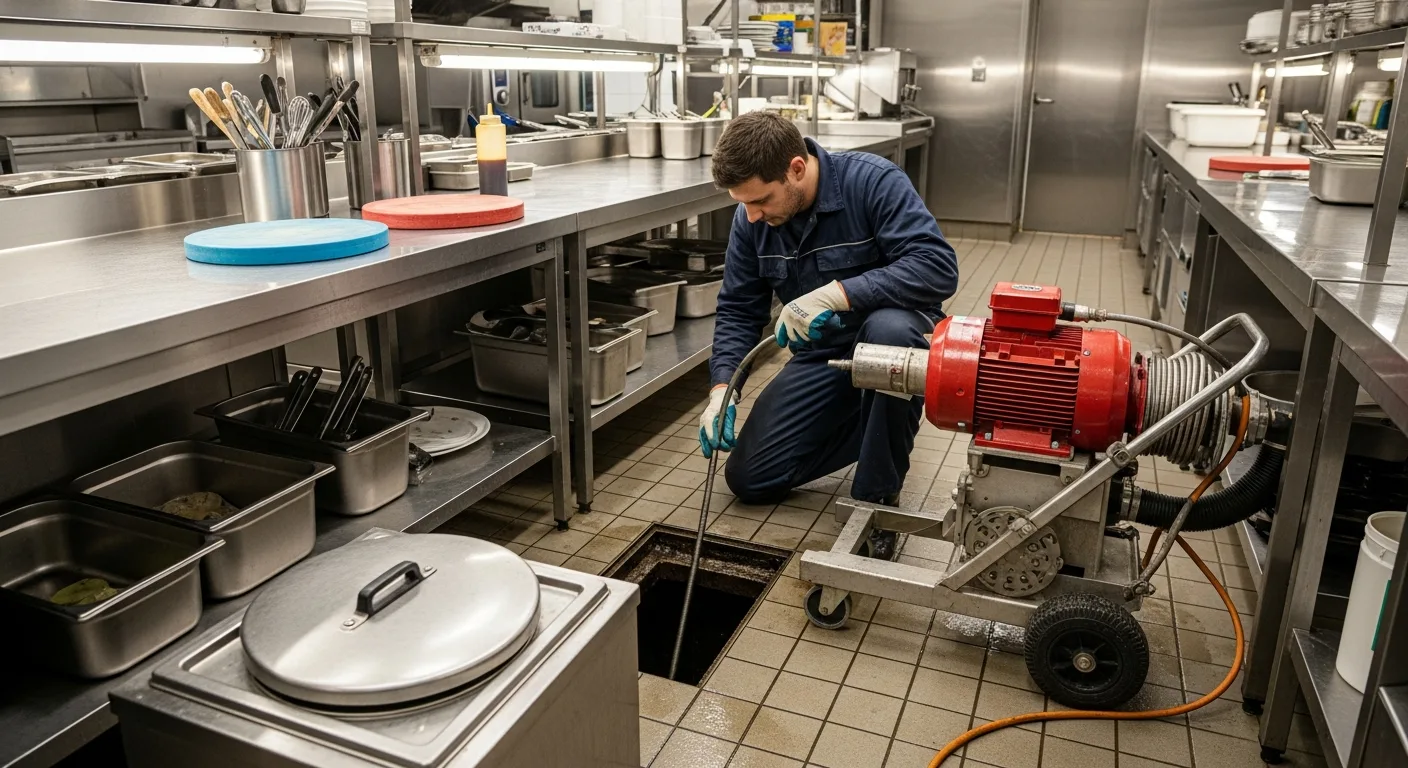
We clear floor drains, trench drains and bar lines with hydro jetting and commercial drain cleaning, camera and repair sewer lines, install and replace water heaters, run gas lines to brew kettles and kitchens, and replace backflow assemblies. We're available 24/7. You get a free estimate and an upfront price before work starts, and we can schedule around brew days and service hours.
Services and tools
Codes and permits
Questions we've answered
- RPZ vs double-check backflow assembly: what's the difference?
- How often does a commercial backflow preventer need testing in Arizona?
- My backflow assembly failed its test. What happens next?
- Where do I send backflow test reports in the Phoenix area?
- What's the difference between a floor sink, floor drain, and mop sink?
- Why is my floor drain backing up?
- What plumbing does Maricopa County review in restaurants?
- Where must a restaurant hand sink go in Maricopa County?
- How often should a restaurant grease trap be pumped?
- What is FOG (fats, oils, and grease) in plumbing?
- Why does my commercial building smell like sewer gas?
- What are the different types of commercial water heaters?
Sources
- Phoenix City Code 37-143 and 37-144, backflow prevention
- Phoenix City Code 28-8, sewer discharge prohibitions and limits
- City of Phoenix, Wastewater Discharge Permitting Information
- Phoenix City Code 32C-103, storm drain discharges
- Mesa City Code 8-1-8, customers requiring a backflow assembly
- Tempe City Code 27-10, prohibited discharges and permits
- Maricopa County Environmental Services, Plan Review Construction Guide
Other industries we serve
Grease interceptor rules by city, pumping schedules, health code plumbing and soda backflow, plus 24/7 kitchen drain service.
Arizona landlord plumbing duties, kitchen stack clogs, water heaters, planned shutoffs, backflow testing and sewer laterals.
Shared grease interceptors, strip center backflow, tenant improvement permits, vacant suite odors and the records cities ask for.
County hotel plumbing rules, pool and spa backflow, laundry lint interceptors and hot water for the morning rush, plus 24/7 repair.
EPA amalgam separator rules, Phoenix compliance reports, clinic backflow, sterilizer and vacuum plumbing, and tenant improvement permits.
Lab backflow, lead testing at fountains, cafeteria grease interceptors, worn restrooms and summer break maintenance for Valley campuses.
Dry traps, fellowship hall kitchen grease, restroom loads on event days and irrigation backflow for Valley houses of worship.
Locker room showers, hair-clogged drains, sewer smells from dry traps and pool and spa plumbing rules for Valley gyms.
State board hot water and drain rules, shampoo bowl clogs, hair interceptors, chemical dispenser backflow and salon water heaters.
Lint interceptor rules, city cleaning records, laundry backflow, water heaters sized for peak demand and sewer line care.
Sand and oil interceptor rules, 12-month pumping, three-year records, RP backflow and bay and reclaim line jetting.
RP backflow for multi-tenant shells, oil separators at truck bays, tempered eyewash water and industrial wastewater permits.
Condo vs owner plumbing duties, shared sewer lines, irrigation backflow testing, community pools and emergency water shutoffs.
Plumbing Help for Breweries and Bars
Talk to a real dispatcher who knows commercial work. Upfront pricing before work starts, 24/7 for emergencies.