
Salon and Barbershop Plumbing in Phoenix
The state board's water and drain rules, the hair that clogs shampoo lines, and the hot water and backflow setup a busy salon needs.
Arizona's Board of Cosmetology rules require every salon to have sufficient hot and cold running water, a restroom with a wash basin, and shampoo bowl drains kept free running. Chemical dispensers tied to the water line need backflow protection, and salons on septic in Maricopa County must put hair traps on their drains.
The rules that apply
Each rule links to the official text we read it from. Cities change these, so check the source before a big decision. Last checked 2026-09-29.
Hot and cold running water
ArizonaEvery licensed establishment, including a mobile unit, must have sufficient hot and cold running water.
Source: A.A.C. R4-10-112Shampoo bowl drains
ArizonaThe establishment licensee cleans and disinfects shampoo bowls and makes sure the drains are free running. Bowls and neck rests are kept in good repair.
Source: A.A.C. R4-10-112Restroom
ArizonaA restroom open to employees and clients during business hours, with a wash basin, running water, liquid soap and disposable towels, kept clean and sanitary.
Source: A.A.C. R4-10-112Chemical dispenser backflow
Model code (2024 IPC)Where a chemical dispenser connects to the potable water system, the supply is protected against backflow. Dispenser backflow devices comply with ASSE 1055 or use an air gap fitting.
Source: 2024 IPC 608.17.7 and 608.14.8Hair traps on septic
Maricopa CountyHair and lint traps are installed on drains connected to an onsite wastewater (septic) system for hair salons, commercial laundries and pet or horse grooming.
Source: County Environmental Health Code Ch. II, Sec. VIIIStrip center backflow
PhoenixRetail centers and strip malls where one water service supplies more than one tenant need a reduced pressure (RP) assembly, tested at least once a year by a certified tester.
Source: Phoenix City Code 37-143 and 37-144What the state board checks at the sinks
For a salon owner, the plumbing rules that come up most often aren't in a plumbing code at all. They're in the Arizona Board of Cosmetology's infection control rule, A.A.C. R4-10-112, and inspectors read them literally.
- Hot and cold water. The establishment, including a mobile unit, must have sufficient hot and cold running water.
- Shampoo bowls. Bowls are cleaned and disinfected, kept in good repair, and the drains have to be free running. A slow bowl doesn't meet that rule.
- Restroom. One restroom open to staff and clients during business hours, with a wash basin, running water, liquid soap and disposable towels.
Pedicure tubs get their own drain and disinfect routine in the same rule, so a tub that drains slowly slows down every turnover. Keep the drains moving and the inspection is easy.
Hair in the drain lines
Hair is to a salon what grease is to a restaurant. It wraps around the crossbar of a shampoo bowl drain, catches conditioner and product residue, and builds a mat that slows the line a little more each week. Chemical drain openers usually move the clog down the pipe instead of out of it.
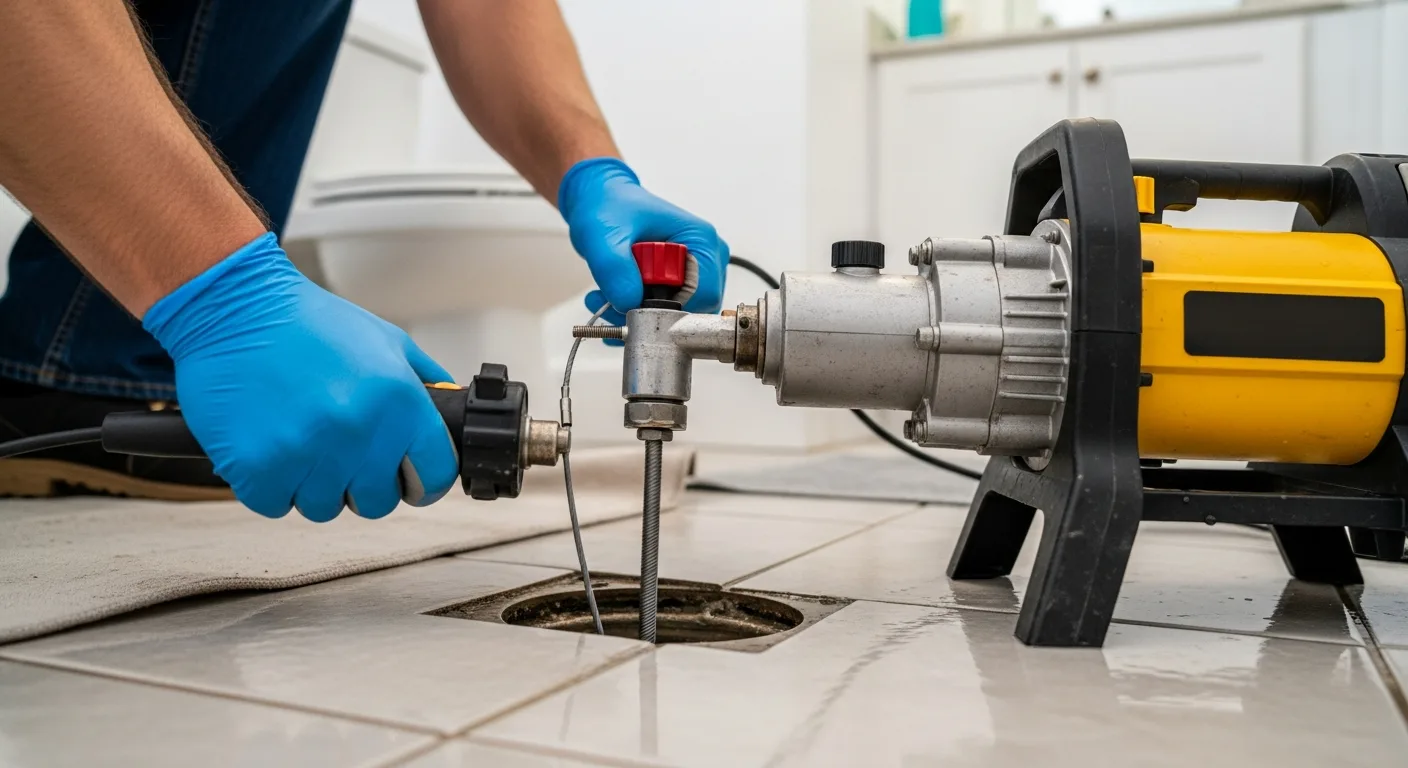
Here's what works. A basket strainer at each bowl, emptied daily. A hair interceptor under the shampoo bowls when the line runs long or keeps clogging. And hydro jetting the branch line when the same bowls back up again and again, since a snake punches a hole and leaves hair stuck to the pipe wall. See why the same drain keeps clogging.
On septic, traps aren't optional. Maricopa County's environmental health code requires hair and lint traps on drains connected to an onsite wastewater system for hair salons. On city sewer, the plumbing code's general rule applies: interceptors are provided to keep substances harmful to the sewer out of it, and in Phoenix the authority having jurisdiction approves their size, type and location.
Hot water demand
A busy salon runs hot water in short, steady bursts all day: shampoo after shampoo, pedicure fills, towel laundry and cleanup. That pattern exposes an undersized or scaled-up water heater fast. The usual signs are lukewarm bowls by mid-afternoon, long waits for hot water at the back bowls, and a tank that rumbles.
The fix depends on the numbers. Count the bowls, pedicure chairs and washers, look at how many run at once, then size the heater, or a pair of heaters, for that peak. A recirculation line can cut the wait at far bowls. See types of commercial water heaters and not enough hot water in a commercial building.
Plan on a permit when you replace one. Phoenix's permit exemption for an in-kind water heater swap covers one- and two-family dwellings only, not a salon suite.
Chemical dispensers and backflow
Color bars, laundry soap feeders and cleaning chemical dispensers often tie straight into the water line. The 2024 IPC requires the water supply to be protected against backflow wherever a chemical dispenser connects, and dispenser backflow devices must meet ASSE 1055 or use an air gap fitting. Without that, a pressure drop can pull chemical-laced water back into the building's drinking water.
The building's own service may need protection too. Most Valley salons sit in strip centers, and Phoenix requires a reduced pressure (RP) assembly where one water service feeds more than one tenant. Each assembly is tested at least once a year by a certified tester. Here's what backflow is and RPZ vs double check.
Opening or remodeling a salon
Adding shampoo bowls or pedicure chairs changes the plumbing, and Phoenix requires a permit before plumbing is installed, altered or replaced. Plan the drains before the chairs: each bowl needs its own trap and a drain sized for the flow, pedicure chairs need hot and cold supplies and a drain, and the water heater has to keep up. If the suite was retail, check whether the building sewer and the water service can carry the new load. Start with commercial tenant improvement plumbing and the Phoenix TI permit page.
How HQ works with salons and barbershops
We clear shampoo bowl and pedicure drain lines, jet branch lines packed with hair, install hair interceptors, and install and replace water heaters. We also replace backflow assemblies, run gas lines, and camera and repair sewer lines. Work can happen before opening or after close, and we're available 24/7. You get an upfront price before work starts.
Services and tools
Codes and permits
Questions we've answered
- Why does the same drain keep clogging?
- Why is my sink draining slowly?
- What's the difference between hydro jetting and drain snaking?
- What are the different types of commercial water heaters?
- Why isn't my commercial water heater making enough hot water?
- How long does a water heater take to heat up?
- What is backflow in plumbing?
- RPZ vs double-check backflow assembly: what's the difference?
- How often does a commercial backflow preventer need testing in Arizona?
- What plumbing is involved in a commercial tenant improvement (TI)?
- Commercial plumbing repairs: tenant or landlord responsibility?
- How does hard water damage my plumbing and appliances?
Sources
- A.A.C. Title 4, Chapter 10 (Board of Cosmetology), R4-10-112 Infection Control and Safety Standards
- 2024 International Plumbing Code, Chapter 6
- 2024 International Plumbing Code, Chapter 10
- Phoenix amendments to the 2024 International Plumbing Code
- Phoenix amendments to the 2024 IBC Chapter 1 (permits)
- Phoenix City Code 37-143, customer backflow duties
- Phoenix City Code 37-144, facilities that need backflow prevention
- Maricopa County Environmental Health Code, Chapter II Section VIII (onsite wastewater)
Other industries we serve
Grease interceptor rules by city, pumping schedules, health code plumbing and soda backflow, plus 24/7 kitchen drain service.
Arizona landlord plumbing duties, kitchen stack clogs, water heaters, planned shutoffs, backflow testing and sewer laterals.
Shared grease interceptors, strip center backflow, tenant improvement permits, vacant suite odors and the records cities ask for.
County hotel plumbing rules, pool and spa backflow, laundry lint interceptors and hot water for the morning rush, plus 24/7 repair.
Brewery backflow, sewer pH and temperature limits, carbonator RPs, bar floor sinks, glass washers and trench drain jetting.
EPA amalgam separator rules, Phoenix compliance reports, clinic backflow, sterilizer and vacuum plumbing, and tenant improvement permits.
Lab backflow, lead testing at fountains, cafeteria grease interceptors, worn restrooms and summer break maintenance for Valley campuses.
Dry traps, fellowship hall kitchen grease, restroom loads on event days and irrigation backflow for Valley houses of worship.
Locker room showers, hair-clogged drains, sewer smells from dry traps and pool and spa plumbing rules for Valley gyms.
Lint interceptor rules, city cleaning records, laundry backflow, water heaters sized for peak demand and sewer line care.
Sand and oil interceptor rules, 12-month pumping, three-year records, RP backflow and bay and reclaim line jetting.
RP backflow for multi-tenant shells, oil separators at truck bays, tempered eyewash water and industrial wastewater permits.
Condo vs owner plumbing duties, shared sewer lines, irrigation backflow testing, community pools and emergency water shutoffs.
Plumbing Help for Salons and Barbershops
Talk to a real dispatcher who knows commercial work. Upfront pricing before work starts, 24/7 for emergencies.