
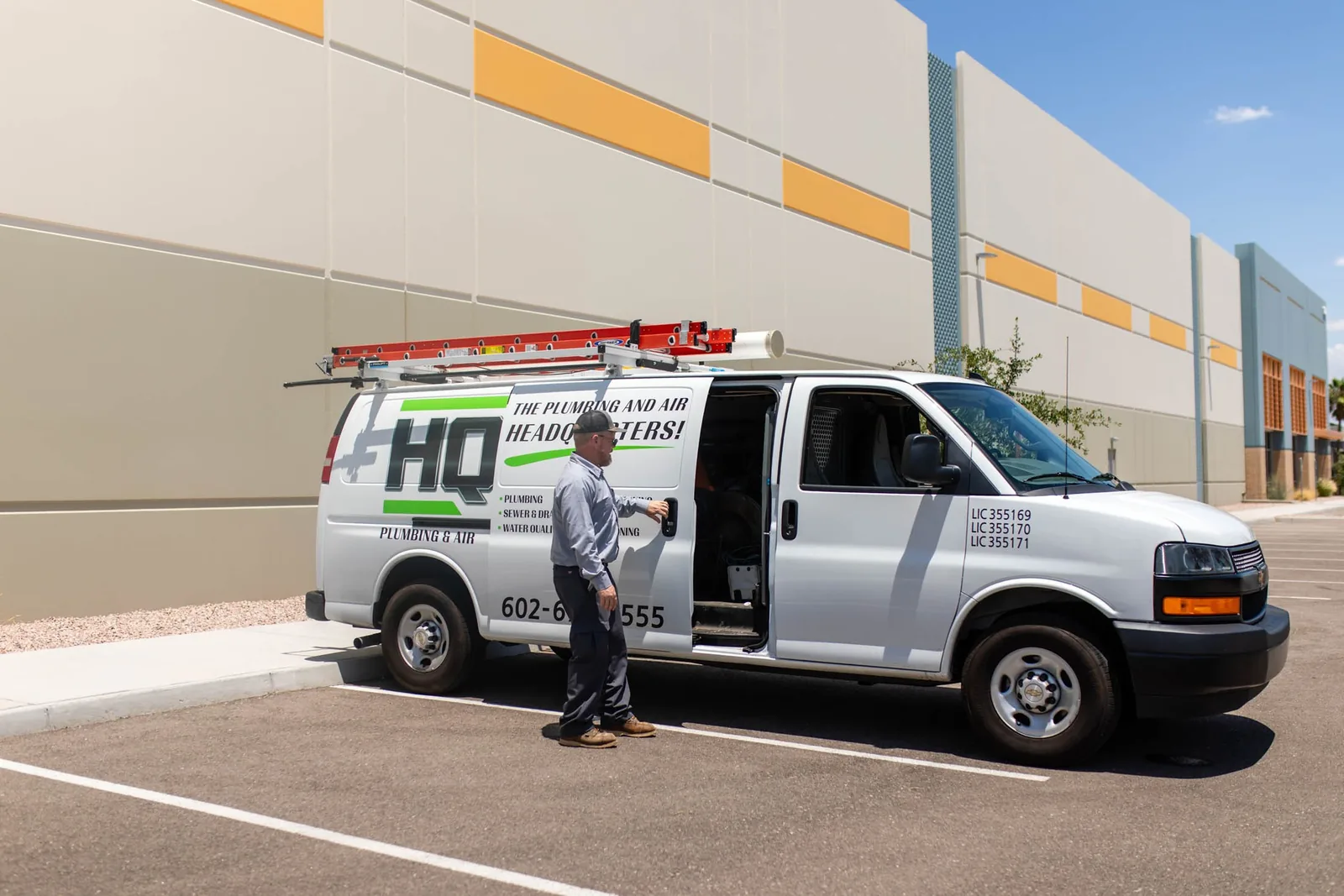
Apartment and Multifamily Plumbing in Phoenix
What Arizona law expects from owners, what actually fails in Valley apartment buildings, and how to keep repairs off residents' radar.
Arizona law makes the owner of an apartment community keep the plumbing in good and safe working order and supply running water and reasonable hot water at all times. In Phoenix the owner also repairs the sewer line out to the public main, even under the street, and tests every backflow assembly each year.
The rules that apply
Each rule links to the official text we read it from. Cities change these, so check the source before a big decision. Last checked 2026-09-29.
Keep the plumbing working
ArizonaThe landlord must maintain all plumbing and sanitary facilities it supplies in good and safe working order and condition.
Source: A.R.S. 33-1324(A)(4)Running water and hot water
ArizonaThe landlord must supply running water and reasonable amounts of hot water at all times, unless the unit's hot water comes from equipment under the tenant's exclusive control on a direct utility connection.
Source: A.R.S. 33-1324(A)(6)Five-day notice
ArizonaWhen a landlord's failure to maintain materially affects health and safety, the tenant can give written notice that the lease ends in five days if it isn't fixed. Other material breaches get ten days.
Source: A.R.S. 33-1361(A)Submetering and RUBS
ArizonaA landlord may bill water and wastewater through a submeter or a ratio utility billing system, passing through only the utility's charges plus a disclosed administrative fee.
Source: A.R.S. 33-1314.01Sewer line to the main
PhoenixThe owner cleans, unstops and repairs the building sewer all the way to the public main. For anything other than a single-family home or duplex, that includes a broken section under the street or alley, with a city permit.
Source: Phoenix City Code 28-5.1Backflow on booster pumps and irrigation
PhoenixMulti-story buildings with booster pumps or above-ground storage tanks need an air gap, RP or double check assembly. Irrigation systems need a PVB or RP depending on the layout.
Source: Phoenix City Code 37-144Annual backflow test
PhoenixEvery backflow assembly is tested at least once a year by a certified tester, results filed with the city, and records kept for three years.
Source: Phoenix City Code 37-143What Arizona law puts on the owner
Arizona's Residential Landlord and Tenant Act is short on plumbing detail, but two duties in A.R.S. 33-1324 carry most of the weight. The owner keeps all plumbing and sanitary facilities in good and safe working order, and supplies running water and reasonable amounts of hot water at all times.
The clock matters. When a plumbing failure materially affects health and safety (no water, no hot water, a sewer backup), A.R.S. 33-1361 lets the resident give written notice that the lease ends in five days if it isn't fixed. Arizona also gives tenants self-help repair rights for smaller problems and specific remedies when water is cut off. So a no-hot-water call on a Friday night isn't a Monday problem. That's the practical case for a plumber who answers 24/7.
What actually fails in Valley apartment buildings
Most multifamily calls come from a short list:
- Kitchen drain stacks. In stacked units, every kitchen above shares one drain. Grease from a dozen kitchens coats the stack until the lowest unit's sink backs up with someone else's dishwater. Snaking one unit clears a hole; hydro jetting the stack from a cleanout or roof vent clears the pipe.
- Water heaters. Phoenix water is hard, and scale shortens tank life and slows recovery. Whether you run one heater per unit or a central boiler plant, a flushing schedule and a plan for replacements beats emergency swaps. See how hard Phoenix water is and repair or replace.
- Main building sewers. Roots, sagging clay and old cast iron under the parking lot. A camera run before a refinance or purchase tells you what you're inheriting.
- Toilets and fill valves. One running toilet in a submetered or RUBS property shows up on a resident's bill, and on your water bill if you don't bill back.
- Irrigation and pool backflow. Common-area systems carry assemblies that need a yearly test.
Sewer laterals: Phoenix puts the whole line on you
Homeowners in Phoenix get a break: if the sewer line serving a house or duplex breaks in the public right-of-way, the city fixes that section. Apartment owners don't. Under Phoenix City Code 28-5.1, for anything other than a single-family home or duplex, the owner repairs a broken building sewer even when the break is off the property in the street or alley, and pulls a city permit to do it. Here's who is responsible for the sewer line in Phoenix in more detail.
Planned shutoffs without angry residents
Most repipes, valve swaps and water heater replacements need a building or riser shut down. A good shutoff has written notice, a firm window, a working isolation valve found before the day of the job, and a crew that can restore water if something else turns up. Our guide to planning a commercial water shutoff walks through it. Clean and simple.
Backflow and water billing
Phoenix requires backflow protection on multi-story buildings with booster pumps or above-ground storage tanks, and on irrigation systems, with every assembly tested at least once a year. Missing the test can put the water service at risk, so tie the due dates to your maintenance calendar.
If you bill water back to residents, A.R.S. 33-1314.01 lets you use a submeter or a ratio utility billing system (RUBS), passing through only the utility's charges plus a disclosed administrative fee. See submetering and RUBS in Arizona.
How HQ works with apartment communities
We handle unit calls, kitchen stack jetting, water heater replacements, sewer camera work and backflow repairs across the Valley, with upfront pricing before work starts and 24/7 emergency service. For portfolios, we keep the paperwork organized by property and unit so your records match what was done.
Codes and permits
Questions we've answered
- Can my Arizona landlord bill me for water with a submeter or RUBS?
- In Phoenix, who is responsible for the sewer line to the city main?
- How do I plan a water shutoff for my commercial building?
- What should a commercial plumbing preventive maintenance plan include?
- What are the different types of commercial water heaters?
- Why isn't my commercial water heater making enough hot water?
- Why does my water pressure drop when two fixtures run at once?
- How hard is Phoenix's water?
- How often does a commercial backflow preventer need testing in Arizona?
- Do I need a backflow preventer and annual test for my sprinklers in Arizona?
- How do I maintain my sewer line to prevent backups?
- What is hydro jetting?
Sources
- A.R.S. 33-1324, landlord obligations
- A.R.S. 33-1361, tenant remedies for landlord noncompliance
- A.R.S. 33-1314.01, submetering and ratio utility billing
- Phoenix City Code 28-5.1, sewer service line repair
- Phoenix City Code 37-143, customer backflow duties
- Phoenix City Code 37-144, facilities that need backflow prevention
Other industries we serve
Grease interceptor rules by city, pumping schedules, health code plumbing and soda backflow, plus 24/7 kitchen drain service.
Shared grease interceptors, strip center backflow, tenant improvement permits, vacant suite odors and the records cities ask for.
Plumbing Help for Apartments and Multifamily
Talk to a real dispatcher who knows commercial work. Upfront pricing before work starts, 24/7 for emergencies.