
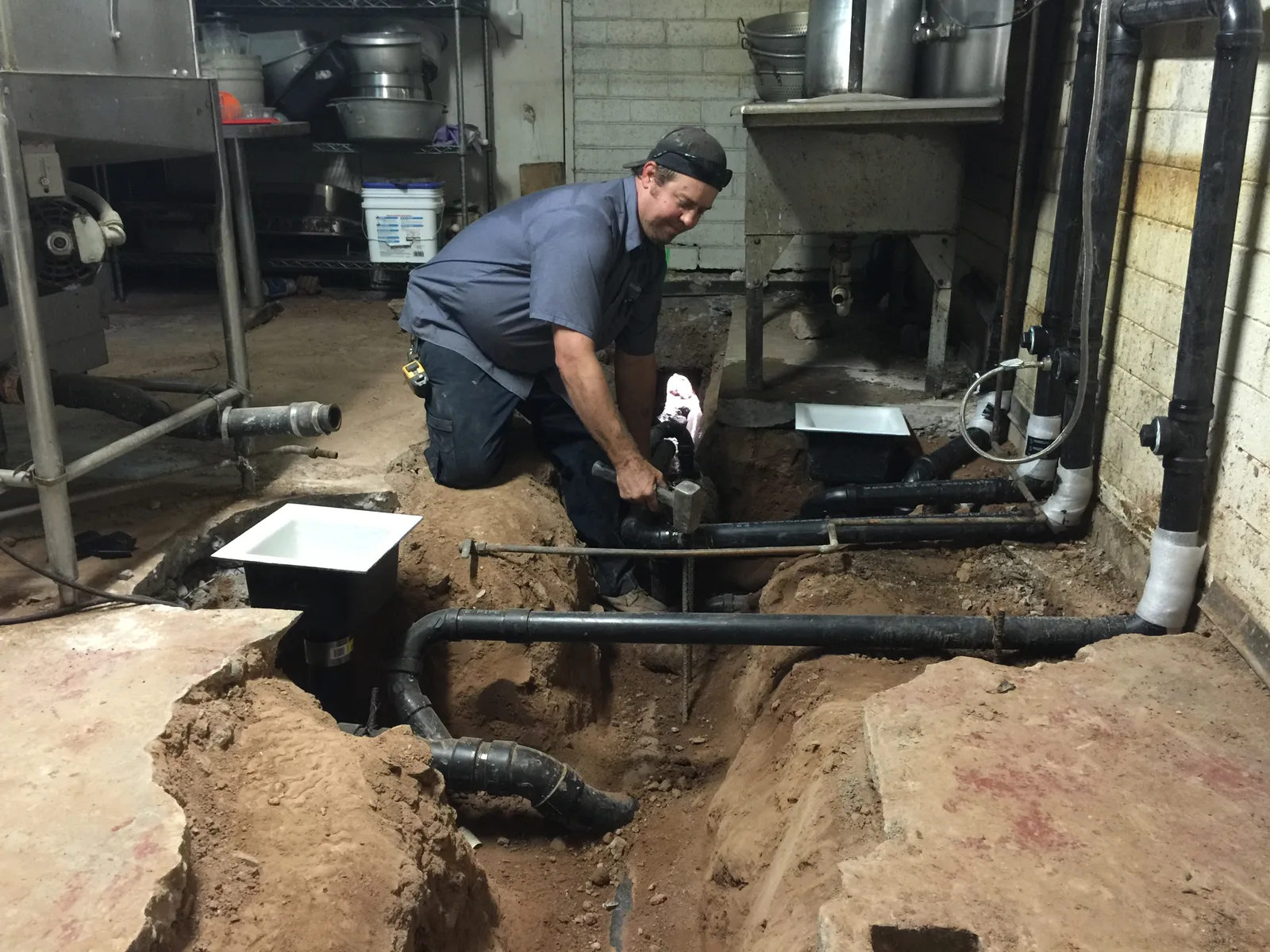
Commercial Slab Leak Repair in Phoenix
Warm spots, a spinning meter and damp tile point under the concrete. Choose between a small patch, a reroute through the walls and a full new run.
A commercial slab leak is a pressurized water line leaking under a concrete floor. HQ pinpoints the leak first, then repairs the spot, reroutes the line through walls or the ceiling, or opens the slab. In Phoenix, stopping the leak needs no permit, but replacing concealed pipe is permitted, inspected work.
The rules that apply
Each rule links to the official text we read it from. Cities change these, so check the source before a big decision. Last checked 2026-10-04.
Stopping the leak is exempt; replacing concealed pipe is not
PhoenixStopping leaks in drain, water, soil, waste or vent pipe needs no permit. Removing a concealed pipe and replacing it with new material is new work, so a permit and inspection are required. A reroute is the second kind of job.
Source: Phoenix PBCC, IBC Sec. 105.2 (Plumbing exemptions)Nothing gets buried before the inspector signs off
PhoenixNo portion of building service equipment intended to be concealed by a permanent part of the building may be concealed until it is inspected and approved, and a final inspection follows. The equipment may not be connected to the water supply until the building official authorizes it.
Source: Phoenix PBCC, IBC Sec. 110.3.10.1 (Building service equipment inspections)New or rerouted supply piping is pressure tested
2024 IPCA completed section of the water supply system is tested tight at not less than working pressure, or with a 50 psi air test for piping other than plastic, and the pressure is held for at least 15 minutes. The permit holder arranges the test.
Source: 2024 IPC Sec. 312.1 and 312.6Buried replacement pipe has to be supported and rated
2024 IPCBuried piping must be supported throughout its entire length, and water service pipe installed underground and outside the structure must carry a working pressure rating of at least 160 psi at 73.4 degrees F.
Source: 2024 IPC Sec. 306.1 and 605.3Also: 2024 IPC Chapter 6, Sec. 605.3A leak under the apron or driveway means a locate before digging
ArizonaExcavating in a public street, alley, right-of-way, public utility easement or private utility easement requires first determining where underground facilities are. Markings are good for fifteen working days.
Source: A.R.S. 40-360.22Who pays: the meter is the dividing line
PhoenixPhoenix repairs leaks on the street side of the water meter. Leaks after the meter, including a slab leak, are the property owner's responsibility.
Source: Phoenix Water Services, General Service IssuesHow do you know a commercial building has a slab leak?
Look for water that has no visible source. The common signs are a water meter that keeps turning with every fixture off, a warm or wet spot on a floor, damp carpet or lifting tile near a restroom core, the sound of running water in a quiet space, and a water bill that climbs without a change in use. A hot-water line leaking under a slab often shows up as a warm patch on the floor. Our pages on signs of a slab leak in Arizona and why slab leaks are common here cover the residential version of these clues, and they carry over to a retail suite or an office floor.
Confirm before anyone cuts concrete. A meter leak test proves the building is losing water. Isolation valves then show which branch it is, and acoustic or tracer-gas equipment finds the spot. See our commercial leak detection page for how those methods work. A camera cannot see inside a pressurized pipe, so a sewer camera is the wrong tool for a supply leak, though it is the right one if the floor is wet from a drain.
Should the leak be repaired in place, rerouted or opened up?
It depends on how many leaks the pipe has had, what the floor is, and how much the tenant can lose. There are three options.
- Spot repair. Open the slab over the located leak, cut out the failed piece, splice new pipe and patch the concrete. This suits a single leak in an otherwise sound line.
- Reroute. Abandon the leaking run and install new piping overhead, in a wall or in a chase to the same fixtures. It avoids repeated concrete work and leaves the new pipe where it can be reached later. It is also the choice when one run has leaked more than once, which usually means the rest of that run is on the same clock.
- Replace the run. If the line is corroded along its length, a partial fix just moves the leak. The usual reasons to go this way are an old copper run with pinholes or a failed joint pattern.
Our guide to rerouting versus breaking the slab goes deeper on the tradeoff. Commercial floors add two checks before any cut: scan the slab and review the as-builts for embedded conduit, other utilities and structural features. If the drawings show structural slab features such as post-tensioning, or nobody can say what is in the slab, involve the building's structural engineer before cutting.
What does the permit and inspection side look like?
In Phoenix, stopping a leak is exempt from permitting, but removing concealed pipe and replacing it with new material is permitted work. That means a reroute or a replaced run gets a permit, a pressure test, and an inspection of the new piping before it is covered. Section 110.3.10.1 of Phoenix's amended code says concealed service equipment may not be covered until it has been inspected and approved. Plan for that inspection in the schedule so the slab or ceiling is not closed too early.
If the leaking section runs outside the building, for example the supply pipe crossing a sidewalk or an apron, the work becomes excavation and needs a locate under A.R.S. 40-360.22 first. Markings last fifteen working days, which matters if the schedule slips. Other Valley cities have their own permit forms and inspection steps, so confirm with the building department that issues your permit before the job is quoted.
How do you keep the business running during the work?
Plan around the water, the noise and the floor. Ask for the shutoff window before work starts, isolate only the branch that serves the affected area where valves allow it, and schedule demolition for after hours or a closed day. Concrete cutting is loud and dusty, so a restaurant, clinic or office needs a barrier plan for the affected area. Our commercial water shutoff planning guide walks through notice, valves and restart. Keep photos and the detection report for the insurer; the insurance documentation checklist lists what is usually asked for.
When a slab-leak repair is the wrong answer
Do not open a slab on a guess. If the meter is not moving, the wet spot may be a drain, a roof or an HVAC condensate line, not a pressurized pipe, and cutting concrete will not find it. If the water is a sewer smell or a damp floor with no supply loss, a cracked drain under the slab is more likely, which is a different repair. See sewer smell from a cracked drain line under a slab. If a building has several leaks across different runs, a full reroute or replacement is the honest answer, and a string of spot repairs is not. And if the leak is on the city side of the meter, it is not yours to fix at all.
What HQ does and how to book
HQ locates the leak, quotes the repair, reroute or replacement, and tells you up front whether a permit applies. We give the price before work starts, offer free estimates, and take emergency calls 24/7 when water is actively escaping. Related pages: commercial water line repair for the service line from the meter, emergency commercial pipe burst response when it is flooding now, and our leak detection service. Call with the address, the floor and suite, what you have seen, and any as-built drawings you have.
Services and tools
How does a Phoenix slab leak repair work?
A plumber confirms and pinpoints the leak, then picks one of four fixes. A spot repair opens the slab over the break. A reroute abandons the buried pipe and runs new PEX or copper through the walls or attic. Epoxy lining seals the pipe from inside. A repipe replaces the whole system.
Read full answer: How does a Phoenix slab leak repair work?What are the signs of a slab leak in an Arizona home?
Watch for a warm spot on the floor, the sound of running water with everything off, an unexplained jump in your water bill, low pressure, cracks in flooring or walls, mildew or buckling floors, and a water heater that runs nonstop. These point to a water line leaking under your concrete slab.
Read full answer: What are the signs of a slab leak in an Arizona home?Is a warm spot on my floor a slab leak?
It can be, but a warm spot alone doesn't prove it. Sunlight, a water heater closet or ductwork can warm a floor too. A slab leak on a hot water line usually keeps the spot warm day and night, and the water meter keeps moving with everything off. Test the meter before you decide.
Read full answer: Is a warm spot on my floor a slab leak?How do I plan a water shutoff for my commercial building?
Plan a commercial water shutoff by locating and labeling every valve first, then isolating only the affected zone so the rest of the building keeps service. Schedule it after hours, notify staff and tenants in writing, coordinate the fire line and equipment, relieve pressure, and verify backflow on restart.
Read full answer: How do I plan a water shutoff for my commercial building?Sources
- City of Phoenix: Amendment to 2024 IBC Chapter 1 (Sec. 105.2, 110.3.10.1)
- City of Phoenix Water Services: General Service Issues
- 2024 International Plumbing Code, Chapter 3 (Sec. 306, 312)
- 2024 International Plumbing Code, Chapter 6 (Sec. 605.3)
- A.R.S. 40-360.22, Excavations; locating underground facilities
Related commercial services
How a meter test, section-by-section pressure test and acoustic listening locate a leak, and who pays once it is found.
Gauge test, replacement, fail-open design, vacuum breakers and why exposed plastic pipe is banned outdoors in Phoenix.
Where owner responsibility starts, how a failed service line is repaired or replaced, and what comes before the excavator.
What HQ does and does not do on a fire line, the Phoenix certificate rule, and the owner's upkeep duties.
The first ten minutes, the valve Phoenix says to close, what to document, and the notification clock in Phoenix code.
What a TI plumbing scope includes, how fixture counts work, and how Phoenix, Mesa and Scottsdale review and inspect it.
Leak Under the Floor?
Talk to a real dispatcher who knows commercial work. Upfront pricing before work starts, 24/7 for emergencies.