
Preventive Plumbing Maintenance for Phoenix Businesses
Recurring jetting, inspection and test visits timed around your hours, with each date and finding written to your account record.
A preventive plumbing program replaces emergency calls with scheduled visits: recurring hydro jetting of kitchen and trunk lines, an annual backflow test, camera checks on lines that keep slowing down, and a walk-through of fixtures and shutoffs. Each visit is logged to your account, so you can show an inspector or an owner what was done and when.
The rules that apply
Each rule links to the official text we read it from. Cities change these, so check the source before a big decision. Last checked 2026-10-04.
Phoenix sets the minimum grease interceptor cleaning cycle
PhoenixHydromechanical interceptors must be fully pumped out and cleaned every 30 days unless the Director grants a variance, and none may go more than 90 days without maintenance. Gravity interceptors at food service establishments must be cleaned at least once every 3 months. A licensed pumper does the cleaning.
Source: Phoenix FOG BMP Manual, how often to pumpKeep three years of maintenance records
PhoenixAll records documenting maintenance activities, including invoices from third-party service contractors, must be available on site for three years and produced for the city on request.
Source: Phoenix FOG BMP Manual (Phoenix City Code Chapter 28)Backflow assemblies are tested at least once a year
PhoenixThe customer tests every backflow prevention assembly at least once a year, and the Planning and Development Director can require more often. Test records go to the city on its forms, and the customer keeps them for three years.
Source: Phoenix City Code 37-143An annual permit is for owners with in-house trades
PhoenixThe building official may issue an annual permit, in place of a permit for each alteration, to a person or company that regularly employs one or more qualified tradespersons at the building. The holder keeps a detailed record of the alterations and gives the city access to it. A recurring service visit from an outside plumber is not the same thing.
Source: Phoenix 2024 IBC Chapter 1 amendments, Sec. 105.1.1 and 105.1.2Regular meter readings and walk-throughs catch leaks early
Federal (EPA WaterSense)EPA lists reading water meters regularly, installing leak detection or flow monitoring, and conducting visual and auditory inspections as best practices for finding leaks in commercial buildings.
Source: EPA WaterSense at Work: Leak Detection and RepairWhat a recurring plumbing visit covers
A preventive visit is scheduled work on the parts of your plumbing that fail slowly. For most Valley businesses that comes down to four things: cleaning the lines that carry grease and soap, testing the assemblies the city requires you to test, looking inside the lines that keep slowing down, and checking the fixtures and shutoffs nobody touches until an emergency.
We set the schedule around your hours. At a restaurant, inside work happens before opening or after close and usually takes one to two hours. Retail centers and apartment communities get windows that avoid peak traffic.
Recurring jetting for kitchen and trunk lines
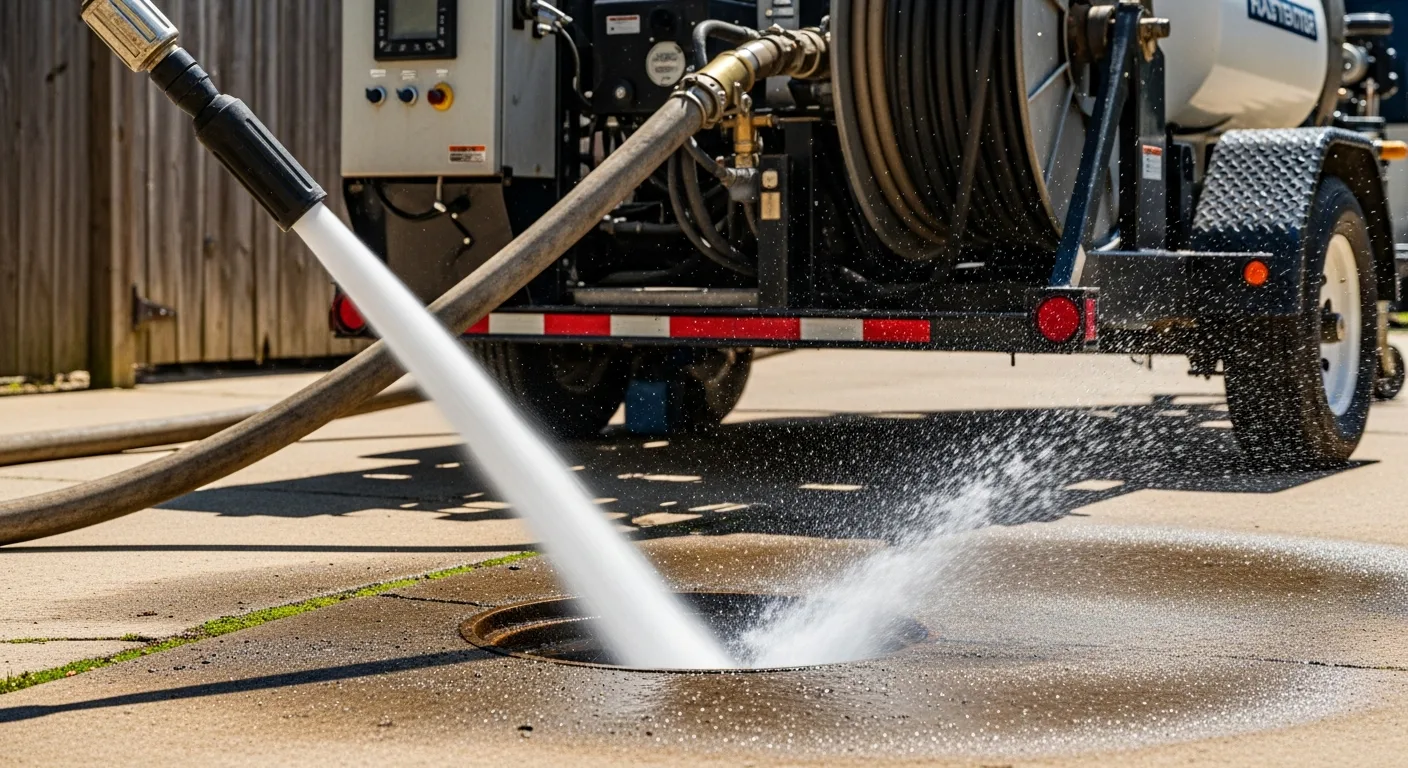
Hydro jetting is the core of most programs. We jet restaurant laterals from the inside with a small hose, and we jet the main out toward the city sewer separately, because a clean branch line does not help if the trunk is half full of grease. Soda and ice-well drains get jetted with a cleaning solution, since they smell long before they back up.
How often depends on what goes down the line. A kitchen frying all day builds up faster than a coffee counter. We log the date against your account, so the next visit is based on what we found last time, not on a guess. Compare it with the plan in commercial plumbing preventive maintenance, and see hydro jetting for the method.
Grease interceptor cycles
Phoenix puts hydromechanical interceptors on a 30-day cleaning cycle, and no more than 90 days without maintenance. Gravity interceptors go at least once every 3 months. A licensed pumper does the cleaning, not us. What we add to the schedule is the inspection after the tank is empty: baffles, tees and standpipes, which are the parts that fail quietly. If something is broken, we repair it right after the pumper leaves. Each cleaning invoice and repair note goes in your three-year record file, which the city can ask to see. Details are on our grease trap service page.
Backflow tests that do not lapse
The annual test is the item most often missed, because it falls on a date nobody owns. We test domestic backflow assemblies, repair or replace the ones that fail, and file the results with the city. In a portfolio, we line up the due dates so a property manager gets one list instead of a dozen notices. See commercial backflow testing requirements.
Camera checks, fixture rounds and leak watching
When a line has been jetted twice in a year and still slows down, the answer is a look inside, not a third jetting. Our sewer camera inspection shows a belly, a root intrusion or a crack, and it turns a recurring call into a repair plan.
A fixture round covers flushometers, hand sinks, mop sinks, hose bibs and visible shutoffs. EPA's WaterSense guidance recommends reading the water meter regularly and walking the building looking and listening for leaks. A meter that moves overnight when the building is closed tells you something is leaking before the bill does. If it does, leak detection finds the line.
What gets logged
Every visit leaves a record: date, location, what we found, what we did and what we recommend next. For restaurants, that record sits alongside your interceptor invoices. For apartments and retail centers, it gives the property manager something to hand an owner. We do not put prices in a schedule on this page, because the right frequency depends on your building. We give an upfront price before any work starts, and free estimates for the repair work a visit turns up.
When a maintenance program is the wrong answer
If your building is new, small or lightly used, you may not need recurring visits at all. An annual backflow test and a call when something slows down is a perfectly reasonable plan for an office suite. A program also cannot fix a line that is broken. A collapsed or bellied pipe needs a repair, and jetting it on a schedule just delays the day you dig. And if the grease is coming from the kitchen's habits, the fix may be in how the line cooks scrape plates, before it is in our schedule.
How to start
Tell us your property type, the number of locations, which lines back up and when your last backflow test was. We will suggest a first visit, then set the rhythm from what we find. If you run more than one site, see multi-location plumbing service. For restaurants, see restaurant group plumbing service, and for apartments and retail centers see property manager plumbing service.
Services and tools
What should a commercial plumbing preventive maintenance plan include?
A commercial plumbing preventive maintenance plan should schedule grease interceptor service at the applicable buildup threshold or required interval, whichever comes first, an annual backflow assembly test, periodic drain and sewer jetting with a camera inspection, water heater flushing, fixture and flushometer checks, shutoff valve mapping, pressure checks, and leak monitoring.
Read full answer: What should a commercial plumbing preventive maintenance plan include?How often must a Phoenix restaurant pump its interceptor?
Phoenix City Code 28-15 requires gravity interceptors at food service establishments to be fully pumped out and cleaned at least every three months. Hydromechanical units (grease traps) must be cleaned at least every 30 days and never go past 90 days. In every case, grease and solids must stay under 25 percent of capacity.
Read full answer: How often must a Phoenix restaurant pump its interceptor?How often does a commercial backflow preventer need testing in Arizona?
At least annually. Arizona rules require a certified tester to check each commercial backflow assembly once a year, and again after any install, relocation, or repair. In Phoenix you file results by the date the city sets, and fire system results are due within 30 days.
Read full answer: How often does a commercial backflow preventer need testing in Arizona?What should a property manager record on a plumbing work order?
A plumbing work order should connect the reported problem to a specific asset and location, authorized scope, provider, completed work and followup. Separate observations from the technician’s findings, and record which tests or approvals remain open. Keep equipment instructions and service evidence linked to the asset; closing a ticket does not establish that every underlying issue was resolved.
Read full answer: What should a property manager record on a plumbing work order?Related commercial services
How chain and franchise operators get consistent plumbing service across Valley cities, and why backflow and permit rules change at every city line.
What happens when a facility manager calls at night, what counts as an emergency, and the short list of details that speeds up dispatch.
How a property manager sets up plumbing service across a portfolio: what to send, who approves and pays, and which calls are urgent.
Which leaks near an apartment or HOA pool are domestic plumbing, which belong to a pool specialist, and how a buried leak is usually narrowed down.
What a multi-unit restaurant operator should standardize across kitchens: jetting cadence, grease records, hand sinks and after-hours coverage.
Stop Waiting for the Backup
Talk to a real dispatcher who knows commercial work. Upfront pricing before work starts, 24/7 for emergencies.