
Plumbing for Property Managers and Retail Centers
Shared interceptors, one-meter strip centers, tenant improvements and the records cities ask for. Who owns what, and how to stay ahead of it.
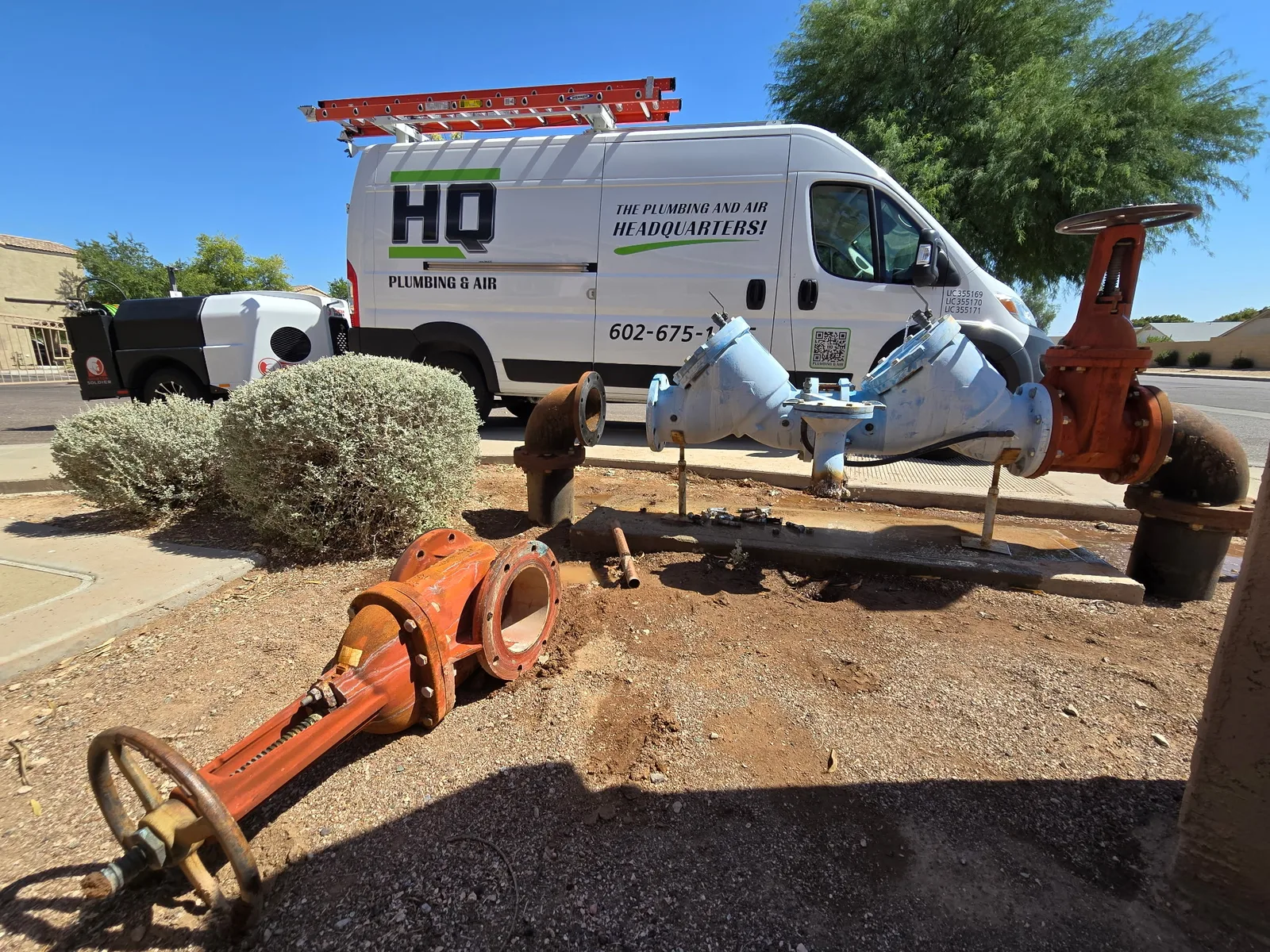
In a Phoenix retail center the owner usually carries the plumbing that tenants share. The city holds the property owner responsible for a grease interceptor that serves more than one tenant, requires an RP backflow assembly when one water service feeds several tenants, and makes the owner repair the building sewer out to the public main.
The rules that apply
Each rule links to the official text we read it from. Cities change these, so check the source before a big decision. Last checked 2026-09-29.
Shared grease interceptor
PhoenixInterceptor maintenance is the user's job, except that a multiple-user interceptor is the property owner's. Pumping records, invoices included, stay on site for three years.
Source: Phoenix FOG BMP ManualOne water service, several tenants
PhoenixRetail shopping centers, strip malls, and retail or industrial shell buildings where one service supplies more than one tenant need a reduced pressure (RP) backflow assembly.
Source: Phoenix City Code 37-144Annual backflow test
PhoenixEvery assembly is tested at least once a year by a certified tester, results go to the city on its forms, and records are kept three years.
Source: Phoenix City Code 37-143Building sewer to the main
PhoenixFor anything other than a single-family home or duplex, the owner repairs the building sewer to the public main, including a broken section under the street or alley, with a city permit.
Source: Phoenix City Code 28-5.1Tenant improvement permits
PhoenixRemodels, tenant improvements and changes of use in non-residential buildings go through commercial plan review and permits. Grease interceptors and backflow assemblies add their own reviews.
Source: Phoenix PDD commercial permitsAnnual permit for routine alterations
PhoenixOwners who regularly employ qualified tradespeople can get one annual permit for alterations to approved plumbing and gas systems, and must keep a detailed record of the work. Phoenix also runs an Annual Facilities Program.
Source: Phoenix Building Code 105.1.1, 105.1.2 and 117Who owns what in a multi-tenant building
The lease decides most of it. Many retail and office leases make the tenant responsible for plumbing inside the suite and leave the landlord with anything shared: the water service, the building sewer, roof drains and common restrooms. Some triple-net leases push nearly everything to tenants. Read the maintenance and repair clause before the first backup, not during it. Here's how tenant vs landlord plumbing responsibility usually shakes out.
The city doesn't read your lease, though. When Phoenix enforces a rule, it goes to whoever the code names, and for shared systems that's often the owner.
Backflow when one meter serves several tenants
Phoenix lists retail shopping centers, strip malls, and retail or industrial shell buildings where one water service supplies more than one tenant among the facilities that need a reduced pressure (RP) backflow assembly. Each assembly gets tested at least once a year by a certified tester, with the results filed with the city and the records kept three years. Other Valley cities run their own programs and send their own notices, and some shut off water when a test is missed. Here's what commercial backflow testing in Arizona involves.
Sewer lines under the parking lot and the street
The building sewer for a retail center often runs under the parking lot, collects several suites and leaves the property under a street or alley. In Phoenix, Code 28-5.1 puts repair of that whole line on the owner, including a broken section off the property, and requires a city permit for the work in the street. A camera inspection before you buy, refinance or re-tenant a food space tells you where the roots, sags and broken joints are. Here's who is responsible for the sewer line in Phoenix.
Vacant suites and sewer odors
An empty suite is the classic source of a sewer smell that drifts into the tenant next door. Water in a trap is what blocks sewer gas, and it evaporates fast in a Phoenix summer when nobody runs the sinks or mops the floor drains. Pour water into every floor drain and fixture in vacant suites on a schedule, or have trap primers installed. If the smell stays, the cause may be a cracked vent or a failed wax ring. See sewer gas smell in a commercial building.
Tenant improvements and permits
New tenants mean new sinks, restrooms and sometimes a kitchen. In Phoenix, remodels, tenant improvements and changes of use go through commercial plan review, and grease interceptors and backflow assemblies get their own look. A retail suite that becomes a restaurant almost always needs a grease interceptor sized for the new fixture count. See commercial tenant improvement plumbing and the Phoenix TI permit page.
If you keep a maintenance staff, Phoenix also lets owners who regularly employ qualified tradespeople get an annual permit for routine plumbing and gas alterations, as long as they keep a detailed record of the work. Details are on our Phoenix annual permit page.
How HQ works with property managers
We work across the Valley for owners and managers with one or many properties: tenant calls, shared interceptor service, backflow repairs and replacements, sewer camera inspections, jetting, water heaters and planned shutoffs. You get an upfront price before work starts, 24/7 emergency service, and invoices that name the property and suite so costs land on the right tenant. Here's the play: one number for every building, and paperwork your accountant can use.
Services and tools
Codes and permits
- Phoenix commercial tenant improvement permit
- Phoenix annual permit for plumbing alterations
- Phoenix commercial minor plumbing online permits
- Chandler tenant improvement plumbing permit timeline
- Valley grease trap and interceptor rules by city
- Phoenix Chapter 37 cross-connection control
- Trap seal protection (UPC 1007)
Questions we've answered
- Commercial plumbing repairs: tenant or landlord responsibility?
- What plumbing is involved in a commercial tenant improvement (TI)?
- How often does a commercial backflow preventer need testing in Arizona?
- RPZ vs double-check backflow assembly: what's the difference?
- Do I have to register my backflow assembly with the City of Phoenix?
- Why does my commercial building smell like sewer gas?
- In Phoenix, who is responsible for the sewer line to the city main?
- Utility easement vs right-of-way: who can dig to fix my sewer?
- How do I plan a water shutoff for my commercial building?
- What should a commercial plumbing preventive maintenance plan include?
- What are the ADA plumbing requirements for a commercial restroom?
- How often should a restaurant grease trap be pumped?
Sources
- City of Phoenix FOG Best Management Practices Manual (2024)
- Phoenix City Code 37-143, customer backflow duties
- Phoenix City Code 37-144, facilities that need backflow prevention
- Phoenix City Code 28-5.1, sewer service line repair
- Phoenix 2024 Building Code Chapter 1 amendments (105.1.1, 105.1.2, 117)
- Phoenix PDD, commercial plan reviews and permits
Other industries we serve
Plumbing Help for Property Managers and Retail Centers
Talk to a real dispatcher who knows commercial work. Upfront pricing before work starts, 24/7 for emergencies.