
Water Softener Installation in Phoenix
Phoenix water is hard to very hard. We size, install and service softeners and filtration, and you get the price before we start.
Do You Need a Softener, and Which Kind?
If your home runs on Phoenix city water, a softener is worth a serious look. The water is hard enough to leave scale in water heaters, pipes, faucets and appliances, and a softener removes the minerals that cause it. We install whole-home softeners, salt-free systems and reverse osmosis drinking water, and we tell you which one fits the problem you actually have.
A licensed and insured plumber handles the install, and you get a free estimate and an upfront price before any work starts.
What Hard Water Does to a Phoenix Home
Phoenix water starts in mineral-rich desert rivers and aquifers, so it arrives loaded with calcium and magnesium. It is safe to drink. The trouble is what it leaves behind when it heats up and dries. See how hard Phoenix water is and how hard water damages plumbing for the details.
In practice that means white crust on faucets and showerheads, spots on glasses, scale coating water heater elements and tanks, and appliances that work harder than they should. Tankless heaters are especially sensitive to scale, which is why tankless descaling is a routine job here.
Which Type of System Fits Your Home?
This is the choice that matters most, so here it is side by side.
| Type | What it does | Upkeep | Best for |
|---|---|---|---|
| Salt-based softener | Removes calcium and magnesium by ion exchange, so the water is actually soft | Add salt; regeneration sends brine to the drain | Homes that want the full soft-water result |
| Salt-free conditioner | Converts minerals into forms that scale less, but removes nothing | Little, no salt and no brine | Scale protection with minimal upkeep |
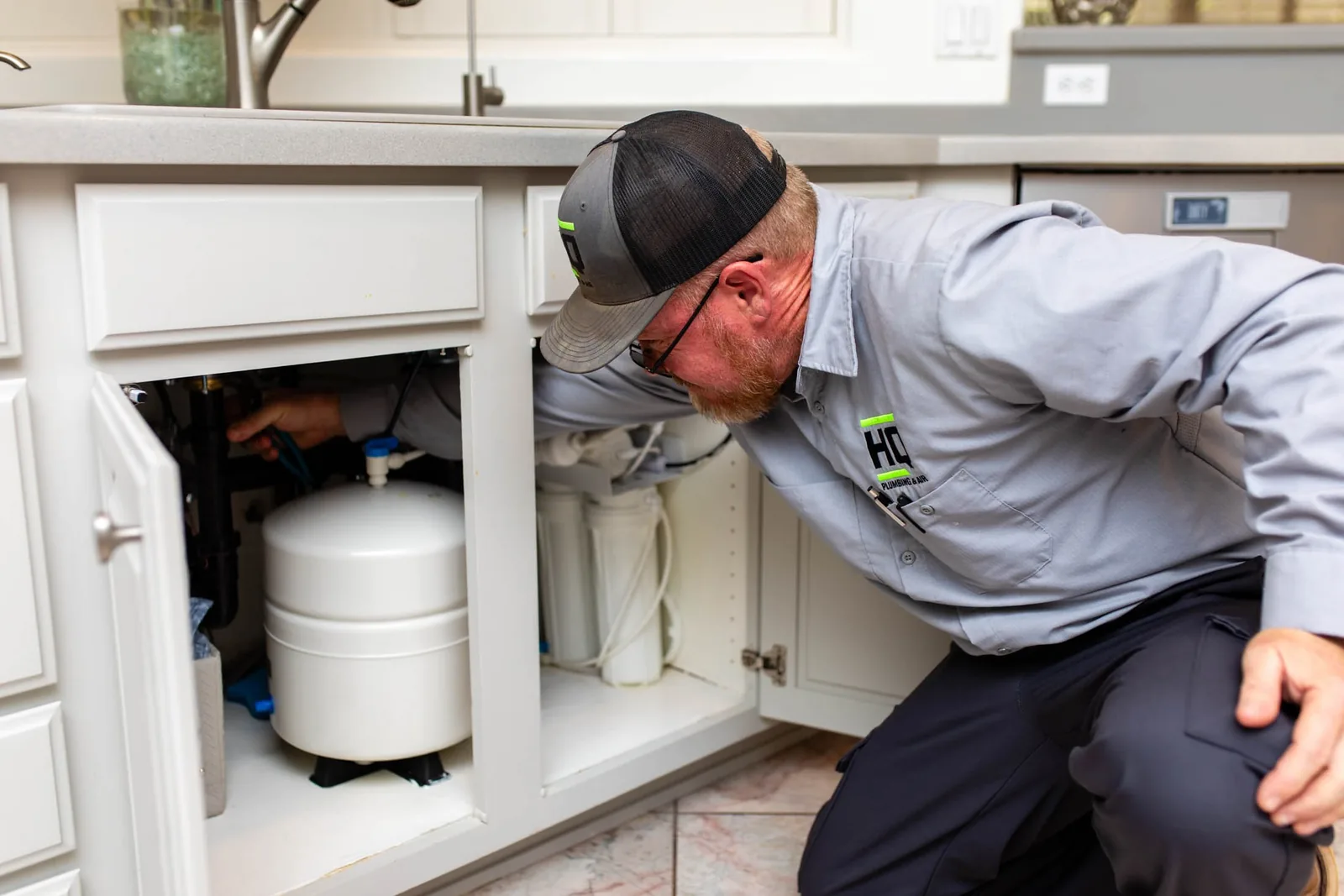
| Reverse osmosis | Filters drinking water at one tap or the whole house | Filter and membrane changes | Better-tasting drinking and cooking water |
The honest answer for many homes is a softener for the whole house, plus reverse osmosis at the kitchen sink if taste matters. They do different jobs. Read softener vs conditioner, whether salt-free softeners work and reverse osmosis vs a softener before you decide. If drinking water is your main goal, see whether reverse osmosis is worth it.
One local note. Softener brine ends up in the sewer system, and some Valley cities have taken steps to cut it. Scottsdale, for example, once offered rebates to households that replace or remove older self-regenerating softeners, though that rebate is no longer on the city's current list. Rules and programs change, so we check what applies in your city before we recommend a salt-based unit.
How Big a Softener Does a Phoenix Home Need?
Size comes from two numbers: how much water the house uses and how hard that water is. The City of Phoenix 2025 water quality report lists total hardness of 172 to 302 mg/L, which the report gives as about 10 to 17.6 grains per gallon. Where your tap sits in that range depends on your part of town and the season.
The math is one line: people times about 75 gallons a day times grains per gallon. A family of four at 15 grains puts about 4,500 grains of hardness through the softener every day, or about 31,500 a week. A unit rated at or a little above the weekly figure regenerates about once a week, which keeps salt and water use down. At the high end of the city's range, run the numbers at 17 or 18 grains instead. The worked examples are in how to choose the right size water softener.
Bigger is not automatically better. EPA WaterSense notes that a typical softener uses 20 to 70 gallons of water each time it regenerates, so a unit that is too small wastes salt and water regenerating every few days, and one that is far too big costs more up front for capacity you will not use. We check your hardness and the household before we recommend a size, and if a softener stops keeping up later, see how to test whether a softener is working and why a softener suddenly uses more salt.
What Happens on a Softener Install
- We look at your water and your home. Household size, how hard the water is, and where the main line, drain and power are.
- We size the system. Sizing follows your water use and hardness. An undersized unit regenerates too often and wastes salt and water.
- You get the price first. Free estimate, upfront price, your approval before we start.
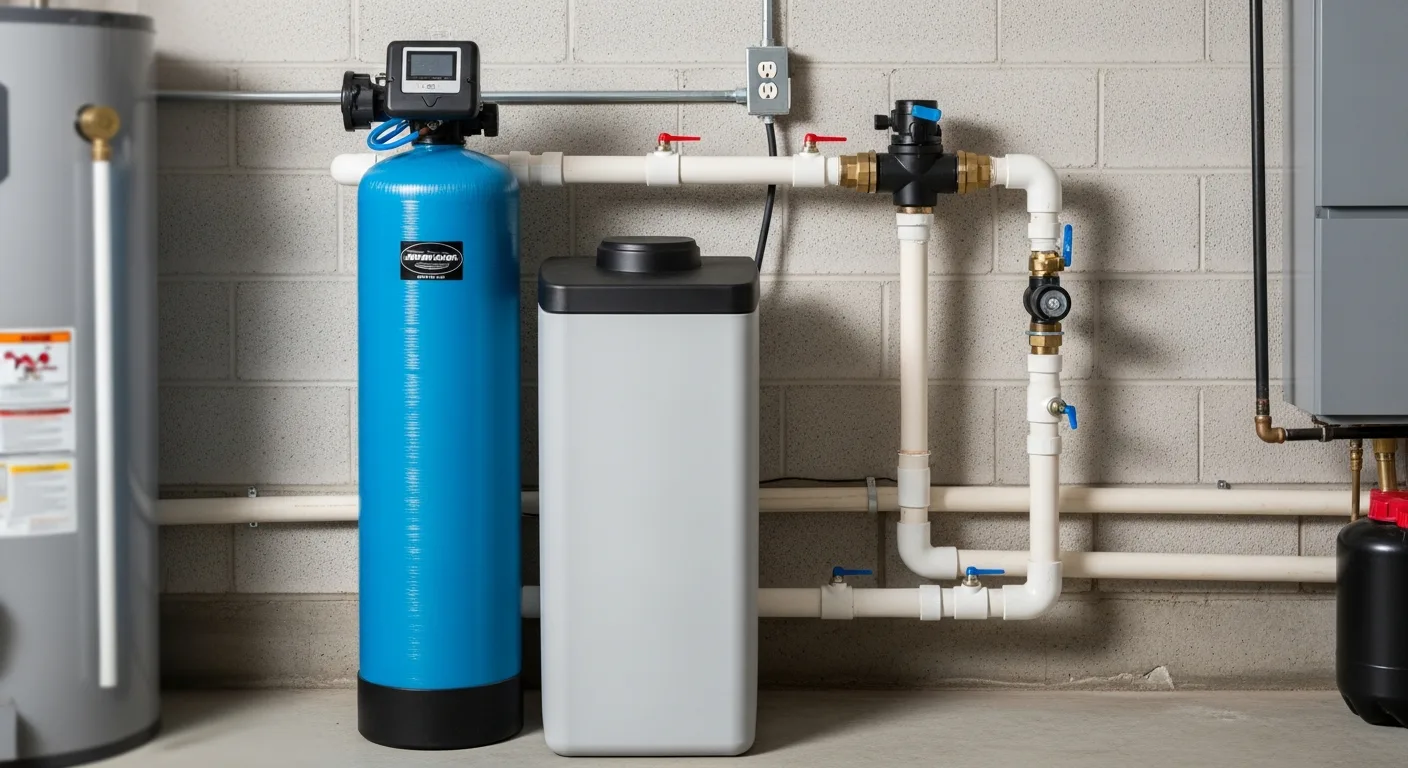
- We install it. The softener is connected to the main water line, a drain for the regeneration water, and power, with a bypass so you can isolate it.
- We set it up and show you how it works. Settings, salt, and what to watch for.
If your softener is already installed and something is off, start with what to check when a softener stops working or whether a softener reduces water pressure.
Upkeep, Repairs and When To Replace
A salt-based softener is simple to live with. You add salt to the brine tank when it runs low, and the unit regenerates on its own schedule. The parts that wear over the years are the resin beads and the control valve. When hard water comes back, a salt bridge is the most common cause, a hard crust that stops brine from forming, and it is usually a quick fix.
Salt-free systems ask for less. There is no salt to buy and no brine to drain, and the media inside is replaced on the manufacturer's schedule. The trade-off is that they reduce scale but do not deliver truly soft water.
If your softener is old, keeps failing or was sized for a smaller household, we will say whether it is worth repairing or time to replace it. If it is a simple fix, we will tell you that too. We would rather you keep a working unit than buy a new one.
Questions To Ask Any Softener Installer
- Is the unit sized for my household and my water, and how was that worked out?
- Is it salt-based or salt-free, and what will each cost me to run?
- Where does the regeneration water drain, and does my city have rules about it?
- Will I get the full price in writing before work starts?
- Is the installer a licensed plumber?
We answer all five before you decide anything. HQ is licensed and insured, and the free estimate covers your questions along with the price.
What Affects the Cost of a Water Softener
We do not post prices here because the setup decides the price. These are the things that change it:
- System type and size. A larger home with more people and harder water needs a bigger unit.
- Salt-based, salt-free or RO. Each has different equipment and install work.
- Location. The distance from the main line, a drain and power affects the plumbing involved.
- Existing plumbing. Older or unusual pipe may need extra fittings.
- Add-ons. Sediment or carbon filters, a bypass setup or an RO system at the sink.
The way to get a real number is the free estimate. You get the price up front, before any work starts.
Softening & Filtration Services
Do I really need a water softener in Phoenix?
The City of Phoenix's 2025 report lists hardness of 10 to 17.6 grains per gallon, hard to very hard on the USGS scale. A softener is an optional way to reduce hardness and new mineral scale. Test your home's water before choosing treatment; hardness varies across Valley water providers.
Read full answer: Do I really need a water softener in Phoenix?Water softener vs water conditioner: what's the difference?
A water softener uses ion exchange to remove calcium and magnesium, swapping them for sodium or potassium and regenerating with salt brine. A salt-free water conditioner removes nothing. It converts those minerals into inactive crystals so scale will not stick. Only the softener makes truly soft water.
Read full answer: Water softener vs water conditioner: what's the difference?Do salt-free water softeners actually work in Phoenix?
Partly. Salt-free systems do not soften water, because they leave the calcium and magnesium in. But independent testing shows they cut scale buildup well. An Arizona State University study found template-assisted crystallization reduced scale by more than 88%, the best alternative tested.
Read full answer: Do salt-free water softeners actually work in Phoenix?What is the difference between reverse osmosis and a water softener?
They do two different jobs. A water softener removes hardness minerals from all the water in the house to stop scale on pipes and appliances. Reverse osmosis pushes water through a membrane at one tap to remove dissolved solids and improve taste for drinking. Many Phoenix homes use both.
Read full answer: What is the difference between reverse osmosis and a water softener?Serving The Entire Phoenix Metro
Our crews deliver water softening & filtration across Phoenix and the surrounding Valley. Find your city below:
Explore More Services

Tired Of Hard Water?
Call HQ for a free estimate and an upfront price on a softener or RO system.