
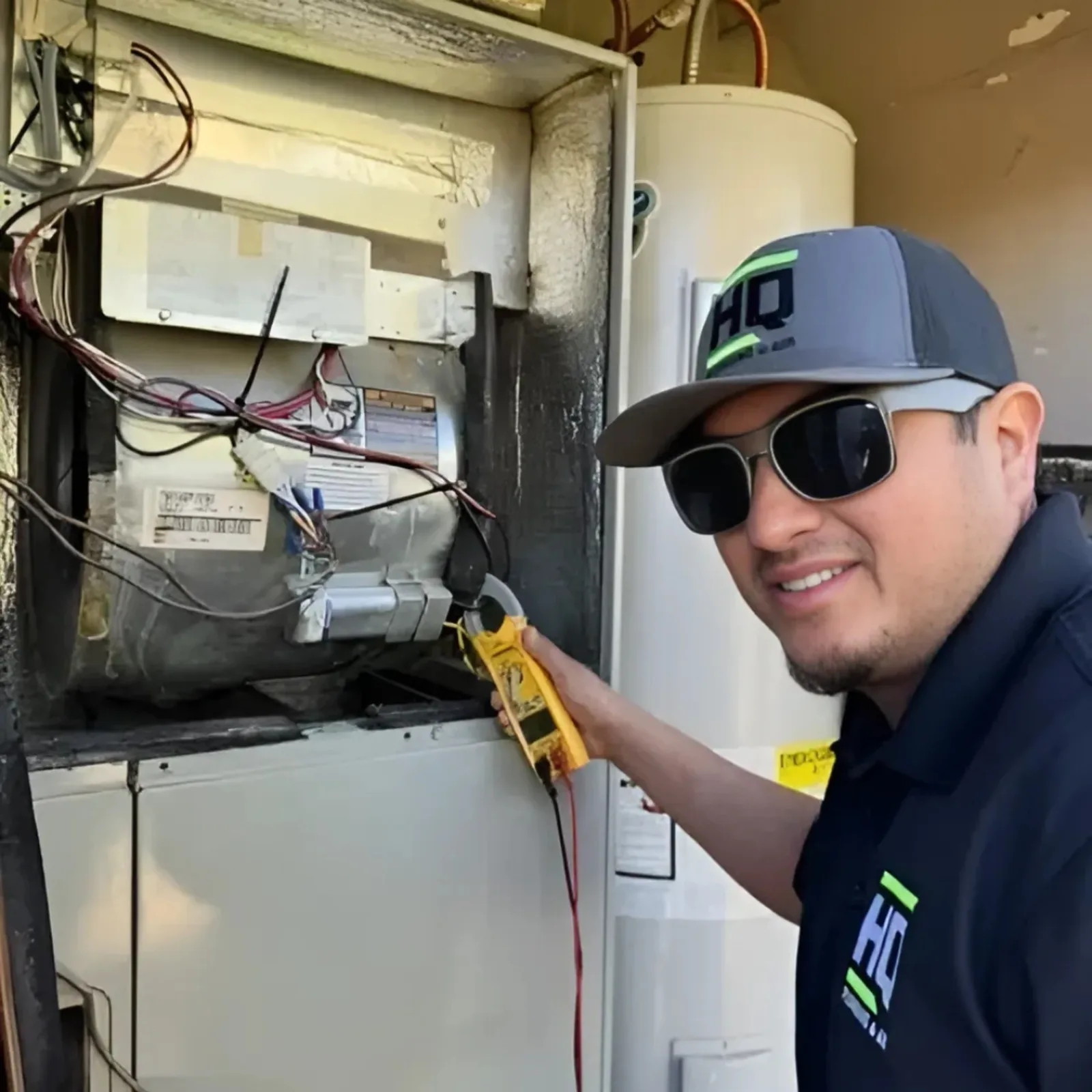
Water Heater Repair & Installation in Phoenix
No hot water? We find out why, tell you repair or replace, and give you the price before we start. 24/7 emergency service.
Repair It or Replace It?
Repair a water heater when one part failed on a fairly young unit. Replace it when the tank is leaking, when it is past its typical service life, or when repairs keep adding up. A licensed and insured plumber checks the unit, tells you which one it is, and gives you a free estimate and an upfront price before any work starts.
We repair and install tank and tankless water heaters, gas and electric. If a tank is leaking right now, we offer 24/7 emergency service. Shut off the cold water supply to the heater and call us.
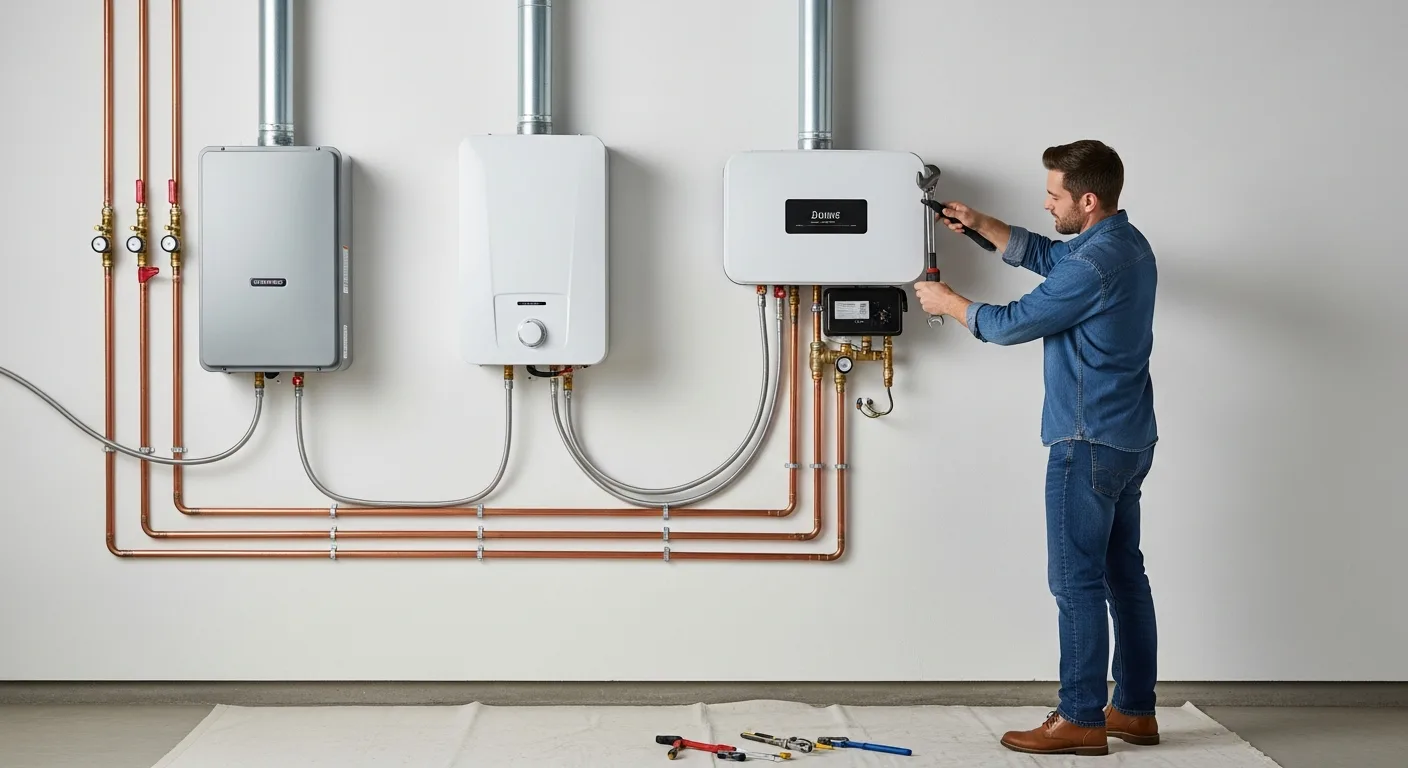
Why Your Hot Water Stopped
A sudden loss of hot water usually comes down to one failed part. What it is depends on the fuel.
- Electric heater: a tripped breaker, a burned-out heating element, a bad thermostat, or a tripped reset button.
- Gas heater: a pilot light that went out, a failing thermocouple, or an interrupted gas supply. Our guide covers a pilot light that will not stay lit.
- Hot water in the kitchen but not the shower: see no hot water in the shower only.
The full checklist is in why you have no hot water. If you smell gas or rotten eggs near the heater, leave the house first and call the gas utility. Here is what to do about a gas smell in the house.
How To Decide
| What you see | Usually means | Usual call |
|---|---|---|
| Water leaking from the bottom of the tank | Tank body has failed | Replace |
| Dripping from the pressure relief valve | High pressure or thermal expansion, or a worn valve | Repair, often an expansion tank |
| No hot water on a young unit | One failed part such as an element, thermostat or thermocouple | Repair |
| Popping or rumbling noise | Sediment and scale on the tank bottom | Flush; replace if the tank is old |
| Old unit, repeated repairs | End of service life | Replace |
More detail in should I repair or replace my water heater, a water heater leaking from the bottom, a leaking pressure relief valve and a popping or rumbling tank. We will say so if a repair is all you need. We would rather fix it than sell you a new one.
Tank, Tankless, Gas or Electric?
| Type | Good for | Watch out for |
|---|---|---|
| Tank, gas or electric | Simple, familiar, straightforward to replace | Standby heat loss; scale buildup in hard water |
| Tankless | Hot water on demand, saves space | Higher upfront cost; needs regular descaling in Phoenix |
| Heat pump (hybrid) | Lowest energy use of the electric options | Needs space and airflow around the unit |
The fuel usually comes down to what your home is set up for. See gas vs electric water heaters and what size water heater you need. If you are weighing solar, are solar water heaters worth it in Arizonacovers it.
What Is Different About Water Heaters Here
Hard water. Phoenix water leaves scale in tanks and on heating parts. A tank heater benefits from an occasional flush (how often to flush a water heater in Phoenix), and a tankless unit needs descaling (how often to descale a tankless heater). A water softener cuts down how much scale forms in the first place.
Permits. The City of Phoenix lists replacement of an existing water heater in a one- or two-family home by a licensed contractor as exempt from a permit, and the work still has to meet code. Read the permit rules for replacing a water heater in Phoenix.
Garage installs. Many Valley homes keep the heater in the garage. Gas units there have their own rules on how high the ignition source sits and on protection from vehicles. See the garage 18-inch rule. Heat is a factor too: does Arizona heat damage water heaters and pipes.
How We Install a Gas Tank Water Heater
A lot of homeowners don't know these rules exist. These are the four things we set right on every gas tank install.
- Up off the garage floor. Phoenix's residential code (Section P2801.6) wants the burner and pilot at least 18 inches above a garage floor unless the heater is listed as flammable vapor ignition resistant. At HQ we set a garage gas tank on a water heater stand or on the built-in pad many Valley homes have, a solid base made to carry the weight of a full tank. The details are in the garage 18-inch rule.
- Flue clear, nothing stored on it. The draft hood and vent on top of the tank must stay open, and nothing should ever sit on top of the heater or against it. A. O. Smith's manual says combustible materials must not be placed against or next to the heater, and that gasoline should never be stored in the same room. A foul odor in the garage near the heater should be checked right away. If it smells like gas, leave and call the gas utility first; here is what to do about a gas smell in the house.
- Type B double-wall vent through the ceiling. Phoenix's fuel gas code (Section 503.10.14) does not let single-wall vent pipe pass through a wall, floor or ceiling, so where the exhaust vent goes up through the drywall and roof we run listed Type B double-wall vent. We keep a 1-inch air space between the vent and the drywall, the clearance DuraVent's Type B instructions call for, with a firestop spacer at the ceiling. More on venting in how a gas water heater is vented.
- A relief line that only runs downhill. The temperature and pressure (T&P) relief line has to flow by gravity with no trap, end no more than 6 inches above the floor or the drain it empties into, and be made of a pipe approved for hot water distribution (Section P2804.6.1). PVC is not one of them. On gas and electric heaters alike, we pipe it in hard copper on a steady downward slope, never uphill. Here is what it means when the relief valve is leaking.
How We Install a Tankless Water Heater
Rinnai and Navien are the two tankless brands we see most in Phoenix homes, and we install and service both. If yours is showing a code, start with the Rinnai error code list or the Navien error code list.
Size. In our experience, a gas tankless unit near 199,000 BTU per hour, the top residential size from both brands, covers most Phoenix homes. Our incoming water is warm, so the unit has less temperature to make up and delivers more of its rated flow. A unit that size often needs a bigger gas line than the old tank had, which we check before we quote. The flow math is in what size water heater you need.
Inside or outside. A tankless heater goes either inside, in the garage, a closet or a mechanical room, or outside on an exterior wall. Indoors it needs a proper supply of combustion air, either a sealed intake to the outdoors or openings sized to the unit's input. We measure the space and set that up as part of the install. Read whether a tankless water heater should go inside or outside.
What Happens on a Water Heater Call
- We find out what is wrong. Age, fuel, symptoms, and whether it is leaking.
- We tell you repair or replace. With the reason, so you can decide.
- You get the price first. Free estimate, upfront price, your approval before we start.
- We do the work. Repair, or removal and installation of the new unit, connected and vented to code.
- We check it and set it up. Temperature, relief valve and connections are checked, and we explain what we did.
Not sure about the temperature setting? Read what temperature a water heater should be.
What Affects the Cost of Repair or Replacement
We do not post prices here because the job decides the price. These are the factors:
- Repair or replacement. A part swap is a different job than removing and installing a whole unit.
- Type and size. Tank, tankless or heat pump, and the capacity your household needs.
- Fuel and hookups. Whether gas lines, venting, electrical or water connections can be reused or need changes.
- Code upgrades. An expansion tank, a drain pan or a relief valve discharge line may be needed.
- Access and location. Garage, closet or attic installs differ.
- When you call. An after-hours leak is a different visit from a scheduled one.
The way to get an exact number is the free estimate. You get the price up front, before any work starts.
Water Heater Services
Why do I have no hot water all of a sudden?
Sudden loss of hot water usually traces to one failed part. On an electric heater, a tripped breaker, a burned-out heating element, a bad thermostat, or a tripped high-limit reset button is the cause. On a gas heater, a pilot that went out, a failing thermocouple, or interrupted gas supply is the likely culprit.
Read full answer: Why do I have no hot water all of a sudden?Should I repair or replace my water heater?
Replace it if the tank itself leaks, if it is past its typical service life, or if repairs keep adding up. Repair it when one fixable part fails on a fairly young unit. Match the symptom and the age against the repair cost, then make the call.
Read full answer: Should I repair or replace my water heater?Tank vs tankless water heater, which is better for a Phoenix home?
Both can work well in Phoenix. Tanks generally cost less to install; tankless units heat water on demand and must be sized for simultaneous use. Compare installation needs, fuel costs, household demand and maintenance. A tankless heater can save energy, but lower operating costs do not guarantee it pays back the installation difference.
Read full answer: Tank vs tankless water heater, which is better for a Phoenix home?How often should I flush my water heater in Phoenix?
Follow your water heater's manual for flushing and anode inspection. Annual flushing is common guidance, and Phoenix's hard water can call for more frequent sediment removal. A softener reduces scale but does not cancel maintenance. Softened water can require closer anode inspection under the manufacturer's instructions.
Read full answer: How often should I flush my water heater in Phoenix?Serving The Entire Phoenix Metro
Our crews deliver water heaters across Phoenix and the surrounding Valley. Find your city below:
Explore More Services
No Hot Water?
Call HQ for a free estimate and an upfront price. We offer 24/7 emergency service.