
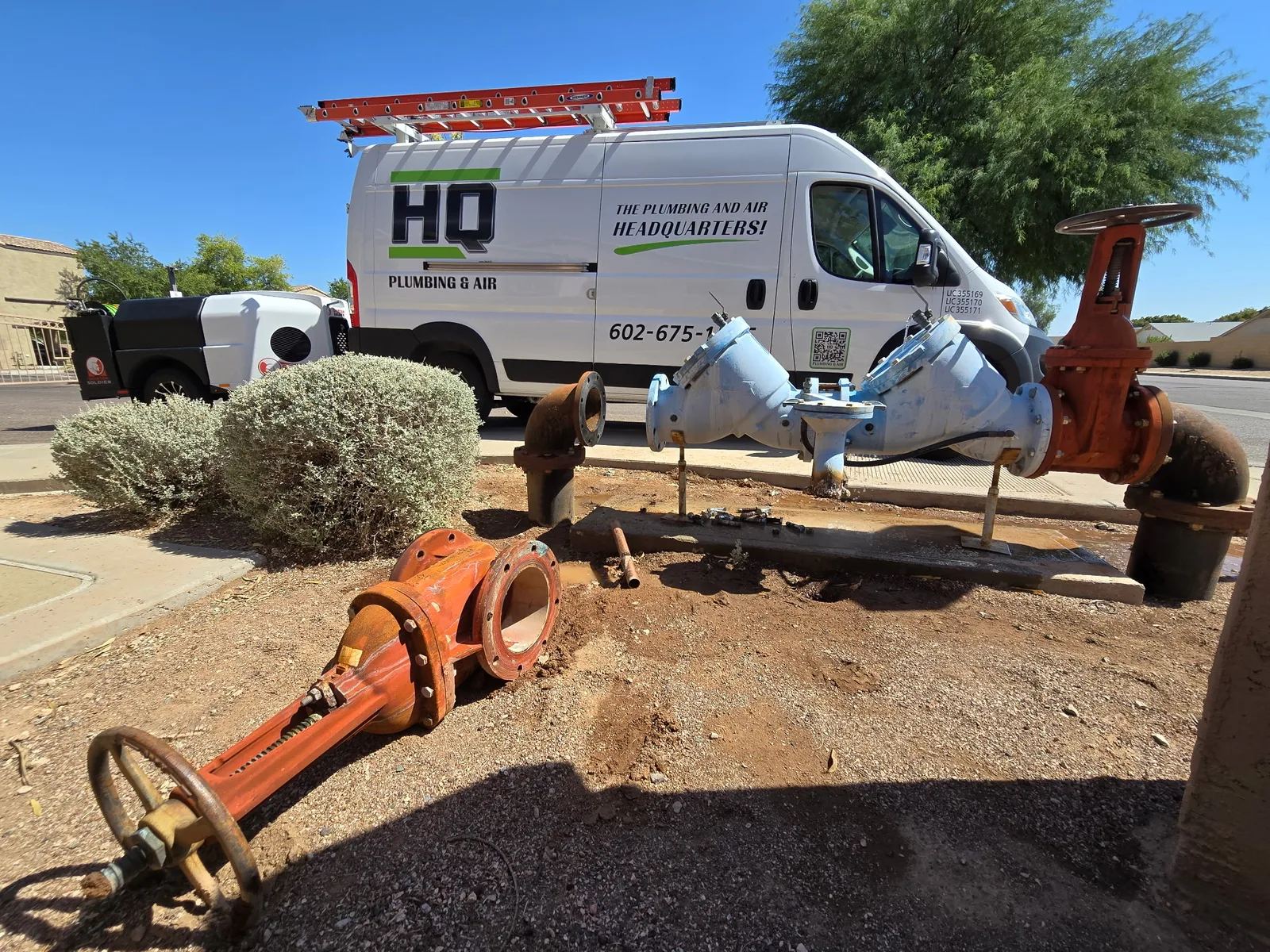
Grease Interceptor Inspection After the Pump-Out
A pump-out empties the tank. It does not tell you whether the parts inside still work. This is the look that does, with findings you can file.
An inside inspection is a look at every internal part of the interceptor after a licensed hauler has pumped it empty. HQ's three-person crew checks baffles, fittings, walls, floor and access, chips off hardened grease the pump truck left behind, and gives you written findings you can file and show a city inspector.
The rules that apply
Each rule links to the official text we read it from. Cities change these, so check the source before a big decision. Last checked 2026-10-04.
Inspections are unannounced and often off hours
PhoenixPhoenix commercial inspections are unannounced because the point is to see how a kitchen runs day to day, and inspectors often come off hours to limit the impact on the business.
Source: Phoenix FOG BMP Manual, what to expect from an inspectionWhat the inspector checks in the tank
PhoenixThe inspector checks whether parts are missing or the interceptor has rotted out, and how much grease it holds, to judge whether the pumping schedule is adequate. Records must be on site for three years.
Source: Phoenix FOG BMP Manual, routine inspectionsA finding comes with a deadline, and extensions go in writing
PhoenixThe inspector issues a requirement to clean, replace or repair, with a time frame based on the impact on the sewer and how much work it takes. Extensions can be granted if requested in writing, but the city can still take enforcement action if a blockage happens in the meantime.
Source: Phoenix FOG BMP Manual, end of inspectionDevice condition
TempeTempe inspections look for grease control devices in good condition with no holes, missing or broken parts or severe corrosion, serviced by a permitted hauler, with pump-out records on site.
Source: Tempe FOG program pageWritten records of repair, not just cleaning
MesaThe owner keeps written records of all cleaning, repair, calibration and maintenance for at least three years at the facility, available to the city on request.
Source: Mesa City Code 8-4-22(D)Cleaning trigger and record contents
ChandlerCombined grease and solids should not exceed 25 percent of the device's capacity, and grease seen leaving the device means the cleaning frequency must go up. Records include dates, the servicer and the nature of service performed.
Source: Chandler food service establishments pageScottsdale's inspector is Water Quality
ScottsdaleScottsdale's Water Quality department inspects each restaurant and verifies traps and interceptors are cleaned and maintained, and cleaning must be documented.
Source: Scottsdale grease interceptor guidelinesWhat an inside inspection is, and what a pump-out is not
A pump-out empties the tank. An inspection tells you whether the tank still works. The pump truck driver sees the lid, the grease cap and the level, then pumps. An inside inspection happens after that, while the tank is empty and every wall, fitting and seam is visible. That is the only time most of those parts can be seen at all.
Phoenix's FOG manual points at this moment. It tells operators to witness the cleaning and calls it a good time to inspect for damaged or missing parts. Most operators do not have the gear or the training to go look, and should not try. See why on our confined-space entry page.
What we check
A licensed hauler pumps first. HQ does not pump. Our three-person crew then goes in with fresh-air intake and a tripod and harness, and works through the tank in the order water travels.
- Inlet fitting and its down spout. Present, secure, and the right length for your city. Mesa, for example, sets 18 inches minimum.
- Baffles and partition walls between chambers: cracks, lean, gaps, missing sections.
- Outlet tee or standpipe, cover and down spout.
- Walls, floor and ceiling. Corrosion, holes and loss of surface. Phoenix and Tempe both name rot and severe corrosion.
- The pass-over baffle. Grease that hardens here is not always removed by pumping, so we chip it off by hand.
- Lids, grade rings and access. Whether the next pumper and the next inspector can reach everything.
For what each part does, see what happens when a baffle or tee breaks.
What you get in writing
You get findings: what was checked, what was wrong, what we did, and what we recommend. That matters because the paper is what an inspector asks for. Phoenix requires three years of records on site. Mesa's code names repair and maintenance in the records, not only cleaning. Chandler lists the nature of service and gives replaced baffle as its example.
A clean finding is useful too. If an inspector arrives next week, a dated report from after your last pump-out shows the interceptor was checked, and which parts were sound. Keep it with your pump tickets. The free grease trap maintenance log is a good place for the dates.
How to be ready for a city inspector
Assume the inspector comes unannounced, since Phoenix says they do. Here is a short preparation list.
- 1Keep three years of pump tickets and repair records on site, where any shift can find them.
- 2Know where every lid is and make sure each one opens. Phoenix wants interceptors free from obstructions and easy to reach.
- 3Know how full the tank usually runs. Phoenix inspectors check grease depth to judge the schedule, and Chandler's rule of thumb is 25 percent.
- 4Have the last inside inspection on file, with any repair dates.
- 5If a requirement already has a deadline, keep the letter and plan the repair before the date. Extensions must be requested in writing, and they do not stop enforcement if a blockage happens.
Our page on what city inspectors check on a grease trap covers the rest of the walkthrough.
When this is the wrong answer
If the tank is not due for a pump-out and nothing looks wrong, you do not need an entry for its own sake. Entering a confined space is the most involved part of any visit, so we would rather you inspect at a pump-out you were already booking. If you only need to know whether the tank is full, ask the pumper to measure the grease and solids depth.
And if your tank is clearly failing, with spalled walls and missing parts, you probably need a repair or replacement estimate, not an inspection. See interceptor repair and replacement.
Booking an inspection
Tell us your city, the tank size and when the pumper is coming. We can line our crew up right behind the truck, as laid out in pump-out and repair coordination. We offer 24/7 emergency service, free estimates and an upfront price before work starts. Related: grease trap and interceptor service and restaurant plumbing.
Services and tools
Codes and permits
What does a city inspector check at a grease trap?
Inspectors look at your pump-out records, the condition of the trap or interceptor, whether every grease-bearing fixture is plumbed to it, and outside areas like the tallow bin and dumpster. In Phoenix the visit is unannounced and often after hours. Keep records on site for three years.
Read full answer: What does a city inspector check at a grease trap?What happens when a grease interceptor baffle or tee breaks?
A broken baffle or outlet tee lets grease and solids slip past the tank, so an interceptor can pass grease toward the sewer even when it is not full. Have a pumper empty it, inspect every internal part, repair or replace what failed, log the work, and ask your city whether the fix needs a permit.
Read full answer: What happens when a grease interceptor baffle or tee breaks?What should a restaurant grease trap log record?
Record the service date, who did it (hauler name and address), what was done, how much material was removed, and where it was disposed of. Keep the log and invoices on site for three years in Phoenix, Chandler, Mesa, Scottsdale and Surprise, and have them ready when the city asks.
Read full answer: What should a restaurant grease trap log record?What grease pumping records must a Phoenix restaurant keep?
Phoenix City Code 28-15 requires food service operators to keep records of every cleaning, the volume of waste removed, the device capacity, waste disposal, and any repair, replacement or maintenance. Keep them at the facility for at least three years from the date created, and hand them to the city's Director on request.
Read full answer: What grease pumping records must a Phoenix restaurant keep?Related commercial services
Baffle, tee and standpipe repairs inside the tank, what inspectors cite, and how the pumper and repair crew are sequenced.
How a failed baffle shows up, how it gets repaired, and the point where the honest answer is a new tank.
Which fitting does what, what Mesa's code says about down spout length, and how a missing tee gets replaced.
Flow control, gaskets and lids on indoor traps, cleaning versus replacing, and the four-fixture rule that decides what you may install.
The signs a tank is past repair, what plan review wants in Phoenix, Mesa, Chandler and Scottsdale, and what installation involves.
Traffic-rated covers, risers, manway sizes and access rules, and the signs a lid needs attention now.
Want the Inside Checked?
Talk to a real dispatcher who knows commercial work. Upfront pricing before work starts, 24/7 for emergencies.