
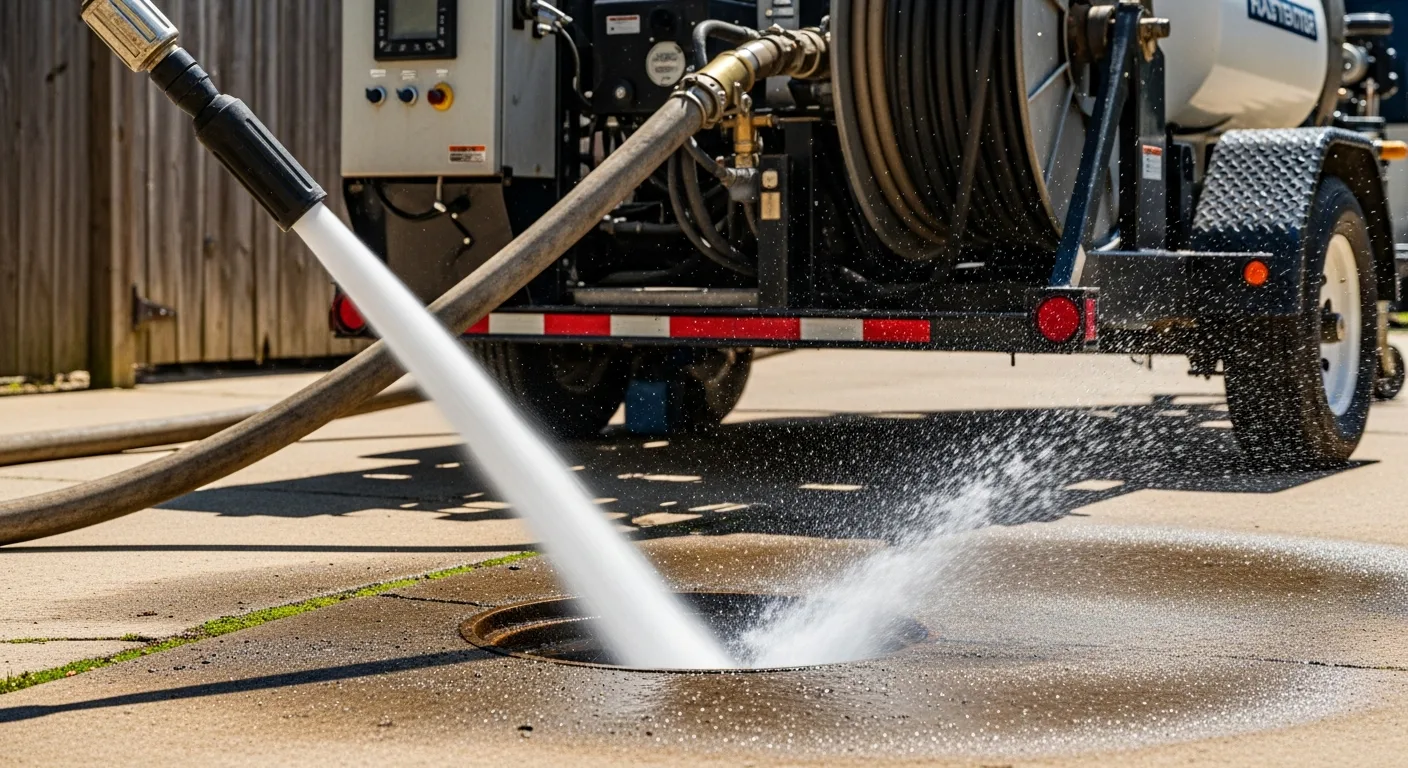
Scheduled Commercial Drain Maintenance in the Valley
Recurring jetting of the lines that keep clogging, logged by date on your account, so a stoppage becomes a calendar item instead of a closed dining room.
A scheduled drain maintenance program jets the lines that keep clogging on a calendar and logs each visit by date on your account. HQ runs this routinely for restaurant accounts, for example jetting the trunk lines into the main twice a year. It fits grease-heavy kitchens and aging buildings, not broken pipe.
The rules that apply
Each rule links to the official text we read it from. Cities change these, so check the source before a big decision. Last checked 2026-10-04.
Maintenance is the owner's duty
Phoenix (IPC 102.3)Plumbing systems must be maintained in proper operating condition in a safe and sanitary condition, and the owner or the owner's authorized agent is responsible for maintenance. The code official can require reinspection.
Source: 2024 IPC Chapter 1 as adopted by Phoenix, Section 102.3Plumbing in good repair
Federal food code, adopted by Maricopa CountyIn a food establishment the plumbing system must be repaired according to law and maintained in good repair. A kitchen that waits for stoppages to find its drain problems is not maintaining its plumbing, it is reacting to it.
Source: FDA Food Code 2017, Section 5-205.15Service records stay on site for three years
PhoenixMaintenance records, including invoices from third-party service contractors, must be available on site for three years, and the user or owner must be able to show the city that maintenance requirements and frequencies are being met.
Source: Phoenix FOG BMP Manual, interceptor maintenance and recordsGrease control cuts routine jetting and back-billing
PhoenixPhoenix tells operators that keeping FOG out of the plumbing reduces the likelihood of a grease blockage in or downstream of the facility, cutting the need for routine jetting of the sewer lines, the chance of closing for an emergency overflow, and the chance of downstream damage the business could be back-billed to fix.
Source: Phoenix FOG BMP Manual, why it mattersInterceptor pumping schedule
PhoenixHydromechanical interceptors must be pumped every 30 days and never go past 90. Gravity interceptors at food service establishments that capture FOG must be pumped at least every 3 months. Jetting visits should fit around those dates, since what is loosened ends up in the interceptor.
Source: Phoenix FOG BMP Manual, how often to pumpCamera first, then clean
Phoenix (city practice)Phoenix cleans about 25 to 30 percent of its more than 5,000 miles of sewer each year, and a sewer TV crew inspects with a camera before a cleaning crew is called out, based on what the camera shows.
Source: Phoenix Water Services, Sewer Cleaning FAQs, questions 2 and 3Spend effort where the problems are
Federal (EPA fact sheet)EPA's sewer cleaning and inspection fact sheet cites a study finding that 80 percent of problems occur in 25 percent of a system, and calls documentation of inspections critical to a successful maintenance program.
Source: EPA Collection Systems O&M Fact Sheet: Sewer Cleaning and InspectionWhat a maintenance visit covers
A maintenance visit jets the lines that have a history of clogging, before they clog. For a restaurant account, that is usually the trunk lines that carry the kitchen branches into the main, plus the branches that serve the fixtures that have caused trouble. It is the same work we do on a stoppage call, done on your schedule instead of in the middle of a rush.
We do the work before opening or after close, and the inside portion usually takes one to two hours. If the line has not been looked at in a while, a camera pass shows what the wall looks like and whether it needs more than jetting.
What gets logged
Every visit is recorded by date on your account. That matters more than it sounds. With the date of the last jetting on file, the next visit is scheduled from the record, not from memory. One restaurant account we serve is on a June and October rhythm, and the log is what keeps it there.
Your invoices are also your paper trail. Phoenix's FOG manual says service invoices need to be on site for three years and available to the city on request, and that is the standard worth keeping for drain service too. We also suggest keeping your own log next to it. Our free grease trap maintenance log is a simple place to do that, and the date of every jetting visit belongs in it.
How the interval gets set
The interval comes from your stoppage history, not from a formula. We look at how often the line has stopped, what a camera shows, and how much grease the kitchen puts down it. EPA's sewer cleaning fact sheet cites a finding that 80 percent of problems occur in 25 percent of a system, which is why we concentrate on the branches and trunk lines that already have a record instead of cleaning everything equally. Phoenix does the same on a city scale: it cleans roughly a quarter to a third of its sewers each year and sends a camera first.
Two things move the interval. A kitchen with heavy fryer and pan traffic puts more grease down the line than a sandwich counter. And a line with scale, roots or a sag clogs faster than a clean one, which is a repair question, not a cleaning one.
How it fits with interceptor pumping
Pumping and jetting are separate jobs that work together. Phoenix wants hydromechanical interceptors pumped every 30 days and gravity interceptors at least every three months. We do not pump, and a licensed hauler does. We coordinate the timing, so a jetting visit lands shortly before a pump-out and the hauler removes what the jet loosened. See our grease trap service for the repair and inspection side.
Who it fits, and who it does not
A maintenance program fits:
- Restaurants and bars whose kitchen lines carry grease and starch. See restaurant plumbing.
- Apartment buildings and HOAs with older kitchen stacks. Our page on apartment building drain cleaning covers the stacks.
- Facilities with restrooms that stop up repeatedly, once a camera has shown the cause. See commercial restroom repeat stoppages.
It does not fit:
- A line with a break or a sag. Cleaning a broken pipe on a schedule is paying to wash out a defect. A camera inspection comes first, then repair.
- A building with new pipe and no stoppage history. There is nothing to prevent yet. Keep the log and call us if that changes.
- A one-time problem. If the cause was a dropped object, a single cleaning is the answer.
What a program does not replace
It does not replace your daily habits. Scraping plates, using strainers and keeping grease out of drains is cheaper than any cleaning visit. The city's own FOG manual says it plainly, and it does not replace the interceptor pumping Phoenix requires. A program also does not make a bad line good. If the camera shows damage, we say so and propose the repair.
Starting a program
Call with your type of business, your stoppage history and the date of your last cleaning, and we will recommend a starting interval and put the first visit on the calendar. We give free estimates and an upfront price before work starts, and we run 24/7 emergency service for the stoppage that happens between visits. See commercial drain cleaning and hydro jetting for the services behind it.
How often should a commercial building have its drains cleaned or jetted?
Set commercial drain-cleaning intervals from grease load, roots, pipe condition, clog history and camera findings. The reviewed IPC maintenance rule and Phoenix/Scottsdale programs do not give one interval for all building drain lines. Grease interceptors have separate requirements; check the applicable local rules.
Read full answer: How often should a commercial building have its drains cleaned or jetted?Why does the same drain keep clogging?
A drain that keeps clogging has a root cause that simple clearing leaves behind: a blocked vent, a partial obstruction a snake only bored through, a low spot (belly) in the pipe, grease or hard-water scale recoating the walls, or a developing main-line problem. A camera inspection finds the real cause.
Read full answer: Why does the same drain keep clogging?Grease trap pumping vs cleaning vs jetting: which is which?
Pumping and cleaning are one job on the grease device: remove everything inside, scrape the walls, leave it empty. Jetting is a different job on the pipes: high-pressure water scrubs grease off the drain and sewer lines downstream. Neither replaces the other.
Read full answer: Grease trap pumping vs cleaning vs jetting: which is which?Why camera the line after hydro jetting?
A camera pass after jetting documents visible cleaning results and defects that buildup may have hidden. Ask for the video and any limits from access, standing water or visibility. It does not prove every branch is clean, measure remaining wall thickness or guarantee the pipe is structurally sound.
Read full answer: Why camera the line after hydro jetting?Sources
- 2024 International Plumbing Code as adopted by Phoenix, Chapter 1, Section 102.3
- FDA Food Code 2017, Section 5-205.15
- City of Phoenix: FOG Best Management Practices for Food Service Establishments (June 2024)
- City of Phoenix Water Services: Sewer Cleaning FAQs (May 2026)
- EPA Collection Systems O&M Fact Sheet: Sewer Cleaning and Inspection (EPA 832-F-99-031)
Related commercial services
Which kitchen drains clog first, how they are cleared from the fixture side, and what the air gap rules mean for the fix.
Why interior branch lines need a small hose, what a cable leaves behind, and how the job is paired with a main line pass.
Where the private main ends and the city sewer begins, why a cleanout decides the job, and why the main and the branches get jetted as a pair.
Why soda and ice well drains stink, what Maricopa County and the plumbing code say about their air gaps, and what a cleaning visit does.
How interior drain work is scheduled around service, what the window looks like, and what happens when a stoppage hits at night.
How to tell a fixture problem from a line problem, why a cable alone keeps failing, and what the repeat call sequence looks like.
Want Drains Cleaned on a Schedule?
Talk to a real dispatcher who knows commercial work. Upfront pricing before work starts, 24/7 for emergencies.