
Restaurant Lateral Line Jetting in Phoenix
A small hose runs the branch lines from your kitchen fixtures to the main, from the inside, so the grease and starch come out instead of getting pushed along.
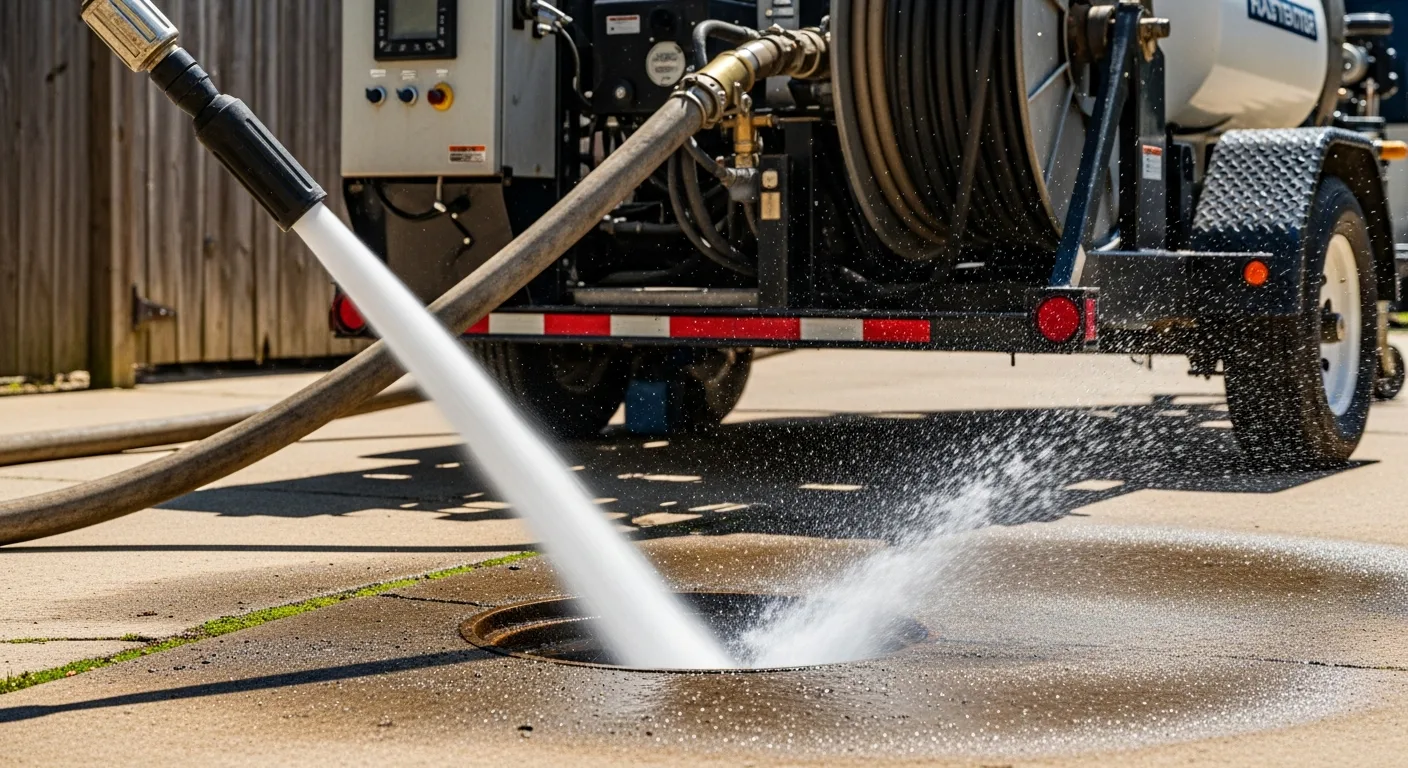
Jetting a restaurant lateral means running a small hose through the branch pipes that carry kitchen fixtures to the main, from the inside and with the flow. It strips the grease and starch coating that a cable leaves behind. HQ does it before opening or after close, usually in one to two hours.
The rules that apply
Each rule links to the official text we read it from. Cities change these, so check the source before a big decision. Last checked 2026-10-04.
Cleanout spacing on horizontal drains
Phoenix (IPC 708.1.1)Horizontal drainage pipes inside a building need cleanouts at intervals of not more than 100 feet, measured along the pipe. Past that, a jetter has nowhere to start without opening a fixture or a trap.
Source: 2024 IPC Chapter 7 as adopted by Phoenix, Section 708.1.1Cleanout at turns of more than 45 degrees
Phoenix (IPC 708.1.4)A cleanout is required at any change of horizontal direction greater than 45 degrees. Where several turns fall within 40 feet of pipe, the first cleanout can serve all of them.
Source: 2024 IPC Chapter 7, Section 708.1.4Cleanouts clean in the direction of flow
Phoenix (IPC 708.1.9 and 708.1.6)A cleanout is arranged to clean piping only in the direction the drain flows, and a removable fixture trap counts as a cleanout equivalent. So a lateral is jetted downstream from a point above the clog, not from the far end back.
Source: 2024 IPC Chapter 7, Sections 708.1.9 and 708.1.6Required cleanouts cannot be hidden
Phoenix (IPC 708.1.11)Required cleanouts cannot be installed in concealed locations such as inside walls, floor and ceiling assemblies or below grade without extension to grade, and cleanout plugs cannot be covered with mortar or plaster.
Source: 2024 IPC Chapter 7, Section 708.1.11Match the hose to the pipe
Manufacturer manualRIDGID's jetter manual pairs 3 to 4 inch floor drains, lateral lines and grease traps with a 1/4 inch hose and 2 to 3 inch kitchen sink and stack lines with a 3/16 inch hose, and warns never to run the jetter with the hose end outside the drain because the hose can whip.
Source: RIDGID KJ-1350 and KJ-1750 Water Jetter Operator ManualSlope upstream of an interceptor
Phoenix (amended IPC 704.1)Lateral piping that drains to a grease interceptor must slope at least 1/4 inch per foot. A lateral that holds water after jetting is a slope problem, which cleaning cannot fix.
Source: 2024 IPC Chapter 7 as adopted by Phoenix, Section 704.1Also: Phoenix amendments to the 2024 IPCInterceptor cleaning cadence
PhoenixHydromechanical interceptors must be pumped and cleaned every 30 days and never go past 90 days. Gravity interceptors at food service establishments that capture FOG must be pumped at least every 3 months. What jetting loosens ends up in this device.
Source: Phoenix FOG BMP Manual, how often to pumpWhat a lateral is, and why it clogs before the main
In a kitchen, we call the branch pipes that run from a group of fixtures to the building drain the laterals. They are the 2 to 4 inch lines under the slab or in the wall behind the cook line. The code has its own words for these pieces, but the job is the same: they carry warm, greasy, starchy water from the fixtures to the main, and they cool and coat as they go.
They clog before the main for a simple reason. They are smaller, they sit closest to the grease sources, and the water in them has not been diluted by the rest of the building. A branch that serves a dish machine and two pot sinks sees more grease per gallon than anything downstream of it.
How the jetting works from inside
We jet laterals from the inside, through an access point your kitchen already has. That is usually a floor sink receptor, a cleanout, or a fixture trap pulled off. The 2024 plumbing code treats a removable trap as a cleanout equivalent, and it says a cleanout should let you clean only in the direction of flow. So we start above the clog and work downstream.
The tool is a small-bore hose with a nozzle that throws jets backward. The jets pull the hose forward and scour the pipe wall as the hose retracts. A cable cannot do that. It drills a hole through the grease and leaves the coating on the wall, which is why a cable-cleared lateral often backs up again within weeks.
Safety is part of the method. Manufacturers warn that a jetter hose can whip if its end leaves the drain, so the hose goes in before the pump comes up and the nozzle stays in the pipe. We protect the floor and keep the water going down the line instead of across the tile.
When the pass is done we flush the line and run your fixtures to confirm. If the run is long or has had trouble before, we put a camera through it to see the wall and look for sags. Our sewer camera inspection service covers what that shows.
Why the lateral and the main are jetted as a pair
Loosened grease has to go somewhere, and the pipe it goes into is the main. If we jet only the laterals, we push the debris into a main that is already coated, and it can stop right at the first bend. So we clear laterals first and follow with a pass on the main, which has its own page: restaurant main line jetting.
There is a second place the debris goes: your grease interceptor. Phoenix wants hydromechanical units pumped every 30 days and gravity units at least every 3 months, so timing a lateral jetting visit shortly before a scheduled pump-out lets the hauler remove what we loosened. We do not pump, and we do not need to. A licensed hauler does that, and we can coordinate the timing with them.
Do you need a jet, or is a cable enough?
A cable is enough when a single object or a short plug sits near the fixture. A jet is the right call when the problem is coating, when the same fixture clogs again within weeks, or when several fixtures on one branch slow down together. If you are not sure, a quick cable pass first costs little time, and what the cable pulls out tells us whether to jet.
When jetting is the wrong answer
- The lateral has a belly or a break. The code requires a minimum of 1/4 inch per foot on pipes that feed an interceptor in Phoenix. If a camera shows standing water that jetting cannot move, the pipe has settled or broken, and the fix is a repair. See sewer repair.
- There is no way in. A lateral with no cleanout and no removable trap needs access first. Required cleanouts cannot be hidden, so a missing one is a code gap as well as a nuisance.
- One fixture is slow and the rest are fine. That is a kitchen drain cleaning job, not a lateral job.
- The slow drains all start at the main. Then the main is the target.
Scheduling the visit
Tell us the fixtures on the slow branch, how often it recurs, and when your interceptor was last pumped. We schedule interior work before opening or after close, usually one to two hours inside. We give you an upfront price before work starts, and estimates are free. Related: hydro jetting, commercial drain cleaning, and restaurant plumbing.
Services and tools
Codes and permits
How do I tell a main sewer line clog from a single drain clog?
If only one fixture drains slowly, the clog is local to that branch line. If several fixtures act up at once, or running one fixture makes another gurgle or back up, the blockage is in the shared building drain or main sewer line. Waste surfaces at the lowest opening first.
Read full answer: How do I tell a main sewer line clog from a single drain clog?Cable or jetter for a commercial main line?
The blockage decides. A cable machine cuts roots and pulls out solid objects. A jetter cleans grease, scale, and sand off the whole pipe wall. Commercial main lines are larger and usually coated with buildup, so many jobs use both, cable first to open the line, then a jetter to clean it, with a camera before and after.
Read full answer: Cable or jetter for a commercial main line?Can a drain be hydro jetted when the property has no accessible cleanout?
An inaccessible cleanout does not automatically rule out jetting, but the plumber must establish a suitable drain opening, hose route and equipment setup. RIDGID's KJ-2200/3100 instructions allow fixture removal for access and prohibit feeding its hose through an installed fixture. Camera access alone does not establish jetter access. Adding a permanent cleanout may be the better choice.
Read full answer: Can a drain be hydro jetted when the property has no accessible cleanout?Why is there grease in my sewer line after the interceptor?
Grease gets past an interceptor when it is overdue for cleaning, a baffle or part is missing, hot water or emulsifiers push grease through, or a fixture bypasses the device. Phoenix and Chandler both name these problems. Fix the device first, then jet the line to remove what already coated it.
Read full answer: Why is there grease in my sewer line after the interceptor?Sources
Related commercial services
Which kitchen drains clog first, how they are cleared from the fixture side, and what the air gap rules mean for the fix.
Where the private main ends and the city sewer begins, why a cleanout decides the job, and why the main and the branches get jetted as a pair.
Why soda and ice well drains stink, what Maricopa County and the plumbing code say about their air gaps, and what a cleaning visit does.
How interior drain work is scheduled around service, what the window looks like, and what happens when a stoppage hits at night.
How to tell a fixture problem from a line problem, why a cable alone keeps failing, and what the repeat call sequence looks like.
Why floor drains back up or stink in the Valley, what a trap primer does, and what a cleaning visit includes.
Branch Lines Slow or Backing Up?
Talk to a real dispatcher who knows commercial work. Upfront pricing before work starts, 24/7 for emergencies.