
Plumber in Downtown Phoenix
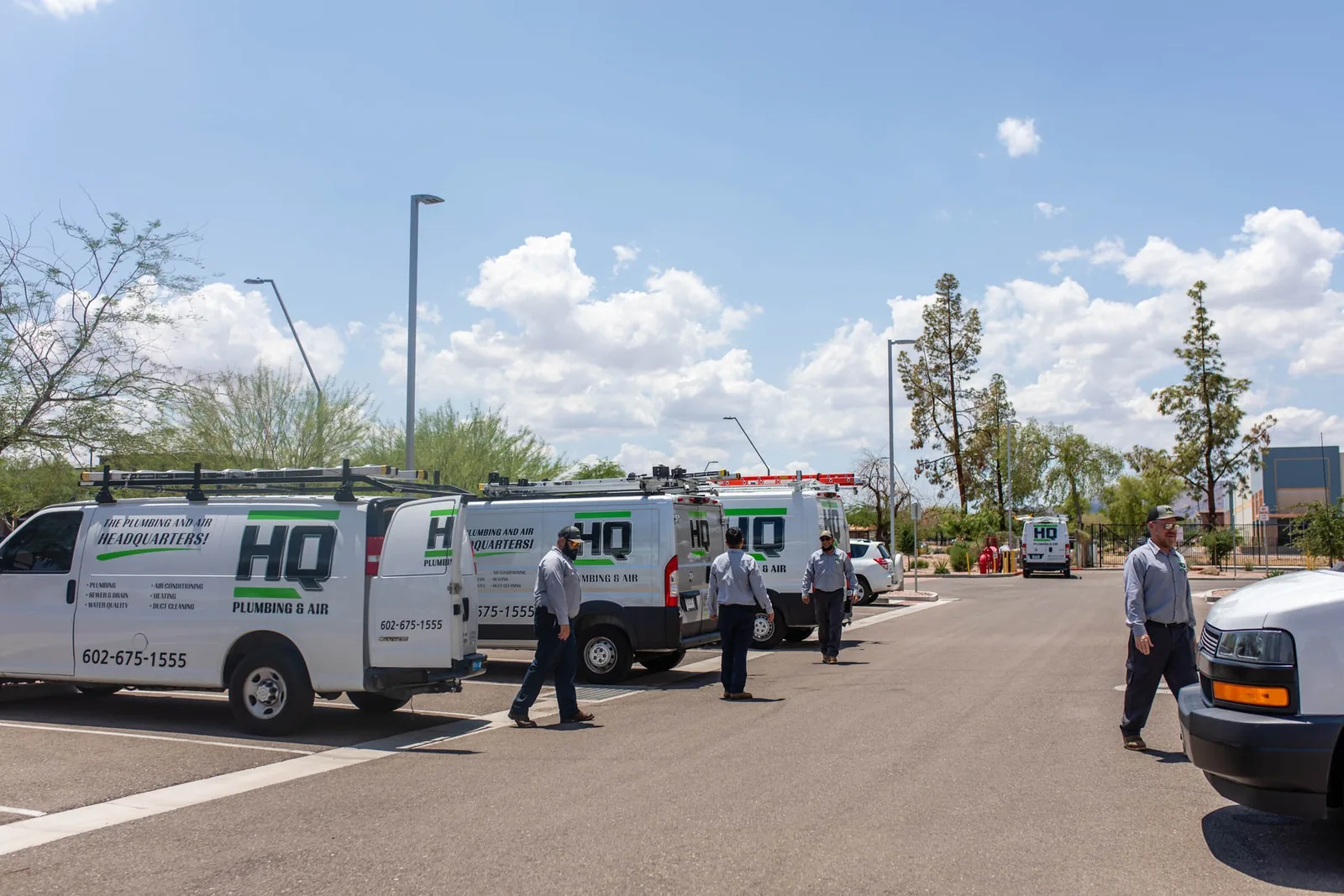
From historic lofts to high-rises and older commercial buildings, HQ Plumbing & Air dispatches licensed plumbers across Downtown Phoenix around the clock.
Plumbing in Downtown Phoenix
Need a plumber in Downtown Phoenix? HQ Plumbing & Air sends licensed plumbers to Downtown homes, condos, restaurants, bars and offices at any hour, for leaks, slab leaks, drain and sewer clogs, water heaters, grease lines, backflow assemblies and gas lines. For an emergency we typically have a plumber on site within two hours of your call. Downtown packs every era of plumbing into a few square miles: bungalows from before 1940 in the historic districts, converted warehouses, and condo and apartment towers built in the last 15 years. We find out what you have before we touch it, work around building rules on parking, elevators and water shutoffs, explain what we find in plain words, and agree the price with you before any work starts.
Many Downtown Phoenix buildings were originally built in the early-to-mid 1900s and have galvanized steel supply lines that are now badly corroded. We frequently encounter slab-level leaks and aging drain stacks in older loft conversions. Parking and access logistics for our trucks are something we handle every day in the urban core.
- Homes in ZIP codes 85003 and 85004
- About 13,600
- Homes built before 1950
- About 2,700
- Homes in buildings of 50 or more
- About 6,200
- Water hardness
- 10 to 17.6 grains per gallon
Bungalows, lofts and towers: Downtown's homes
Census estimates for ZIP codes 85003 and 85004, which take in Downtown Phoenix and the historic neighborhoods around it, count about 13,600 homes. The two halves are very different. In 85003 the median home was built in 1971 and about 1,500 homes date from 1939 or earlier. In 85004, the median is 2011, and about 3,700 of its 7,100 homes were built in 2010 or later.
Fewer than one in four Downtown homes is a detached house. About 6,200, close to half, are in buildings of 50 or more homes. That mix decides the first step on a plumbing call: a 1920s bungalow with its original pipe, a loft in a converted warehouse, and a condo on the 20th floor of a new tower each fail in different ways.
What wears out in a Downtown house built before 1950
A house built before 1950 may still have galvanized steel water pipe, a cast iron or clay sewer line, and fixtures and valves that have been patched many times. Galvanized pipe rusts from the inside until the pressure drops at every tap or the water runs brown after it sits. Cast iron scales and cracks, clay joints open up and let roots in, and an old sewer line can sag under a yard or a driveway.
We start with a pressure test and a look at the pipe we can reach, and a camera run from the cleanout shows the drain and sewer line from the inside while you watch. Then we show you which runs are failing and which still have years left, so you can choose between a repair, rerouting one line, or repiping.
Leaks in Downtown condos, lofts and towers
In a building with shared walls and floors, a leak rarely stays in one home. Water from a supply line, a water heater in a utility closet or a shower pan can reach the unit below before anyone sees it. If you find water coming through a ceiling or wall, shut off the water to your unit or the fixture if you can reach the valve, then tell your building's manager or association, because the source may be in another unit or in a pipe the building shares.
Your association's governing documents say which pipes, valves and fixtures are yours and which belong to the building, so read them or ask the manager before work starts. We find where the water is coming from, repair what is in your unit, write down what we found for you and the manager, and plan around the building's rules for parking, freight elevators, work hours and water shutoffs.
Restaurants and bars: grease interceptors and Phoenix's rules
Downtown's restaurants, bars and food halls fall under Phoenix's fats, oils and grease program. City Code 28-15 says the business must keep its grease interceptor in continuously effective operating condition, with grease and solids removed, the inside cleaned and its internal parts repaired, and must keep the records at the site for at least three years. The city's 2024 manual says a gravity interceptor at a food service business is pumped and cleaned at least once every three months, a hydromechanical grease trap every 30 days, and that most interceptors stop working well once grease and solids fill 25 percent of the device.
Phoenix inspections are unannounced, so a slow kitchen drain or a missed pump-out shows up at the worst time. We clear kitchen and floor drains, jet grease out of the lines to the interceptor, run a camera to find where grease is building up, and repair or replace interceptor parts.
Backflow testing for Downtown businesses and buildings
Most Downtown commercial buildings have at least one backflow assembly, on the water service, the irrigation or the fire line. Phoenix City Code Chapter 37 requires an approved assembly where a property has a backflow hazard, a test at least once a year by a certified tester, and the results filed with the city. A missed test can lead to a notice from the city and, in the end, a water shutoff.
HQ's certified technicians test and certify backflow assemblies, file the results with the city, and repair or replace assemblies that fail or leak. Put the test date on a calendar for every assembly in the building, since each one has its own.
Who owns which pipe outside a Downtown building
Downtown is part of the City of Phoenix, so Phoenix Water Services supplies the water and owns the water and sewer mains. On the water side the line is drawn at the meter: a problem from the street to the meter is the city's, and a problem after the meter is the owner's. If water is running in the street or at the meter box, call Phoenix Water Services. If the meter keeps moving with every tap off, the leak is most likely on your side, and we find it with a line locator and listening equipment before anyone digs.
The sewer line from a building to the city main is the property owner's to clean and keep up. For a single-family home, Phoenix City Code 28-5.1 says that if the owner shows roughly where a break is and it turns out to be in the public right-of-way, the city verifies it and repairs that part. Our sewer camera and locator are how that spot is found, which decides whose dig it is.
Phoenix water, permits and the sewer bill
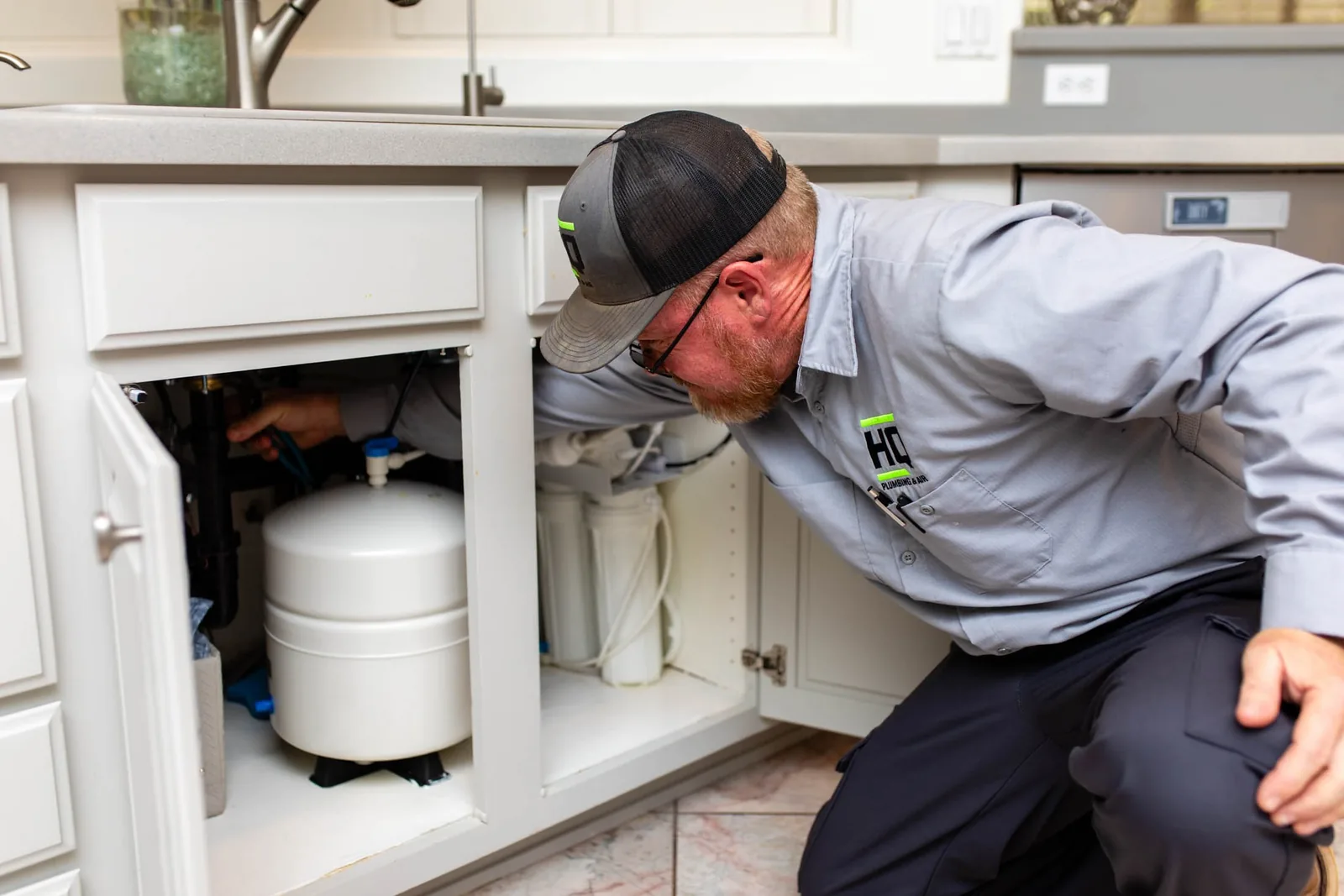
Phoenix's 2025 water quality report puts the city's water hardness at 10 to 17.6 grains per gallon across the system. That much mineral builds scale in water heaters, tankless heat exchangers, faucet cartridges and flush valves. We repair and replace tank and tankless water heaters, and install water softeners and filtration where scale keeps coming back.
Phoenix has enforced its 2024 building codes since August 1, 2025. Clearing a stoppage, stopping a leak, or replacing a fixture or valve in the same place needs no permit. Replacing a buried water or sewer line, or adding gas piping, is new work: it needs a permit and an inspection before it is covered, and we pull it and book the inspection. For homes, Phoenix sets the monthly sewer charge from average water use in the January, February and March billing cycles, so fix winter leaks fast and keep the plumber's invoice for a Sewer Fee Review.
How to choose a plumber in Downtown Phoenix
Arizona licenses plumbing contractors through the Registrar of Contractors. Before anyone works on your water, sewer or gas lines, look the company up on the ROC's contractor search to check that its license is current and covers the work, residential or commercial. Work by a licensed contractor is also what makes a homeowner eligible for the state's Residential Contractors' Recovery Fund if a job goes wrong.
What a plumbing job costs depends on the problem, the pipe, how hard it is to reach, the building's rules, and whether a permit is needed, so be wary of a firm price given before anyone has looked. HQ Plumbing & Air is family owned, licensed, bonded and insured. Estimates are free, the price is agreed before work starts, and our workmanship carries a two-year warranty. Call us any time, day or night, or send the form on this page and we will call you back.
Downtown Phoenix Areas We Cover
Our crews regularly work throughout Downtown Phoenix, including Roosevelt Row, Evans Churchill, Warehouse District, Civic Space Park area, CityScape, Copper Square and the surrounding areas. If you don't see your neighborhood listed, call us. Chances are we cover it.
We've worked in the densest parts of the metro, including multi-story commercial spaces, historic buildings with restricted access, and high-rise condos, and we know how to mobilize fast regardless of the job environment.
What We Do in Your Area
Do you work in high-rise and condo buildings in Downtown Phoenix?
Yes. We serve condos, lofts, and multi-story commercial buildings. We coordinate with HOAs and property managers and bring the right equipment for vertical access.
My Downtown Phoenix building has very old pipes. Can you help?
Absolutely. Older Downtown buildings often have galvanized steel supply lines and cast-iron drain stacks. We assess the condition, advise on spot repair vs. repiping, and handle both.
Is parking difficult for your trucks Downtown?
We plan for urban logistics. Our crews arrive in appropriately sized vehicles and have experience navigating parking restrictions in the Downtown core.
What is the phone number for City of Phoenix Water Services?
For a leak at the meter or in the street, or water that needs to be shut off by city staff, call the city's 24/7 water emergency line at 602-261-8000. For billing and other questions, Phoenix Water Services Customer Services is 602-262-6251, weekdays from 8 a.m. to 5 p.m. A leak after the meter is the owner's, and that is a call for a plumber.
Is Phoenix tap water safe to drink?
Yes. Phoenix publishes a water quality report every year, and its water meets federal Safe Drinking Water Act standards. It is hard, at 10 to 17.6 grains per gallon in the 2025 report, which affects taste, scale and fixtures, not safety. Water that runs brown or rusty from one tap usually points to old galvanized pipe in the building.
What plumbing work needs a permit in Phoenix?
Under Section 105.2 of the 2024 Phoenix Building Construction Code, plumbing work needs a permit unless it is on a six-item exempt list: stopping leaks unless a concealed pipe must be replaced, clearing clogs, same-spot fixture swaps, appliance hookups, a licensed contractor's in-kind water heater swap, and small secondary backflow work.
Read full answer: What plumbing work needs a permit in Phoenix?How do I verify a plumber's license in Arizona?
Use the Arizona Registrar of Contractors free public license search at roc.az.gov/search. Look up the plumber by license number, business name, or qualifying-party name, then confirm the license is Active, the classification matches your job, the bond is current, and the complaint history is clean before you sign anything.
Read full answer: How do I verify a plumber's license in Arizona?Why are slab leaks so common in Arizona?
A slab leak can develop when a buried supply pipe corrodes, rubs against concrete or soil, or is stressed by ground movement, thermal expansion or excessive pressure. Water chemistry can contribute to copper pitting, but hardness alone does not identify the cause. Leaks beneath a slab can remain hidden.
Read full answer: Why are slab leaks so common in Arizona?Does HQ Plumbing & Air really answer 24/7?
Yes. A real Phoenix dispatcher answers the HQ line day or night, including weekends and holidays. No answering service, no offshore call center. For true emergencies we dispatch a licensed plumber same day across the Phoenix metro. Call (602) 675-1555 anytime.
Read full answer: Does HQ Plumbing & Air really answer 24/7?Sources for this page
- Census Reporter: ZIP codes 85003 and 85004 (ACS 2024 5-year, tables B25024, B25034 and B25035)
- City of Phoenix: Fats, Oils and Grease Best Management Practices Manual (2024)
- Phoenix City Code Sec. 37-143 (backflow assemblies)
- City of Phoenix Water Services: General Service Issues
- Phoenix City Code Sec. 28-5.1
- City of Phoenix: 2025 Water Quality Report
- City of Phoenix: 2024 IBC Chapter 1 Administrative Amendments (Ord. G-7397)
- City of Phoenix: Submit a Sewer Fee Review
- Arizona Registrar of Contractors: Before you hire
Need a Plumber in Downtown Phoenix?
HQ Plumbing & Air dispatches licensed technicians to Downtown Phoenix around the clock. Call now for upfront pricing and fast response.