
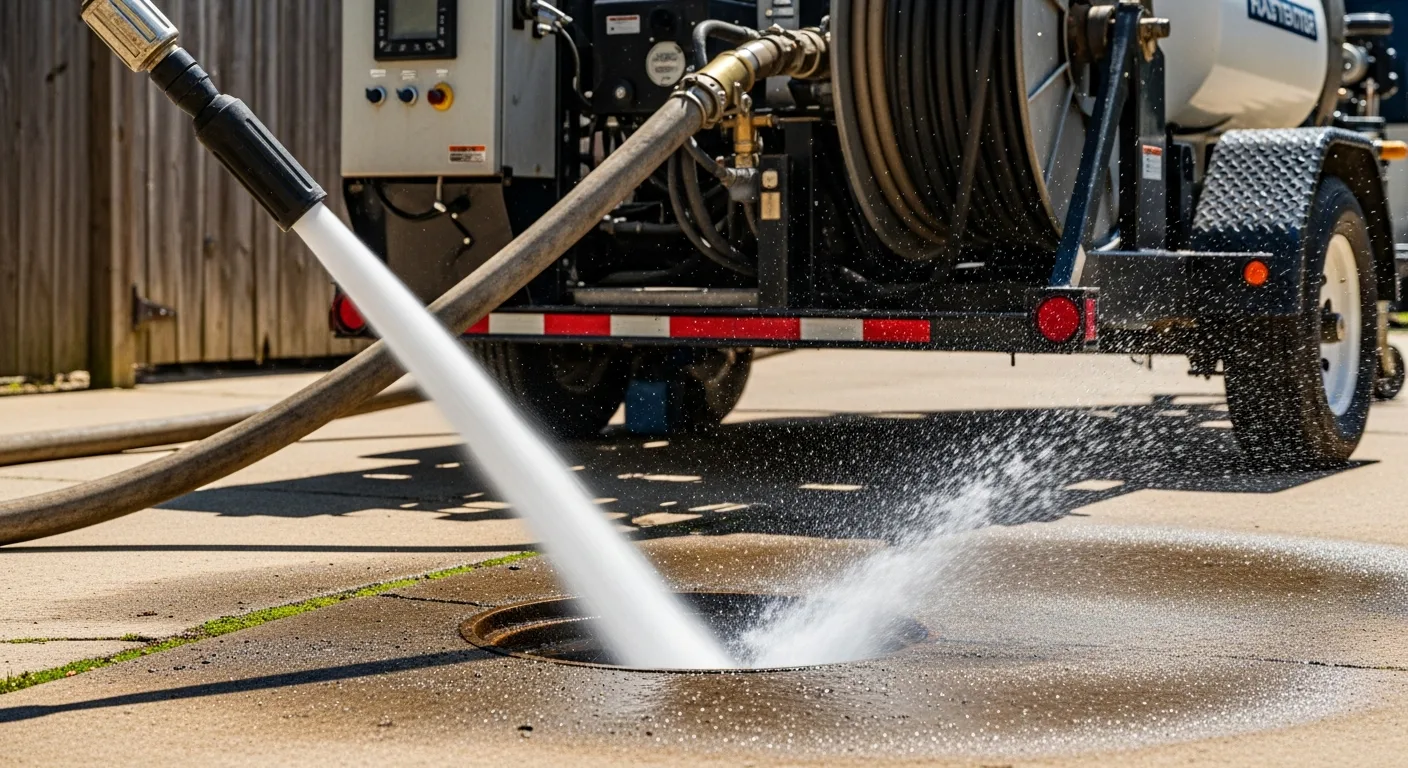
Hydro Jetting in Phoenix
High-pressure water that scours grease, roots and scale off the pipe wall instead of punching a hole through the clog, run from your cleanout to the city main.
Hydro jetting in Phoenix sends water at high pressure through your sewer or drain line to scour off grease, roots and scale that a cable only punches through. HQ jets from a cleanout down to the city main, then runs a camera to confirm the pipe is clean and intact. It suits lines that keep clogging, not broken pipe.
The rules that apply
Each rule links to the official text we read it from. Cities change these, so check the source before a big decision. Last checked 2026-10-04.
The line to the main is the owner's to clean
PhoenixHome or property owners are responsible for cleaning and maintaining the sewer line from the house to the connection with the city sewer main in the street or alley.
Source: Phoenix Water Services, General Service IssuesThe public sewer is off limits without a permit
PhoenixNo person may uncover, make any opening into, use, alter or disturb any public sewer or appurtenance without first obtaining a permit from the Department.
Source: Phoenix City Code 28-27Grease has to be removed, not dissolved
Phoenix (food service)Using chemicals, enzymes, proteins, bacteria, grease solvents or emulsifiers to temporarily dissolve fats, oils and grease is prohibited.
Source: Phoenix FOG Best Management Practices Manual (June 2024)A cleanout after every hydromechanical interceptor
PhoenixA two-way cleanout must be installed on the discharge side of all hydromechanical grease interceptors, so the line downstream can be cleaned back to the device.
Source: Phoenix amendment to 2024 IPC Sec. 1003.3.5.3Cleaning a line needs no permit
PhoenixClearing stoppages in pipes, valves or fixtures is exempt from a permit, as long as no valves, pipes or fixtures are replaced or rearranged.
Source: Phoenix PBCC, IBC Ch. 1 Sec. 105.2 (Plumbing item 2)When does a Phoenix line need jetting instead of a cable?
When the cable keeps working for a few weeks and then the line closes again. A cable opens a hole through the blockage. That gets water moving, but grease stays coated on the pipe wall and root hairs stay in the joints, so the next clog starts on day one. A jetter runs a hose with a rear-facing nozzle up the line; the water jets pull the hose forward and scour the full circumference of the pipe as it comes back. The pipe ends up clean wall to wall. See jetting versus snaking a main line and what hydro jetting is.
The usual Phoenix candidates are a restaurant lateral lined with grease, a house main with root intrusion at the joints, a cast iron drain built up with scale, and a soda or ice-well drain with syrup sludge. For a one-time stoppage, the cable usually gets it done; see Phoenix drain cleaning.
Why grease and roots win in Phoenix lines
Phoenix Water Services names grease and roots as the two main causes of sewer backups, and grease as the most frequent. Grease poured down a drain cools and hardens further along, and every layer catches the next. Roots go looking for water and find any crack or loose joint, then mat up inside the pipe. Cutting a root ball with a cable leaves the root stubs in place, and they grow back. Jetting removes the mat and the hair roots in the joint, though a joint that lets roots in will let them in again.
Phoenix's housing adds to it. About 40 percent of the city's homes were built before 1980, and older lines have more joints that have shifted.
Jetting for Phoenix restaurants and businesses
Phoenix's grease manual says kitchen grease that gets past your interceptor raises the need for routine jetting and can lead to downstream damage the business is back billed for. It also bans enzymes, bacteria and solvents that dissolve grease, because they only move it further down the line. Mechanical cleaning is what is left, and jetting is the thorough version.
For kitchens we jet laterals from inside and run the main to the city sewer, usually before opening or after close, and the work inside is typically one to two hours. Soda and ice-well drains get a jetting pass with cleaning solution. Accounts on a maintenance schedule get each visit logged on the account, which is the kind of record a Phoenix grease inspector or a landlord asks to see. Phoenix's 2024 code amendment requires a two-way cleanout on the discharge side of all hydromechanical grease interceptors, and that cleanout is where the jetter goes in. If your interceptor has none, adding one makes every future cleaning faster. See restaurant lateral line jetting and scheduled drain maintenance.
Jetting for Phoenix homes
At houses, the common reason is roots in the main, especially where mature trees stand near the sewer line. The city's advice is to keep new trees and shrubs away from the cleanout and the line, and to watch for slower flow when they are already close. A jetting pass followed by a camera tells you whether the line is just rooted or has a crack the roots are using. If it is cracked, jetting on a schedule is buying time, and a spot repair may be the better long-term answer. We'll show you the footage and let you choose.
Where jetting stops: your cleanout to the city main
We jet the private line from your cleanout to where it meets the city main. City Code 28-27 says no one may open into, use or disturb a public sewer without a Water Services permit, so the main and its manholes are the city's to clean. If the camera shows the main surcharging or blocked at your connection, that is a Water Services call. Cleaning a line needs no permit in Phoenix, so there is no paperwork on a jetting job.
When jetting is the wrong answer
Do not jet a pipe that is already broken. Water at jetting pressure in a collapsed section, an offset joint or a badly deteriorated cast iron or clay pipe can make the damage worse, which is why we camera older lines first when we suspect it. Read can hydro jetting damage old cast iron or clay. If the line is broken, the answer is a repair; see sewer repair. And if the clog is a single toy or a wad of wipes, a cable is faster and costs less.
How to book
Call with the address, how often the line clogs and whether there is a cleanout. We offer same-day service, 24/7 emergency service for backups, free estimates and upfront pricing before work starts. A camera run after jetting shows what the water left behind; see camera inspection after jetting and the Phoenix service area page.
What is hydro jetting?
Hydro jetting sends high-pressure water through a hose and a special nozzle that scours the full inside of a drain or sewer pipe. The blast cuts and flushes away grease, scale, sludge, and tree roots, leaving the pipe walls clean rather than just poking a hole through the clog.
Read full answer: What is hydro jetting?Cable or jetter for a commercial main line?
The blockage decides. A cable machine cuts roots and pulls out solid objects. A jetter cleans grease, scale, and sand off the whole pipe wall. Commercial main lines are larger and usually coated with buildup, so many jobs use both, cable first to open the line, then a jetter to clean it, with a camera before and after.
Read full answer: Cable or jetter for a commercial main line?Can hydro jetting damage old cast iron or clay pipe?
Hydro jetting can damage pipe if pressure, nozzle, temperature or technique is unsuitable, even when no defect was previously known. Thin, cracked or separated old pipe has additional risk. Inspect accessible sections and select settings for the material and condition; a camera cannot prove remaining wall strength.
Read full answer: Can hydro jetting damage old cast iron or clay pipe?Does hydro jetting keep tree roots from coming back?
No. Hydro jetting clears roots out of the pipe, but it does not close the crack or joint they grew through, and the tree keeps seeking water. To stop regrowth, seal or replace the pipe, remove the source, or schedule repeat cleanings based on what a camera shows afterward.
Read full answer: Does hydro jetting keep tree roots from coming back?Why camera the line after hydro jetting?
A camera pass after jetting documents visible cleaning results and defects that buildup may have hidden. Ask for the video and any limits from access, standing water or visibility. It does not prove every branch is clean, measure remaining wall thickness or guarantee the pipe is structurally sound.
Read full answer: Why camera the line after hydro jetting?Sources
- City of Phoenix Water Services: General Service Issues
- Phoenix City Code Sec. 28-27
- City of Phoenix: FOG Best Management Practices for Food Service Establishments (June 2024)
- City of Phoenix: 2024 IPC Amendments (Sec. 1003.3.5.3)
- City of Phoenix: 2024 IBC Chapter 1 Administrative Amendments (Sec. 105.2)
- Census Reporter: Phoenix, AZ (ACS 2024, table B25034)
Related commercial services
How a Phoenix leak gets found and fixed, who owns which side of the meter, and how a January leak raises a year of sewer bills.
What a camera run proves under Phoenix City Code 28-5, which repairs need a permit and inspection, and when to skip the camera.
Where the city's pipe ends, the galvanized replacement program, Phoenix's pressure and pipe rules, and how a repair gets permitted.
Who clears what in Phoenix, why grease and roots cause most backups here, and how to stop paying for the same clog twice.
What a Phoenix inspector writes up, which kitchens must move to a gravity interceptor, and how a repair or replacement clears the finding.
Phoenix City Code 37-143 and 37-144 in practice: who must test, which assembly fits your business, placement rules and penalties.
Line Keeps Clogging?
Talk to a real dispatcher who knows commercial work. Upfront pricing before work starts, 24/7 for emergencies.