
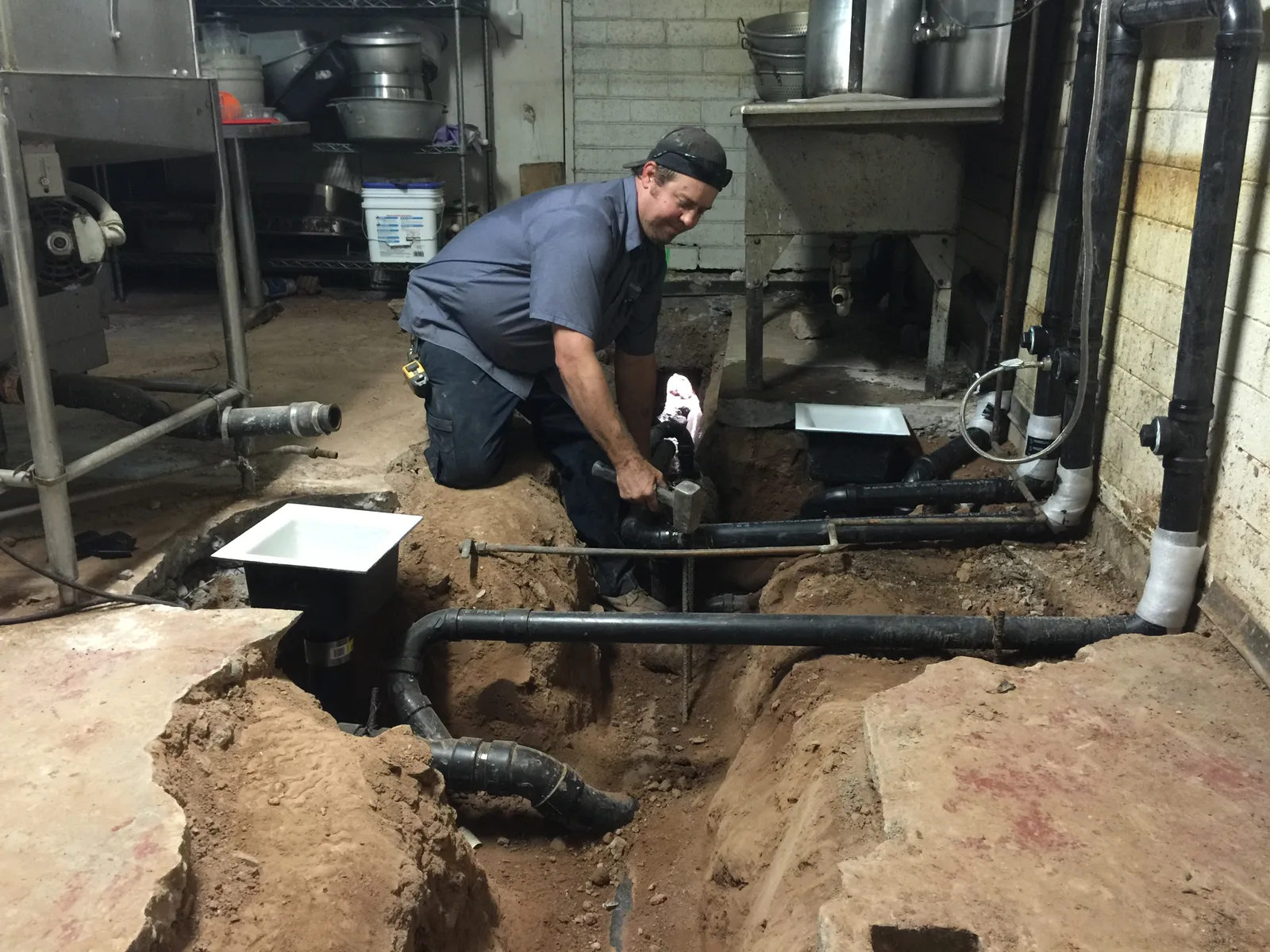
Underground Water Line Repair in Phoenix
The buried line from the meter to your home or building, located, dug or replaced, pressure tested and inspected, with a check first on whether the city should be paying for it.
Underground water line repair in Phoenix fixes the buried pipe from the city meter to your home or building. HQ locates the break, digs or replaces the section, pressure tests it and gets it inspected. Before you pay, check the city's online service line inventory: Phoenix replaces galvanized service lines it flags, from meter box to building, at no cost.
The rules that apply
Each rule links to the official text we read it from. Cities change these, so check the source before a big decision. Last checked 2026-10-04.
The city's pipe stops at the meter
PhoenixIssues from the street to the water meter are the city's responsibility, and issues after the water meter are the owner's.
Source: Phoenix Water Services, General Service IssuesGalvanized lines the city flags are replaced free
PhoenixWhen a customer's service line is identified as galvanized, Water Services or its contractor schedules a replacement from the city meter box to the hose bib or connection at the house or building, and the city covers the entire cost.
Source: City of Phoenix service line inventory (pipes.phoenix.gov)Pressure regulator above 80 psi
PhoenixWhere local static water pressure exceeds 80 psi, a private pressure regulating or reducing valve is required on the customer side of the service meter.
Source: Phoenix Water Services Design Standards Manual (2021)Exposed outdoor water pipe must be metal
PhoenixNon-metallic potable water pipe, fittings and valves may not be exposed in exterior outdoor locations; exposed components must be approved metallic materials.
Source: Phoenix amendment to 2024 IPC Sec. 605.25Replacement is permitted work, inspected before burial
PhoenixReplacing defective concealed water pipe with new material is new work that needs a permit, and water distribution piping must pass a rough-in or underground inspection before it is buried.
Source: Phoenix PBCC, IBC Ch. 1 Sec. 105.2 and 110.3.10.1Only the city moves a meter
PhoenixOnly authorized Department representatives may move or remove meters. If anyone else does, the city shuts off the water until the customer pays to restore the meter to its authorized location.
Source: Phoenix City Code 37-53How do you know the buried line has failed?
The yard or the bill usually tells you first. A patch of grass that stays green in June, a soft or sunken spot between the meter and the building, water seeping at the foundation, a hiss at the meter box, a sudden drop in pressure across the whole property, or a bill that jumped with no change in use. To confirm it, shut off every fixture and watch the meter, then close the building's main valve. If the meter keeps moving with the building valve closed, the leak is in the buried line between the two. See signs a wet lawn means a broken water line.
Where the city's pipe ends and yours begins
At the meter. Phoenix Water Services says everything from the street to the meter is the city's and everything after it is the owner's. The city builds its side to its own standard, Type K copper for meters under 3 inches and ductile iron for 3 inches and larger. Your side is whatever went in when the building did, which in older Phoenix neighborhoods can be galvanized steel, and in newer ones copper or plastic.
The meter itself stays put. City Code 37-53 says only the Department may move or remove a meter, and if anyone else does, the city shuts off the water until the customer pays to put it back. So if a repair would be easier with the meter somewhere else, that is a request to Water Services, not a plumber's job. Water bubbling up inside the meter box or in the street is also the city's; call 602-261-8000.
Check the city's galvanized replacement program before you pay
This is the step most owners miss. Under the federal Lead and Copper Rule Revisions, Phoenix inventoried every service line, submitted the inventory to ADEQ in October 2024, and posted it online for public view. If your line is listed as galvanized requiring replacement, the city says it will schedule the replacement from the city meter box to the hose bib or connection at the house or building, and cover the entire cost. The city stopped installing galvanized service lines in 1983, so homes and buildings older than that are the ones to check. Lines listed as unknown get a second verification. If yours is on the list, that is a free new line; if it is copper or plastic, the repair is yours. Look up your address in the online inventory, or email pipes@phoenix.gov. The city also says it has found no lead service lines in its field work since 2021.
Repair a section or replace the whole line?
It depends on the pipe and the history. A single break in an otherwise sound copper line gets dug, cut out, spliced and tested. A galvanized line that is not on the city's list, a plastic line that has split in two places, or a run under a driveway is often better replaced than chased, either by trenching or by pulling new pipe through the old path where soil and fittings allow; see trenchless water line replacement.
Phoenix adds two rules that apply to every replacement. The section that rises out of the ground to the building or a hose bib has to be metal, because the city's 2024 code amendment bars exposed outdoor plastic water pipe. And if the static pressure is over 80 psi, the city's design manual requires a pressure reducing valve on your side of the meter. A new line under full street pressure with no working regulator is a new line on a timer.
Permits, locates and the inspection
Stopping a leak is exempt from a Phoenix permit. Replacing a defective buried line with new pipe is new work, so it needs a permit, and the new pipe gets an underground inspection before backfill. Anything in the street or the public right-of-way is a separate permit. Before we dig, Arizona law requires a utility locate; operators mark their lines within two working days, and the marks are good for fifteen working days. Then we dig, repair, pressure test, flush and restore the surface. For long or deep runs see the property owner's side of trench safety.
For businesses, apartments and HOAs
Commercial sites often have more than one service: a domestic meter, a landscape meter and separate building feeds, and City Code 37-53 has required a separate meter for landscaped areas over 10,000 square feet on services set up since 1990. We trace which service is leaking before anyone digs. Tell us about tenants and any shutdown limits before we schedule. See commercial water line repair, HOA plumbing and apartment main line breaks.
When digging is the wrong answer
If the leak is at the meter or in the street, the city fixes it. If the green patch is over an irrigation line, it is a sprinkler repair, not a service line. If the only symptom is low pressure, check the regulator, the main valve and any whole-house filter first; see low water pressure in the whole house. And if your line is on the city's galvanized list, wait for the city.
How to book
Call with the address, where you see water, and whether the water is still on. We offer 24/7 emergency service, free estimates and upfront pricing before work starts. Our leak detection and Phoenix leak repair pages cover leaks inside the building, and the Phoenix service area page covers the rest of what we do here.
Is a wet lawn a sign of a broken water line?
It can be, but irrigation leaks are also common. Turn everything off, then check the water meter. If the meter keeps moving and the patch stays wet with the irrigation off, a buried water line is likely leaking. If the meter is still, look at irrigation valves, pool equipment, a cooler line or drainage.
Read full answer: Is a wet lawn a sign of a broken water line?What is trenchless water line replacement?
Trenchless water line replacement swaps the buried pipe between the meter and your house through a couple of small access pits instead of one long trench. Pipe bursting and directional drilling are the common methods. It saves yard, driveway and landscaping, but it doesn't fit every site, so the soil and the old pipe decide.
Read full answer: What is trenchless water line replacement?What is a main water line, and when is it replaced?
The main water line is the buried pipe that carries city water from the meter to your house. In Phoenix, everything after the meter is yours to maintain. Replace it when it leaks, when pressure or water quality drops, or when the city flags it as galvanized. Phoenix replaces flagged galvanized lines at no charge.
Read full answer: What is a main water line, and when is it replaced?How deep is a residential water main buried in Phoenix?
Phoenix's design manual sets minimum cover over city distribution mains at 3 feet, or 4 feet under arterial streets and in easements, and 6.5 feet for mains 16 inches and larger. The meter connection needs at least 30 inches. Those are minimums for new work, so call Arizona 811 before you dig.
Read full answer: How deep is a residential water main buried in Phoenix?How should an Arizona public water system maintain its service-line material inventory?
Keep an evidence-based inventory of the service lines connecting the regulated system to buildings, including the relevant system-owned and customer-owned portions. Preserve material classifications, supporting records and updates. The initial inventory deadline was October 2024; distinguish those continuing duties from the LCRI baseline inventory and other requirements due in November 2027.
Read full answer: How should an Arizona public water system maintain its service-line material inventory?Sources
- City of Phoenix Water Services: General Service Issues
- City of Phoenix: Lead Service Line Inventory and Replacement
- City of Phoenix: Design Standards Manual for Water and Wastewater Systems (2021)
- City of Phoenix: 2024 IPC Amendments (Sec. 605.25)
- City of Phoenix: 2024 IBC Chapter 1 Administrative Amendments
- Phoenix City Code Sec. 37-53, Meters
- A.R.S. 40-360.22, Excavations; locating underground facilities
Related commercial services
How a Phoenix leak gets found and fixed, who owns which side of the meter, and how a January leak raises a year of sewer bills.
What a camera run proves under Phoenix City Code 28-5, which repairs need a permit and inspection, and when to skip the camera.
Who clears what in Phoenix, why grease and roots cause most backups here, and how to stop paying for the same clog twice.
What a Phoenix inspector writes up, which kitchens must move to a gravity interceptor, and how a repair or replacement clears the finding.
Phoenix City Code 37-143 and 37-144 in practice: who must test, which assembly fits your business, placement rules and penalties.
When jetting beats a cable in Phoenix lines, what the city's grease rules mean for maintenance jetting, and when not to jet.
Water Line Leaking Underground?
Talk to a real dispatcher who knows commercial work. Upfront pricing before work starts, 24/7 for emergencies.