
Apartment Stack and Main Line Leaks in Phoenix
Building-level leaks that touch several units: stacks, risers and underground lines, and the owner's duties when they fail.
A leak in an apartment building's drain stack, water riser or underground main hits more than one unit, so the owner carries it. Arizona law requires the landlord to keep plumbing in good working order and supply running water, and Phoenix puts a broken building sewer to the public main on the owner of anything bigger than a duplex.
The rules that apply
Each rule links to the official text we read it from. Cities change these, so check the source before a big decision. Last checked 2026-10-04.
Maintain plumbing and supply water
ArizonaThe landlord must maintain all plumbing and sanitary facilities in good and safe working order and condition, and supply running water and reasonable amounts of hot water at all times, except where the unit's hot water is under the tenant's exclusive control on a direct utility connection.
Source: A.R.S. 33-1324(A)(4) and (6)Five-day notice for health and safety
ArizonaWhen a landlord's failure under 33-1324 materially affects health and safety, the tenant may give written notice that the rental agreement will end in not less than five days if the breach is not remedied in five days.
Source: A.R.S. 33-1361(A)Sewer line breaks past the property line
PhoenixThe city repairs a verified break in the public right-of-way only for single-family and duplex properties. For anything else, the owner repairs or replaces the building sewer, including the section outside the property line.
Source: Phoenix City Code 28-5.1Cleanouts for jetting
PhoenixHorizontal drains and building drains need cleanouts at intervals of not more than 100 feet, and the junction of the building drain and building sewer needs a cleanout at the junction or within 10 feet upstream of it.
Source: Phoenix Plumbing Code 2024, 708.1.1 and 708.1.3Riser valves so you can isolate a leak
PhoenixFull-open valves go at the base of every water riser in occupancies other than multiple-family buildings two stories or less, and on top of down-feed pipes. Valves must be accessible and identified.
Source: Phoenix Plumbing Code 2024, 606.1 to 606.4Pressure that breaks old pipe
PhoenixWhere water pressure within a building exceeds 80 psi static, an approved pressure-reducing valve with strainer must bring building distribution pressure down to not more than 80 psi, except for service lines to sill cocks and outside hydrants.
Source: Phoenix Plumbing Code 2024, 604.8Who pays for a stack or main line leak
The owner does. A drain stack, a water riser and an underground main all serve more than one unit, and Arizona's landlord statute makes the owner responsible for plumbing the owner supplies. A.R.S. 33-1324 requires the landlord to maintain plumbing in good and safe working order and to supply running water and reasonable hot water at all times.
The clock matters. If the failure materially affects health and safety, such as a sewage leak or no water, a resident can give written notice under A.R.S. 33-1361 that the lease ends in five days if it is not fixed. A building-level leak that stays open is how one problem turns into a vacancy problem. For unit-level work, see apartment unit leak response.
What a leaking stack looks like
A leaking drain stack shows up as a damp wall, a stain growing on a ceiling below or an odor, not a puddle. Stacks run in the walls between units, and a failed joint, cracked cast iron fitting or a corroded section drips only when the units above run water. Stains that appear after showers or laundry, in the same spot, point to a drain. Stains that stay steady point to supply.
Our water leak from the ceiling FAQ explains how to tell the two apart. For old cast iron, read how long cast iron drain pipe lasts. A camera in the stack and the building drain tells you whether it is one bad joint or a pipe at the end of its life.
Water risers, underground mains and slab leaks
A steady meter reading with every fixture off means a leak between the meter and the units. The water meter leak test takes ten minutes, and what it means when the meter still moves with the main valve off points to underground pipe. Warm spots on a slab floor, hissing, a sudden drop in pressure and unexplained wet landscaping are the usual signs; signs of a slab leak in Arizona lists them.
Phoenix's plumbing code expects full-open valves at the base of every water riser in most multifamily buildings, so a riser leak should be isolatable without shutting the whole property. Many older properties have no usable valve, which turns a leak repair into a building shutdown. Finding and exercising those valves before the leak is the cheapest maintenance you can do. Pressure matters too. The code requires a pressure-reducing valve where building pressure exceeds 80 psi, and a failed one will find every weak joint in a 40-year-old line.
We locate leaks with listening and tracing equipment, and our leak detection service explains what to expect. If the line has to be opened, slab leak repair choices compares rerouting and breaking the slab.
Main sewer lines and who owns the break
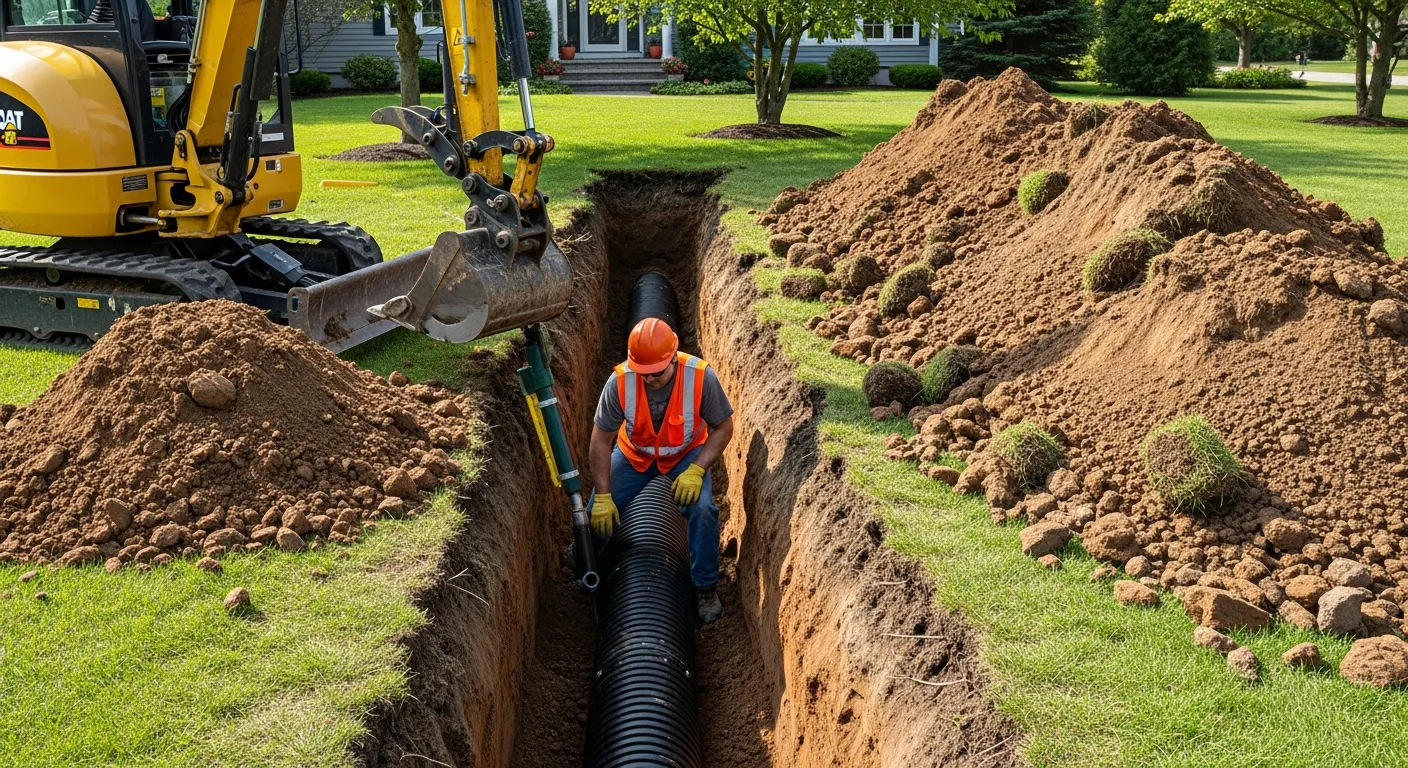
A building sewer that fails under a parking lot or the street is the owner's repair in Phoenix. Phoenix City Code 28-5.1 has the city repair a verified break in the right-of-way only for single-family and duplex properties. An apartment owner repairs the whole line to the public main, including the part under the street, and needs a city permit to do it. See who is responsible for the sewer line in Phoenix.
Stoppages come first. When several ground-floor units back up at once, the stoppage is in the main, not a unit drain, and our sewer backup in a multi-tenant building FAQ lists what to do first. A cable clears the blockage and a camera shows why it formed. Phoenix requires cleanouts every 100 feet and one at the building drain junction, which is also where we set up the jetter. A property without cleanouts means a longer, more expensive visit, which is why hydro jetting without an accessible cleanout is worth reading.
When the cheaper answer is enough
Not every leak is a repair. A pinhole in a short exposed section can be a spot repair, and a tuberculated stack that still flows may only need descaling, not replacement. Our cast iron descaling FAQ covers when that works. The honest answer, after a camera and a pressure check, is sometimes "this section, not the whole building."
Replacement is the right answer when the pipe is breaking in more than one place, the camera shows collapse or the same line has leaked repeatedly. We will tell you which one you have before work starts.
What HQ does for multifamily owners
We clear stacks and mains, jet cast iron and clay, run cameras, find and repair leaks, excavate and replace damaged underground sections and set up shutoffs so the next leak is a one-riser problem. We offer 24/7 emergency service, free estimates and upfront pricing before work starts. See sewer repair, hydro jetting, sewer camera inspection and our multifamily page.
In Phoenix, who is responsible for the sewer line to the city main?
You are. In Phoenix, the property owner is responsible for the sewer line from the house to the public main, under City Code Chapter 28. The one exception: for single-family and duplex homes, the city repairs broken sewer piping in the public right-of-way. A clog in your line is always your cost.
Read full answer: In Phoenix, who is responsible for the sewer line to the city main?Sewer backup in a multi-tenant building: what first?
First keep people away from the sewage and stop water use in the building so the backup stops growing. Then call a commercial plumber to find the blockage, notify the city if it is coming from the public main, and tell tenants in writing. Photograph everything before cleanup starts.
Read full answer: Sewer backup in a multi-tenant building: what first?Why do apartment kitchen drain stacks clog?
Apartment kitchens can feed grease, soap and food debris into a shared vertical stack. Deposits can restrict flow and cause backups at available openings below a blockage. Several affected units suggest checking shared piping, but inspection determines the cause, location and cleaning method; whole-stack jetting is not always needed.
Read full answer: Why do apartment kitchen drain stacks clog?How long do cast iron drain pipes last?
Cast iron drain, waste, and vent pipe typically lasts about 50 to 60 years. The InterNACHI life-expectancy chart puts it near 60 years above ground and 50 to 60 years below ground. Some pipe lasts longer, but Phoenix homes built before 1975 are usually at or past that age.
Read full answer: How long do cast iron drain pipes last?Meter still moving with the main valve off: house or yard?
If your water meter keeps moving after you close the house's main valve, the leak is not inside the house. It is on the buried line between the meter and the valve, on something tapped in ahead of the valve such as irrigation, or in the valve itself. Check irrigation first, then walk the line.
Read full answer: Meter still moving with the main valve off: house or yard?What are the signs of a slab leak in an Arizona home?
Watch for a warm spot on the floor, the sound of running water with everything off, an unexplained jump in your water bill, low pressure, cracks in flooring or walls, mildew or buckling floors, and a water heater that runs nonstop. These point to a water line leaking under your concrete slab.
Read full answer: What are the signs of a slab leak in an Arizona home?Does an apartment need a water shutoff valve for each unit?
Usually yes. The International Plumbing Code calls for a full-open valve on the water supply pipe entering every dwelling unit, unless the pipe serves a single fixture with its own stops. Many multi-tenant buildings need a tenant main shutoff (three stories or less, 2024 code). Access and labels are required too. Cities adopt different code editions.
Read full answer: Does an apartment need a water shutoff valve for each unit?Related commercial services
Grease device rules for coffee shops by city, espresso water filtration and backflow, hand sinks, ice machine drains and hot water sizing.
Bakery grease interceptor rules, flour and dough clogs, floor drains around coolers and proofers, and water heater sizing from the county table.
Commissary agreements, dump station drains, potable fill backflow, truck tank sizes and grease device rules for kitchens that host food trucks.
What to do in the first ten minutes of a restaurant plumbing emergency, when to stop serving, and how after-hours dispatch works.
Hand sink placement and temperature, prep sink air gaps, splash guards and which sinks go to the grease device, with repair options.
Stopping a unit leak, Arizona entry and repair rules, tenant self-help limits and in-unit water heater failures.
Leak in the Building?
Talk to a real dispatcher who knows commercial work. Upfront pricing before work starts, 24/7 for emergencies.