
Bakery Plumbing in the Phoenix Valley
Why dough and fat clog a bakery line, where county rules put floor drains, and how to size a water heater for pan washing.
A bakery drains like a restaurant kitchen with two extra problems: starchy dough and flour that bind with fat into a paste, and a large hot water load. Phoenix treats a bakery that prepares food on site as a food service establishment needing a grease interceptor, and Maricopa County sizes the water heater from your equipment list.
The rules that apply
Each rule links to the official text we read it from. Cities change these, so check the source before a big decision. Last checked 2026-10-04.
Interceptor for on-site food prep
PhoenixAll food service establishments that prepare food on site need a grease interceptor. Gravity interceptors are required above four fixtures, and for any dishwasher or disposer. Gravity interceptors are pumped at least every 3 months.
Source: Phoenix FOG BMP ManualSolids and viscous waste are prohibited discharges
PhoenixNo user may discharge solid or viscous pollutants, FOG or petroleum oil that can cause obstruction to the flow in sewers, or any waste that is a pass-through or interference risk for the city's treatment system.
Source: Phoenix City Code Ch. 28, prohibited discharges (28-12 page)Trap limits for small bakeries
MesaA grease trap is allowed only with four or fewer fixtures used for food preparation, and any facility with a dishwasher must install a grease interceptor. Interceptors are 500 to 2,500 gallons with at least two chambers.
Source: Mesa City Code 8-4-22(E)Trap service frequency
TempeIndoor grease traps are allowed with four or fewer kitchen fixtures on the grease line and are serviced by a licensed non-hazardous liquid waste hauler monthly, or more often if needed. A commercial dishwasher requires an interceptor.
Source: City of Tempe FOG programFloor drains and coolers
Maricopa CountyFloor drains and floor sinks cannot go inside walk-in coolers, except trough-type drains in refrigerated processing rooms with undercut or swing doors. Walk-in condensate lines drain to an approved floor drain, never onto open ground or pavement.
Source: County Plan Review Construction GuideDedicated water heater, sized from the equipment
Maricopa CountyEach permitted food establishment gets its own properly sized heater. Recovery must equal or exceed 100 percent of calculated hourly demand on a 60 degree rise, with water at 120 degrees F or higher reaching sinks within 45 seconds.
Source: County hot water supply guidelineDoes a bakery need a grease interceptor?
Almost always, if it bakes on site. Phoenix requires a grease interceptor at every food service establishment that prepares food on site, and a bakery with mixers, pan washing and a three-compartment sink qualifies. Butter, shortening, oil sprays and cake batter all carry fat. Mesa and Tempe allow a small trap only with four or fewer fixtures on the grease line and no commercial dishwasher.
Gravity interceptors in Phoenix get pumped at least every three months, and Phoenix tells operators to pump sooner once fat and solids reach 25 percent of capacity. A hydromechanical trap in Phoenix is pumped every 30 days, and Tempe's monthly rule is the same idea. A licensed hauler pumps either one. We repair baffles and tees after the pump-out, and our grease trap and interceptor service page explains that sequence.
Why flour clogs a bakery drain
Flour, dough and batter turn into paste, and fat makes it stick. Starch swells in water, binds with butter and shortening and settles in the low spots of horizontal drain pipe. Phoenix's sewer code bans solid or viscous pollutants that can obstruct the sewer, and a bakery lateral is where that rule meets reality.
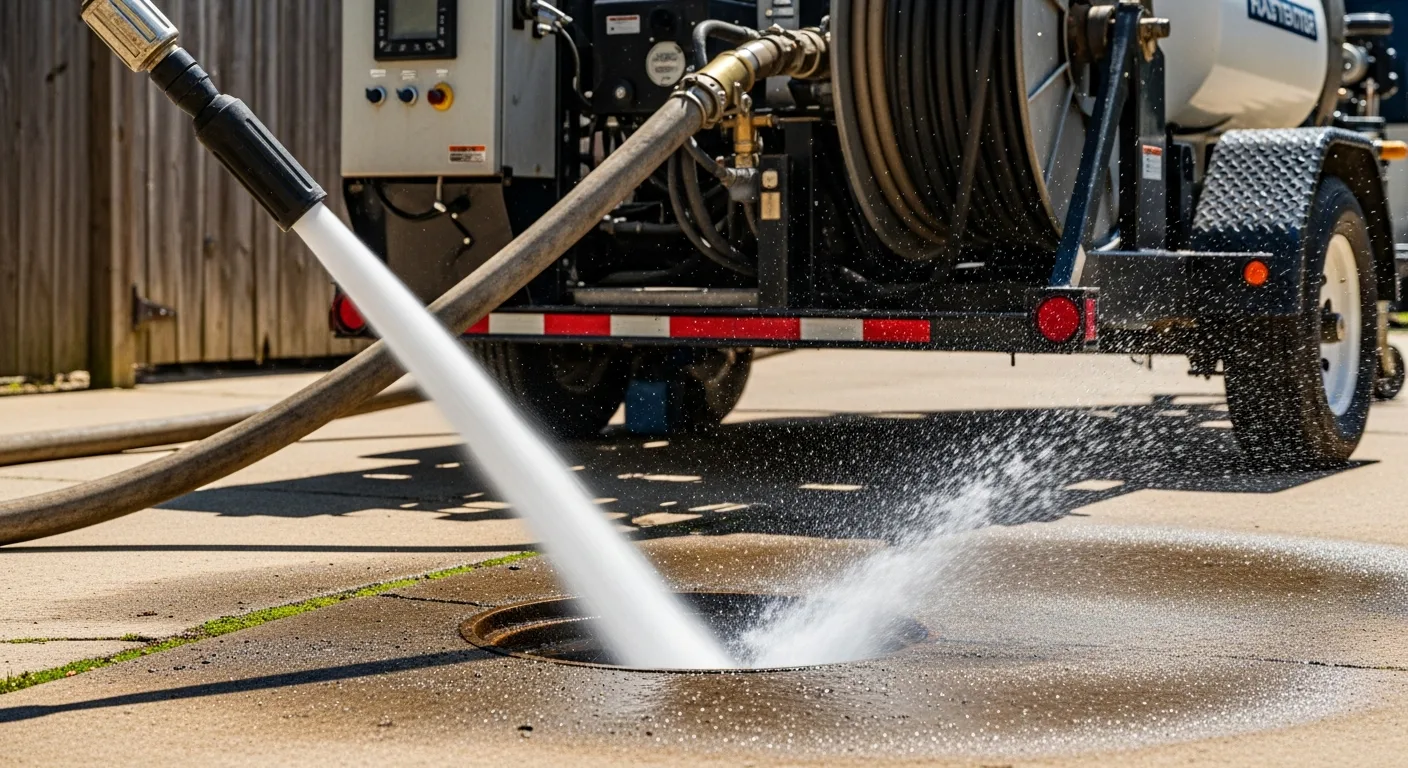
Three habits keep the line open. Scrape bowls and pans into the trash before they reach a sink. Put a strainer basket in the pot sink. Wipe sheet pans and mixing paddles before rinsing, because wet dough is much harder on a drain than dry crumbs. None of this replaces jetting. A bakery that runs sourdough batches daily often needs hydro jetting on a schedule, and we log maintenance jetting per account so you can see the interval working.
Floor drains, coolers and proofers
Floor drains do the work in a bakery, and the county has strong opinions about where they sit. Maricopa County's guide says floor drains and floor sinks cannot go inside walk-in refrigeration units except trough-type drains in refrigerated processing rooms when the doors are undercut or swing doors. Walk-in condensate lines must drain to an approved floor drain, and the guide says they may not run onto open ground or pavement.
Equipment is the second half. Ovens, proofers and walk-ins all need to be sealed to the floor and walls with cleanable trim, flashing or caulk, and the drains around them are where flour, grease and mop water meet. Trench drains and floor drain cleaning walks through what to expect, and trap primers for commercial floor drains matter in a Phoenix summer when an unused drain dries out and lets sewer gas in.
Hot water: the demand nobody sizes right
A bakery's hot water demand is bigger than its fixture count suggests. The county's hot water guideline says each permitted establishment must have its own dedicated, properly sized water heater, with at least a 120 degree F set-point and delivery to hand sinks, dish sinks and service sinks within 45 seconds. Recovery has to equal or exceed 100 percent of the calculated hourly demand, calculated on a 60 degree temperature rise.
The guide's equipment table is where the numbers come from. It lists a three-compartment warewash sink at 45 to 60 gallons per hour, a three-compartment prep sink at 45, a pre-rinse sprayer at 45, a mop sink at 5 to 15 and a hand sink at 5. It also gives a High column for operations that wash multi-use utensils, and a Low column for carry-out operations using single-service ware. A bakery that washes metal pans and bowls all day sits on the High side. Add a pre-rinse sprayer and a door-type dish machine, and the water heater that looked big enough at the quote stage runs out by the second batch.
We replace light commercial tank water heaters with Bradford White and A. O. Smith supply-house units, including haul-away of the old one, and we can check recovery against the county table. Start with our water heater page, then read why a commercial heater cannot keep up.
When a smaller fix is enough
If your drain is slow but your interceptor is clean and the line scopes clear, you may only need a hand sink or strainer upgrade, not a new device. If the problem is a smell at a floor drain, refill the trap before you call anyone, because a dry trap is the usual cause. And if you are only reheating or baking pre-made dough with no pot sink, your city may treat you more like a retail counter than a bakery, so ask before you design a full interceptor system.
If you see grease or dough scum in a floor sink after a pump-out, that is not a schedule problem. Read grease backing up into floor sinks before you add a pump date.
What HQ does for bakeries
We clean and jet kitchen laterals and floor drains, camera the line after a stoppage, repair hand sinks and prep sinks, and replace water heaters. Work is scheduled before opening or after close, usually one to two hours inside the building. We offer 24/7 emergency service, free estimates and an upfront price before any work starts. See commercial drain cleaning or our restaurant plumbing page for the full service mix.
Does a coffee shop, bakery or bar need a grease trap?
Usually yes. Phoenix, Tempe and Chandler require a grease device at food service establishments that prepare food on site, and Chandler's rule also covers beverages. Surprise lets some low-grease shops, including coffee shops, use a trap if an engineer signs off. Hand sinks and ice machines don't need one.
Read full answer: Does a coffee shop, bakery or bar need a grease trap?How are commercial floor and trench drains cleaned?
Daily care is pulling strainers, scrubbing, and flushing with hot water. When a drain slows, crews step up from a plunger to a cable, a vacuum, and then hydro jetting for grease and scale. Deep cleaning of troughs and trenches is monthly work, and a floor drain that is rarely used also needs its trap kept full of water.
Read full answer: How are commercial floor and trench drains cleaned?Why do commercial floor drains need a trap primer?
A floor drain that rarely gets water lets its trap seal evaporate, and then sewer gas comes up into the room. The plumbing code requires trap seals that can dry out to be protected, and a trap primer is the usual fix. It feeds the trap a little water automatically so the seal never disappears.
Read full answer: Why do commercial floor drains need a trap primer?Why isn't my commercial water heater making enough hot water?
Most commercial units fall short because they are undersized for peak demand or choked with sediment from Phoenix hard water. Failed thermostats, burned-out elements, and broken dip tubes also cut output. A unit that cannot hold sanitizing temperatures puts your health permit at risk, so right-size, flush, and repair fast.
Read full answer: Why isn't my commercial water heater making enough hot water?Why is my grease trap backing up into the floor sinks?
Wastewater is taking the easiest way out. The usual causes are a trap or interceptor past its cleaning date, grease coating the line downstream, or a blockage in the sewer line. Stop water use, get the device pumped, then have the line jetted and camera-checked before the next dinner rush.
Read full answer: Why is my grease trap backing up into the floor sinks?What temperature must hot water be in a commercial kitchen?
In a Maricopa County food business, the heater is set to at least 120 degrees F. Hand sinks get tempered 100 to 110 degrees F water through a mixing valve. Manual dish washing needs 110 degrees F, hot water sanitizing 171 degrees F, and dish machines have their own limits. Non-food sinks run 85 to 110 degrees F.
Read full answer: What temperature must hot water be in a commercial kitchen?Sources
- City of Phoenix: FOG Best Management Practices for Food Service Establishments (June 2024)
- Phoenix City Code Chapter 28, Art. II, Use of Public Sewers and Limitations
- Mesa City Code Sec. 8-4-22, Interceptors
- City of Tempe: FOG Program
- Maricopa County Plan Review Construction Guide, Food Establishments (Rev 09/04/2026)
- Maricopa County: Guideline to Sizing Water Heaters, Water Temperature and Potable Water Supply (Rev 10/15/2025)
Related commercial services
Grease device rules for coffee shops by city, espresso water filtration and backflow, hand sinks, ice machine drains and hot water sizing.
Commissary agreements, dump station drains, potable fill backflow, truck tank sizes and grease device rules for kitchens that host food trucks.
What to do in the first ten minutes of a restaurant plumbing emergency, when to stop serving, and how after-hours dispatch works.
Hand sink placement and temperature, prep sink air gaps, splash guards and which sinks go to the grease device, with repair options.
Drain stack, water riser, slab and underground main leaks in apartment buildings, owner duties, riser valves and leak detection.
Stopping a unit leak, Arizona entry and repair rules, tenant self-help limits and in-unit water heater failures.
Bakery Drain Slowing Down?
Talk to a real dispatcher who knows commercial work. Upfront pricing before work starts, 24/7 for emergencies.