
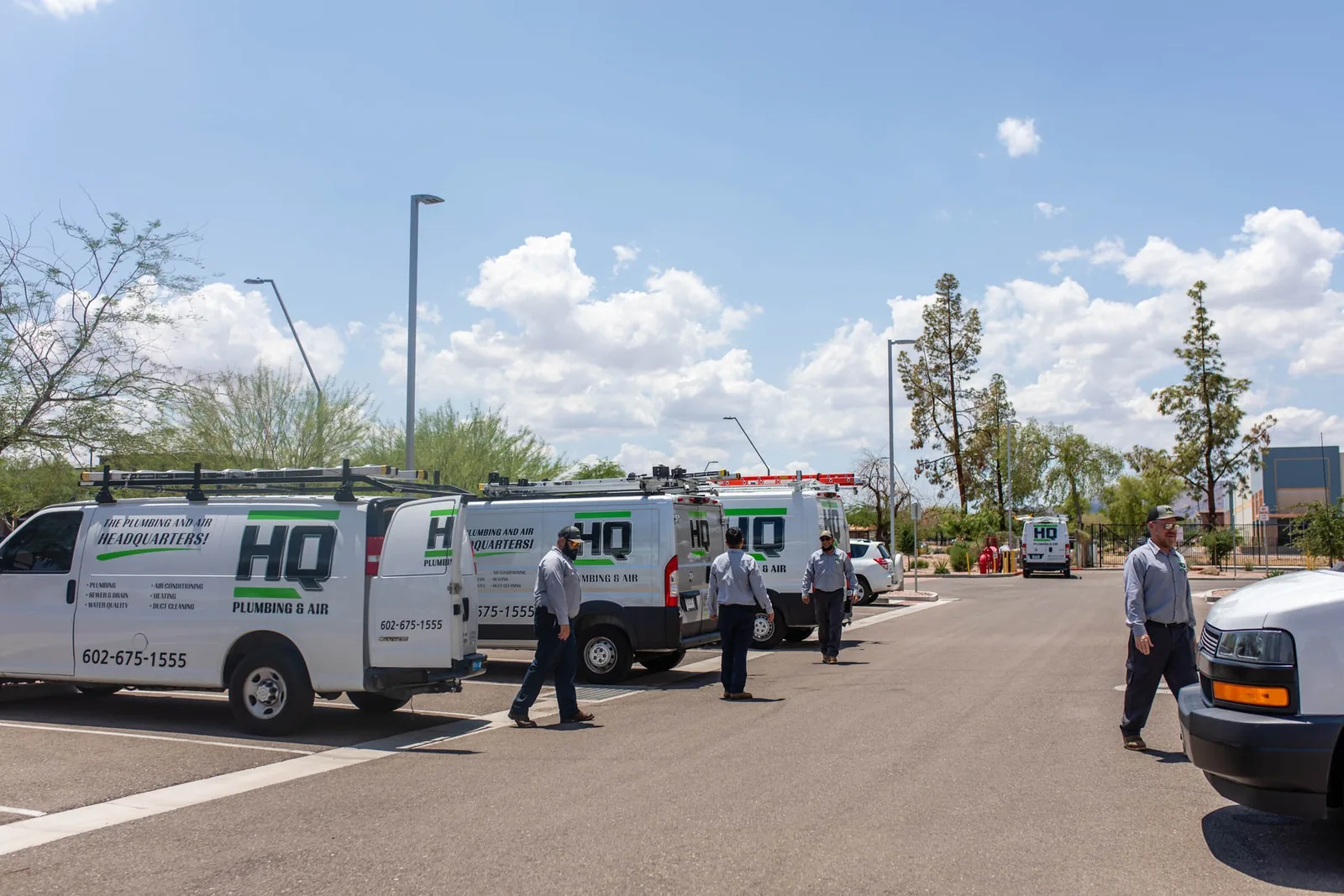
Plumber in Phoenix Biltmore
Plumbing service for the Biltmore area's houses, condos and high-rises, from leaks and drain backups to water heaters and gas lines.
Plumbing in Phoenix Biltmore
Need a plumber in the Biltmore area? HQ Plumbing & Air sends licensed plumbers to homes, condos and businesses around 24th Street and Camelback Road at any hour, for leaks, slab leaks, drain and sewer clogs, water heaters, water softeners and gas lines. The Biltmore area mixes 1950s houses, homes from the 1970s and 1980s, new custom builds, and condo towers and townhomes, so the plumbing behind the walls varies from one street to the next. We find out what you have before we touch it, work cleanly in finished homes, explain what we find in plain words, and agree the price with you before any work starts.
High-end properties in the Biltmore area often have specialty plumbing systems: radiant floor heating, whole-home filtration, multiple water heaters, and complex fixture configurations. We're experienced with these systems and treat every job with the care premium properties require.
- Homes in ZIP 85016
- About 21,500
- In buildings of 2 or more homes
- About half
- Built before 1970
- About 8,100
- Water hardness
- 10 to 17.6 grains per gallon
Houses, condos and towers: the Biltmore area's homes
The City of Phoenix names 24th Street and Camelback Road, the center of the Biltmore area, as one of the two cores of its Camelback East village, and says a major part of the village's homes were built between 1950 and 1970. Census estimates for ZIP code 85016, which takes in the Biltmore area and its neighbors, count about 21,500 homes. About 8,100 of them were built before 1970, about 6,400 in the 1970s and 1980s, and about 3,200 in 2010 or later, so the median home dates from 1977.
Only about 8,400 of those homes are detached houses. About half sit in buildings with two or more homes, and about 5,500, roughly one in four, are in buildings of 50 or more. That mix decides a lot about a plumbing call here: a ranch house on a slab, a townhome sharing a wall, and a tenth-floor condo above someone else's ceiling each fail in different ways and need different first steps.
Older houses and the pipes inside them
A house built before 1970 may still have galvanized steel water pipe, a cast iron or clay sewer line, and water lines laid in or under the concrete slab. Galvanized pipe rusts from the inside until the pressure drops at every tap or the water runs brown after it sits. Cast iron scales and cracks, and clay joints open up and let roots in. Houses that have been remodeled often hide a mix of old and new pipe joined inside the walls.
We start with a pressure test and a look at the pipe we can reach, and a camera run from the cleanout shows the drain and sewer line from the inside while you watch. Then we show you which runs are failing and which still have years left, so you can choose between a repair, rerouting one line, or repiping.
Leaks in condos and townhomes
In a building with shared walls, a leak rarely stays in one home. Water from a supply line, a water heater or a shower pan can reach the unit below or next door before anyone sees it. If you find water coming through a ceiling or wall, shut off the water to your unit or the fixture if you can reach the valve, then tell your building's manager or association, because the source may be in another unit or in a pipe the building shares.
Your association's governing documents say which pipes, valves and fixtures are yours to repair and which belong to the building, so read them or ask the manager before any work starts. We find where the water is coming from, repair what is in your unit, write down what we found for you and the manager, and work around a building's rules on parking, elevators, hours and water shutoffs.
Who owns which pipe outside a Biltmore home
The Biltmore area is part of the City of Phoenix, so Phoenix Water Services supplies the water and owns the water and sewer mains. On the water side the line is drawn at the meter: a problem from the street to the meter is the city's, and a problem after the meter is the owner's. If water is running in the street or at the meter box, call Phoenix Water Services. If the meter keeps moving with every tap off, the leak is most likely on your side, and we find it with a line locator and listening equipment before anyone digs.
The sewer line from a house to the city main is the property owner's to clean and keep up. For a single-family home, Phoenix City Code 28-5.1 says that if the owner shows roughly where a break is and it turns out to be in the public right-of-way, the city verifies it and repairs that part. Our sewer camera and locator are how that spot is found, which decides whose dig it is.
Hard water, water heaters and the systems in newer homes
The Biltmore area gets Phoenix's water, and the city's 2025 water quality report puts its hardness at 10 to 17.6 grains per gallon across the system. That much mineral builds scale in water heater tanks, tankless heat exchangers, faucet cartridges and toilet valves. A tank that rumbles as it heats or runs out of hot water early is usually full of sediment. We repair and replace tank and tankless water heaters, descale tankless units, and install water softeners and whole-home filtration where scale keeps coming back.
Newer and remodeled homes here often carry more equipment: two water heaters, a recirculation pump, a softener, and gas lines to a range, an outdoor kitchen, a fire feature or a pool heater. We service each of them. New gas piping goes through a Phoenix permit and an inspection before the gas is turned on.
Permits and the Phoenix sewer bill
Phoenix has enforced its 2024 building codes since August 1, 2025. Clearing a stoppage, stopping a leak, or replacing a fixture or valve in the same place needs no permit. Replacing a buried water or sewer line is new work: it needs a permit, and the new pipe must pass inspection before the trench is filled. When a job needs one, we pull it and book the inspection.
Fix winter leaks fast. Phoenix sets each home's monthly sewer charge from its average water use in the January, February and March billing cycles, so a running toilet or a slab leak in those months raises the sewer bill for the year after. Once the leak is fixed, the city takes a Sewer Fee Review request within 60 days of the July bill date, so keep the plumber's invoice.
How to choose a plumber in the Biltmore area
Arizona licenses plumbing contractors through the Registrar of Contractors. Before anyone works on your water, sewer or gas lines, look the company up on the ROC's contractor search to check that its license is current and covers plumbing. Work by a licensed contractor is also what makes a homeowner eligible for the state's Residential Contractors' Recovery Fund if a job goes wrong.
What a plumbing job costs depends on the problem, the pipe, how hard it is to reach, the building's rules, and whether a permit is needed, so be wary of a firm price given before anyone has looked. HQ Plumbing & Air is licensed, bonded and insured. Estimates are free, the price is agreed before work starts, and our workmanship carries a two-year warranty. Call us any time, day or night, or send the form on this page and we will call you back.
Phoenix Biltmore Areas We Cover
Our crews regularly work throughout Phoenix Biltmore, including Biltmore Estates, Piestewa Peak Corridor, 24th Street Corridor, Safari Drive, Camelback Corridor and the surrounding areas. If you don't see your neighborhood listed, call us. Chances are we cover it.
We know how to work in luxury properties: cleanly, quietly, and without damaging finishes or landscaping. Our technicians are professional and respectful of high-value environments.
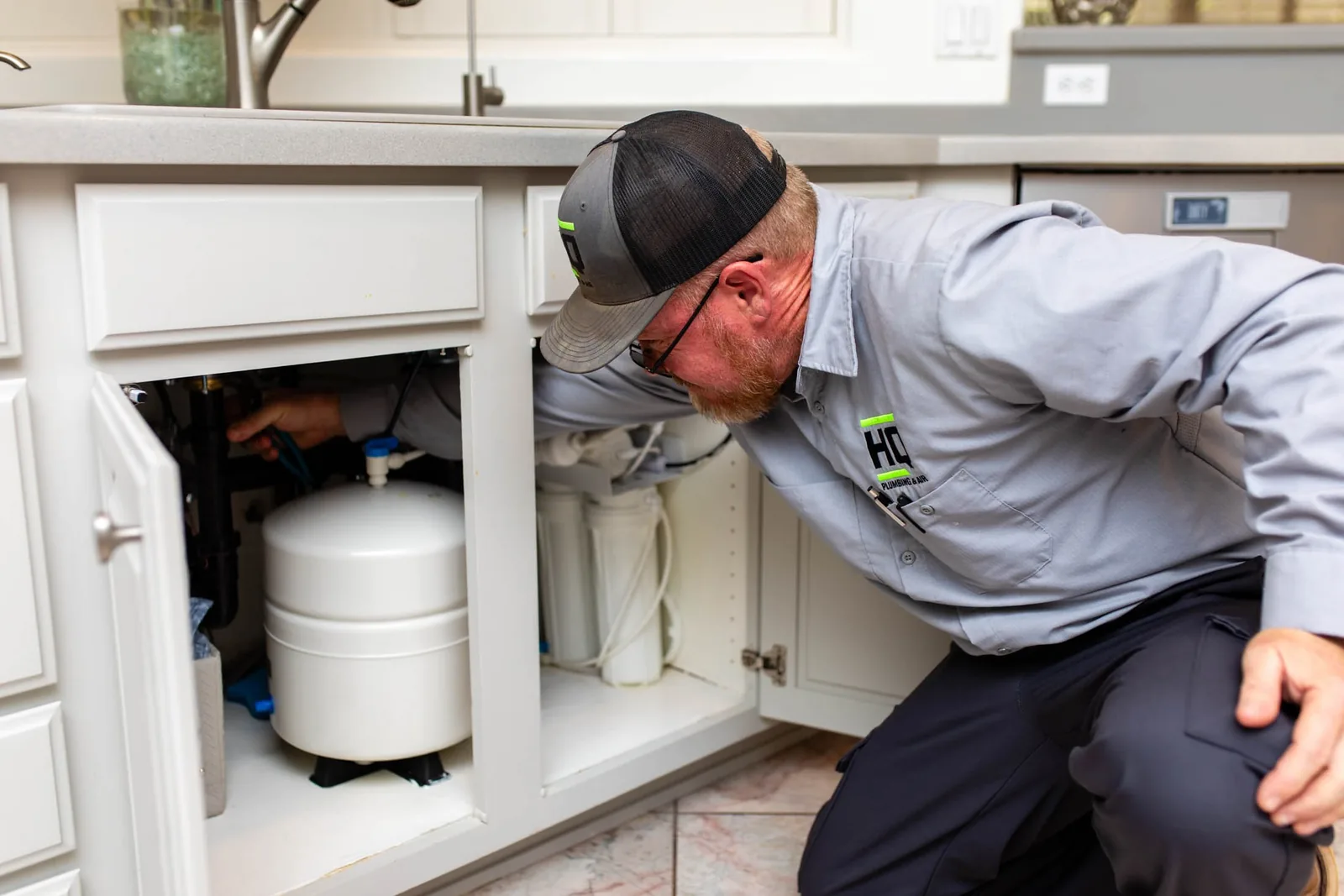
What We Do in Your Area
Can you service specialty plumbing systems in luxury Biltmore homes?
Yes. We work on the multi-zone water heating, whole-home filtration and custom fixtures that many larger Biltmore-area homes have.
Do you offer discreet service for high-profile properties?
Yes. We understand the expectations that come with premium properties. Our technicians are professional, clean, and mindful of your schedule.
What is the phone number for City of Phoenix Water Services?
For a leak at the meter or in the street, or water that needs to be shut off by city staff, call the city's 24/7 water emergency line at 602-261-8000. For billing and other questions, Phoenix Water Services Customer Services is 602-262-6251, weekdays from 8 a.m. to 5 p.m. A leak after the meter is the owner's, and that is a call for a plumber.
Is it legal for a handyman to replace a toilet in Arizona?
Often, yes. Arizona's handyman exemption, A.R.S. 32-1121, covers casual or minor work for someone else when the whole job, labor and materials, is under $1,000 and needs no building permit. Swapping a toilet in the same spot usually fits. Moving it, or any work that needs a permit, needs a licensed contractor, and only licensed work is covered by the state's Residential Contractors' Recovery Fund.
Is Phoenix tap water safe to drink?
Yes. Phoenix publishes a water quality report every year, and its water meets federal Safe Drinking Water Act standards. It is hard, at 10 to 17.6 grains per gallon in the 2025 report, which affects taste, scale and fixtures, not safety. Water that runs brown or rusty from one tap usually points to old galvanized pipe in the home.
What plumbing work needs a permit in Phoenix?
Under Section 105.2 of the 2024 Phoenix Building Construction Code, plumbing work needs a permit unless it is on a six-item exempt list: stopping leaks unless a concealed pipe must be replaced, clearing clogs, same-spot fixture swaps, appliance hookups, a licensed contractor's in-kind water heater swap, and small secondary backflow work.
Read full answer: What plumbing work needs a permit in Phoenix?How do I verify a plumber's license in Arizona?
Use the Arizona Registrar of Contractors free public license search at roc.az.gov/search. Look up the plumber by license number, business name, or qualifying-party name, then confirm the license is Active, the classification matches your job, the bond is current, and the complaint history is clean before you sign anything.
Read full answer: How do I verify a plumber's license in Arizona?Why are slab leaks so common in Arizona?
A slab leak can develop when a buried supply pipe corrodes, rubs against concrete or soil, or is stressed by ground movement, thermal expansion or excessive pressure. Water chemistry can contribute to copper pitting, but hardness alone does not identify the cause. Leaks beneath a slab can remain hidden.
Read full answer: Why are slab leaks so common in Arizona?Does HQ Plumbing & Air really answer 24/7?
Yes. A real Phoenix dispatcher answers the HQ line day or night, including weekends and holidays. No answering service, no offshore call center. For true emergencies we dispatch a licensed plumber same day across the Phoenix metro. Call (602) 675-1555 anytime.
Read full answer: Does HQ Plumbing & Air really answer 24/7?Sources for this page
- Census Reporter: ZIP code 85016 (ACS 2024 5-year, tables B25001, B25024, B25034 and B25035)
- City of Phoenix: Camelback East Village
- City of Phoenix Water Services: General Service Issues
- City of Phoenix: 2025 Water Quality Report
- Phoenix City Code Sec. 28-5.1
- City of Phoenix: 2024 IBC Chapter 1 Administrative Amendments (Ord. G-7397)
- City of Phoenix: Submit a Sewer Fee Review
- Arizona Registrar of Contractors: Before you hire
- Arizona Revised Statutes 32-1121 (handyman exemption)
Need a Plumber in Phoenix Biltmore?
HQ Plumbing & Air dispatches licensed technicians to Phoenix Biltmore around the clock. Call now for upfront pricing and fast response.