
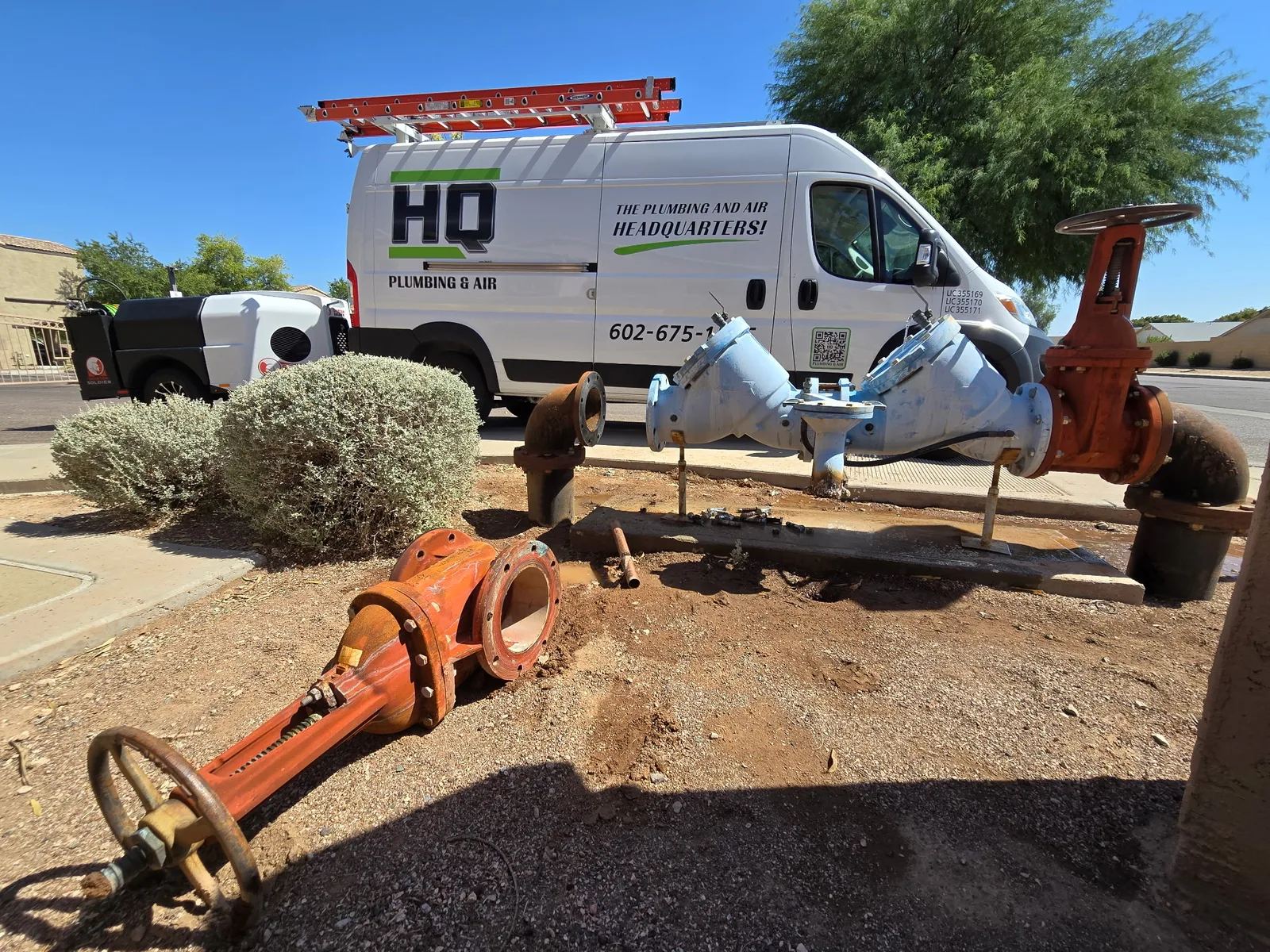
Leaking Backflow Preventer at a Business or Apartment Community
Water spitting or dripping from a domestic backflow assembly means a worn part or a failed unit. How we isolate it, repair or replace it, then test and certify.
A domestic backflow assembly that drips or discharges water has a worn part, debris or a failed assembly. We isolate the line, open the assembly to inspect it, replace the failed parts or the whole unit, then test and certify it. A replacement is a written proposal.
What was wrong
A property manager or business owner notices water running from a pipe assembly outside the building, usually near the water meter or along the irrigation line. It might be a steady drip, a spray from a relief port, or a puddle that keeps coming back. Sometimes the leak shows up when the annual backflow test fails. Other times someone just sees water where it shouldn't be.
A backflow assembly sits on the water line to keep dirty water from being drawn back into the drinking supply. It has internal check valves and, in some types, a relief valve that discharges on purpose when something is wrong. Water coming out is a symptom, not a design feature, and it means one of those internal parts isn't sealing.
This page covers domestic water assemblies, the ones that protect the building's drinking water and irrigation connections.
How we find the cause
We shut down the line and look at the assembly. We open it, inspect the internal parts and run water through it to see where it leaks. Depending on the type, the cause is usually debris stuck on a seat, a worn rubber part, a fouled relief valve, or a body that is cracked or corroded.
We also check how the assembly is installed. Clearance, height and drainage all affect how the unit behaves, and a bad install can look like a bad assembly.
What fixes it
Many leaks are repaired by replacing the worn internal parts and then testing the assembly. If the assembly is damaged beyond a rebuild, or parts are no longer made, we propose a replacement. That's written up for your approval before work starts, and where a permit or notification to the water provider is needed, we tell you which.
After any repair, the assembly is tested and certified. Arizona rules (A.A.C. R18-4-215) require the assembly to be retested after repair, and the test must be done by a certified tester. We file the results with the city, since Phoenix puts the duty to submit them on the customer.
What to know before you call
If the assembly is spraying, you can usually close the shutoff valve ahead of it, but that cuts water to whatever it feeds. If it feeds the whole building or irrigation, tell us so we can plan the shutoff with the property manager and give tenants notice.
Tell us if the assembly failed a test, and bring the report. Mention whether it's on a restaurant, an apartment community, an irrigation line or a main service. In managed properties, access may need a lockbox or gate code, and approval for replacement goes through the owner or manager. Also let us know who pays, since landlord and tenant arrangements differ.
At home
Most homes don't have a testable backflow assembly, but a home irrigation system usually does. A leak there follows the same steps: shut off, inspect, repair or replace, test.
Last reviewed 2026-10-05. This page describes a pattern we see on service calls; your building, fixtures and city rules decide the details.
Services that fix it
Questions people ask
Codes and permits
Seeing This at Your Place?
Call or send the details. 24/7 emergency service, licensed and insured, free estimates, price up front.