
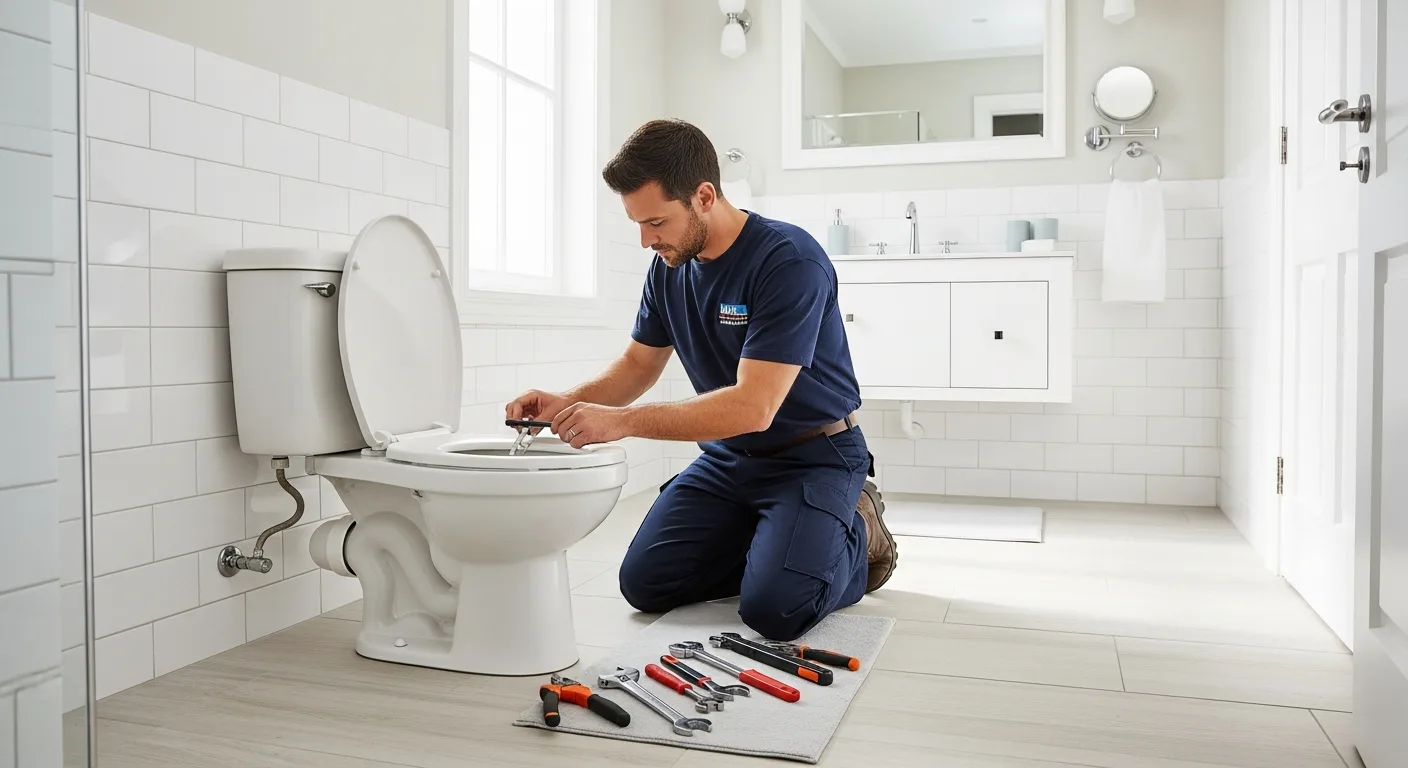
Leaking Toilet in a Commercial Restroom or Apartment
Water around a toilet base, or dripping from the supply line or tank, means a failed seal or part. How we find the source, fix it and protect the floor below.
A leaking toilet is a failed part: the wax seal at the base, the supply line or shutoff, or a tank gasket. We run water to see where it comes from, replace the failed part and confirm it's dry. If the flange or the floor is damaged, that becomes a proposal.
What was wrong
A restroom attendant notices a wet ring around a toilet base, or a tenant reports a damp bathroom floor and a stain on the ceiling below. Sometimes it's a slow drip from the supply line behind the toilet that nobody saw until the cabinet or drywall swelled. Water that reaches a subfloor or a unit below turns a small repair into a bigger one, so it's worth acting early.
Where the water appears tells you most of what you need. Water at the base is usually the wax seal between the toilet and the drain flange. Water at the wall is usually the supply line or shutoff valve. Water running down the outside of the tank or dripping from the tank bolts is a gasket problem. These are different parts, and the fix for one doesn't help the others.
How we find the cause
We dry everything, then run water and watch. We flush the toilet and look at the base. We open the supply and look at the line and the stop valve. We check the tank connections. Drying first matters, because a damp toilet can fool you into blaming the wrong joint.
If the leak only shows when the toilet flushes, it's the base seal or the flange. If it drips constantly, even when no one flushes, it's the supply side. If the toilet rocks, the bolts or flange are loose, and a loose toilet will keep breaking its seal.
What fixes it
Most of these are a replaced part. A failed wax ring gets a new seal. A bad supply line or stop valve gets replaced. Worn tank gaskets or bolts get new ones. We confirm each repair by running the fixture and checking that the area stays dry.
If we pull the toilet and find a cracked flange, a flange set too low, or a rotted subfloor, that goes into a written proposal because it's a bigger repair. For rentals and managed buildings, proposals go to the owner or property manager, and we document the work with photos and on-site sign-off when your process needs it.
What to know before you call
Close the shutoff behind the toilet if water is dripping, and put a towel down. If water has reached a ceiling or a unit below, tell us when you book so we can look at the damage as well as the toilet.
In apartments, tell us who is authorizing the work and how to reach the tenant. In commercial buildings, tell us if the site requires a check-in, a PIN, or a work-order number.
If it's your home
You can often tighten bolts or replace a supply line yourself, and we'll tell you if that's all it needs. If the toilet leaks at the base and you've reseated it before, or you see staining below, call us before the floor takes the damage.
Last reviewed 2026-10-05. This page describes a pattern we see on service calls; your building, fixtures and city rules decide the details.
Services that fix it
Questions people ask
Seeing This at Your Place?
Call or send the details. 24/7 emergency service, licensed and insured, free estimates, price up front.