
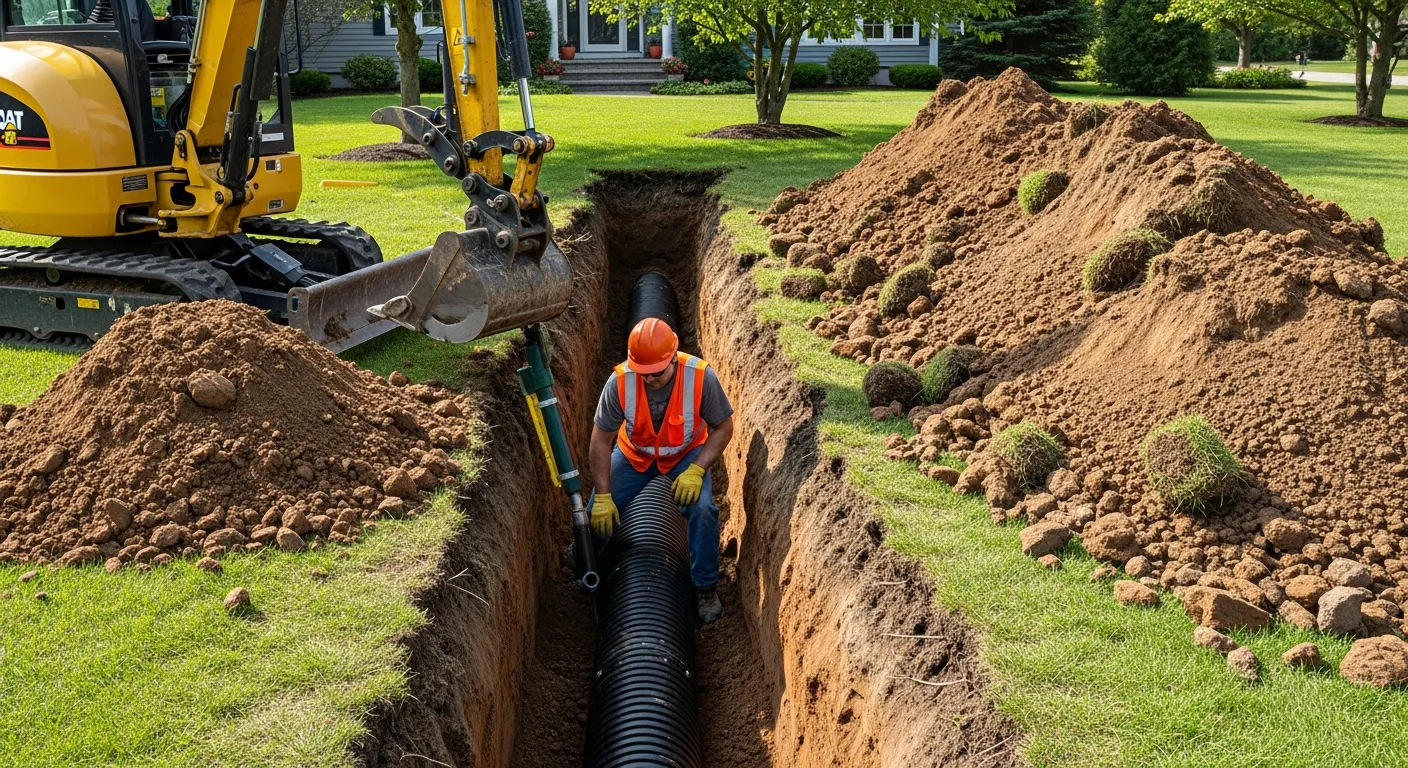
Trenchless Sewer Repair in Phoenix
Call HQ before you sign for lining or bursting. We can do either, and we will show you on camera whether your line suits it or needs to be dug.
HQ can line or burst a sewer, and in most cases we recommend digging and replacing it instead. The plumbing code allows trenchless repair with camera surveys and a permit. A trench lets the inspector see the pipe, bed and slope before backfill. A liner is checked on video. Call us before you sign anything.
The rules that apply
Each rule links to the official text we read it from. Cities change these, so check the source before a big decision. Last checked 2026-10-11.
Pipe bursting is limited to small gravity lines
Phoenix (2024 IPC)Section 716.2 limits bursting of building sewer and building drain piping to gravity piping 6 inches and smaller, and the new pipe must be the same nominal size as the old. The new pipe is HDPE at SDR 17 (ASTM F714), and a recorded camera survey comes first.
Source: 2024 IPC Sec. 716.2 to 716.4, as accepted in PhoenixRelining needs the city to review the video before the permit
Phoenix (2024 IPC)Section 717 limits relining to gravity piping 4 inches and larger, with the same nominal size. The pipe is descaled, cleaned and flushed, then surveyed on video. Before the permit is issued, the code official reviews that video to decide whether the pipe can be relined.
Source: 2024 IPC Sec. 717.2 to 717.4, as accepted in PhoenixSome defects rule relining out
Phoenix (2024 IPC)If the video shows the piping was not installed correctly or has defects, relining is not permitted and the defective portions must be exposed and repaired. Listed defects include backgrade or insufficient slope, complete pipe wall deterioration, and complete separations such as from tree root invasion or improper support.
Source: 2024 IPC Sec. 717.5Phoenix does not amend the trenchless sections
PhoenixPhoenix's amendments to the 2024 IPC change Chapter 7 only at Section 704.1, so Sections 716 through 718 apply as written. Phoenix also accepts the Uniform Plumbing Code, so ask which code your permit is under.
Source: City of Phoenix amendments to the 2024 IPCAlso: Phoenix PBCC, IBC Ch. 1 Sec. 101.4.3 (UPC or IPC applies, as amended)Replacing buried drain pipe is permitted work
PhoenixWhen concealed drain, soil or waste pipe is defective and has to be removed and replaced with new material, the work is new work that needs a permit. Clearing stoppages and stopping leaks are exempt. Sewer piping must have a rough-in or underground inspection before it is buried or concealed.
Source: Phoenix PBCC, IBC Ch. 1 Secs. 105.2 and 110.3.10.1Owners cover the sewer line to the main, with limits
PhoenixProperty owners clean and maintain the line from the building to the city main. The city repairs only broken service lines inside the public right-of-way, and for properties other than a single-family home or duplex, the street or alley section belongs to the owner.
Source: Phoenix City Code 28-5Pits and trenches need a utility locate
ArizonaUnderground facility operators must mark their lines within two working days of the excavator's request, and the marks last fifteen working days. Trenchless work still needs entry and exit pits.
Source: A.R.S. 40-360.22Both methods have limits that EPA lists
Federal (EPA)EPA lists bypass or diversion of flow for bursting and lining, ground movement from bursting, and for lining a reduced pipe diameter and a defective installation that may be difficult to rectify.
Source: EPA Trenchless Sewer Rehabilitation fact sheetDoes HQ line or burst sewer pipe?
Yes, we can, and most of the time we will tell you to dig and replace the line instead. That is not a dodge. It is how we build every sewer: to code, permitted, and where an inspector can see the work. If your camera run shows a pipe that suits trenchless, we will say so and quote it. If it does not, we will show you the video and explain why. HQ holds an Arizona A-12 license, the class for sewers, drains and pipe laying, so digging a sewer is work we are set up to do, not a last resort. Call us before you sign with anyone, because the first conversation is where we sort out which repair fits your line.
What does the plumbing code say about trenchless repair?
It allows it, with conditions. The 2024 International Plumbing Code, which Phoenix accepts, has a section for pipe bursting (716) and one for relining (717), and Section 718 covers cured-in-place repair standards. Bursting is limited to gravity building sewer and drain piping of 6 inches and smaller, replaced with HDPE pipe the same nominal size. Relining is limited to gravity piping of 4 inches and larger, again the same nominal size. Both start with a recorded camera survey, and both end with a camera survey the code official reviews. Phoenix's amendments to the 2024 IPC leave these sections alone.
So the code does not forbid trenchless. What it does is move the inspection from the pipe to a video of the pipe. We have no quarrel with a code official reviewing a recording, and a clean liner can seal cracks and open joints. The question is what that inspection can and cannot tell anyone.
How is a dug sewer inspected, and how is a liner checked?
A dug sewer is inspected in the open. Phoenix requires a rough-in or underground inspection of sewer piping before it is buried, so the inspector sees the pipe, the bed it sits on, every joint and the slope before a shovel of backfill goes in. The new pipe is then tested: the IPC's gravity sewer test holds a 10-foot head of water for 15 minutes.
A liner is checked from the inside. Section 717 relies on the pre-installation video, the installer's data report, a flush and flow test, a post-installation video and a written certification from the permit holder. Those are real records. But the pipe behind the liner stays buried, nobody sees its joints or its bed, and EPA lists a defective liner installation as something that "may be difficult to rectify." When a liner fails, the fix is usually the dig you tried to avoid.
Why is a liner only as good as the pipe it goes into?
A liner copies the pipe it lines, flaws included. A belly that holds water stays a belly. Section 717.5 says relining is not permitted where the video shows backgrade or insufficient slope, complete pipe wall deterioration, or complete separations, such as from tree roots or improper support. Those are the failures that need real repair, and the code sends them back to a trench. Our guides to a belly in the sewer line and an offset joint show what they look like on camera.
Two more limits matter. A liner thickens the pipe wall, so it reduces the inside diameter, and EPA lists that as a drawback of lining. And every branch connection has to be reopened after the liner cures. EPA notes that laterals are typically reinstated with robotic cutting devices working from the inside, which is another thing nobody can see once the work is done.
When is trenchless the right call?
When the camera supports it and digging would cost you more than the pipe. A good candidate is a round, aligned line with sound grade and cracks or leaking joints, in the size range the code allows. Digging also gets hard when the pipe runs under a slab, a driveway, a patio or a finished commercial floor. In those cases we will walk you through lining or bursting, pull the permit, and give you the video and the paperwork. Our guides to pipe bursting versus pipe lining and to relining all of the line, part of it or none explain the trade-offs.
How does HQ handle a failing sewer line?
Step by step, in this order:
- 1Clean and film the line. We hydro jet what needs clearing, then run a sewer camera and record it. You get the video.
- 2Find and mark it. We locate the problem by footage and depth and mark it on the ground. For Phoenix, that mark also tells you whether the break sits on your side of the property line or in the public right-of-way.
- 3Decide with the video in front of you. Dig and replace, line, or burst. If the line suits trenchless, you will hear that from us. If it does not, you will hear why.
- 4Call the locate and pull the permit. Arizona requires a utility locate before digging. The plumbing permit comes next, and a right-of-way permit if the work reaches the street. See the permit to dig in the right-of-way.
- 5Do the work to code and test it. The inspector looks at the pipe before it is covered.
- 6Hand over the record. Video, permit paperwork and test results.
What should you ask any contractor who offers lining or bursting?
Ask five questions. Will you pull a permit? Will the city see the pre-installation video before the permit is issued? What is the pipe size, since bursting stops at 6 inches and lining starts at 4? How will every lateral connection be reopened? And if the liner fails, what happens next? A quote that skips the camera survey or the permit does not follow Sections 716 and 717. If you want the code details first, read Is trenchless sewer repair allowed by plumbing code?.
When is trenchless the wrong answer?
When the pipe has collapsed, lost its grade, separated at a joint, or when the camera shows damage the code lists as a bar to relining. Those lines need exposing and repairing. It is also wrong when nobody has put a camera in the line yet. Deciding on a method before filming the pipe is guessing. If the real problem is a clog, grease or roots, cleaning comes first; see hydro jetting and jetting before lining.
Who pays, and who owns the line?
You do, up to the city main, with limits on what the city covers. Phoenix City Code 28-5 makes owners responsible for the line from the building to the main. The city repairs a broken section in the public right-of-way only for a single-family home or duplex. For any other property, including businesses and apartments, the owner repairs the street or alley section too, with a city permit. See who is responsible for the sewer line in Phoenix and sewer line ownership by Valley city.
How do you start?
Call with the address, the city, and any camera video you already have. We offer 24/7 emergency service for backups, free estimates and upfront pricing before work starts. For the full repair and replacement picture, see our sewer repair page.
Is trenchless sewer repair allowed by plumbing code?
Yes. The 2024 IPC accepted in Phoenix includes pipe bursting, relining and cured-in-place repair. Sections 716 and 717 require recorded camera surveys for bursting and relining; Section 718 specifies standards for cured-in-place repairs. Defective pipe can require excavation first. Confirm the applicable code and permit requirements.
Read full answer: Is trenchless sewer repair allowed by plumbing code?Trenchless sewer repair vs digging: what's the difference?
Trenchless sewer repair renews or replaces a pipe through small access pits using methods like CIPP lining or pipe bursting, so most of the line stays buried. Traditional digging trenches the full length of the pipe. Trenchless protects landscaping and is often done in about a day.
Read full answer: Trenchless sewer repair vs digging: what's the difference?Pipe bursting vs pipe lining: which sewer repair do I need?
Choose pipe lining (CIPP) when the old sewer pipe is still mostly intact, since a resin liner cures inside it to form a new pipe. Choose pipe bursting when the pipe is collapsed, badly broken, or needs upsizing. A camera inspection decides which fits.
Read full answer: Pipe bursting vs pipe lining: which sewer repair do I need?Full reline, partial reline, or nothing for my sewer line?
Let the camera decide. Do nothing if the pipe is round, tight and mostly clear. Spot-line one isolated crack or root-filled joint. Reline the whole run when defects repeat along it. A liner cannot fix a collapsed or badly shifted pipe, so that needs replacement.
Read full answer: Full reline, partial reline, or nothing for my sewer line?What does a belly in a sewer line mean?
A belly, or sag, is a low spot where the sewer pipe has lost its slope and holds water. It's usually a problem only if debris settles there and builds up into backups. Seattle's utility calls a sag under 25 percent of the pipe diameter minor, and 50 percent or more severe.
Read full answer: What does a belly in a sewer line mean?In Phoenix, who is responsible for the sewer line to the city main?
You are. In Phoenix, the property owner is responsible for the sewer line from the house to the public main, under City Code Chapter 28. The one exception: for single-family and duplex homes, the city repairs broken sewer piping in the public right-of-way. A clog in your line is always your cost.
Read full answer: In Phoenix, who is responsible for the sewer line to the city main?Sources
- 2024 International Plumbing Code, Chapter 7 (Sections 716, 717, 718), as accepted in Phoenix
- City of Phoenix: Amendments to the 2024 International Plumbing Code
- City of Phoenix: 2024 IBC Chapter 1 Administrative Amendments (Sec. 105.2, 110.3.10.1)
- Phoenix City Code Sec. 28-5, Property owner responsible for building sewers
- A.R.S. 40-360.22, Excavations; locating underground facilities
- U.S. EPA: Collection Systems O&M Fact Sheet, Trenchless Sewer Rehabilitation (EPA 832-F-99-032)
- U.S. EPA Water Technology Fact Sheet: Pipe Bursting
- Arizona Administrative Code R4-9-102, contractor license classifications (A-12 Sewers, Drains and Pipe Laying)
- 2024 International Plumbing Code, Chapter 3 (Sec. 312.7, gravity sewer test)
- ICC CodeNotes: Replacement of Underground Building Sewers and Building Drains in the I-Codes
Weighing Lining or Bursting?
Talk to a real dispatcher who knows commercial work. Upfront pricing before work starts, 24/7 for emergencies.