
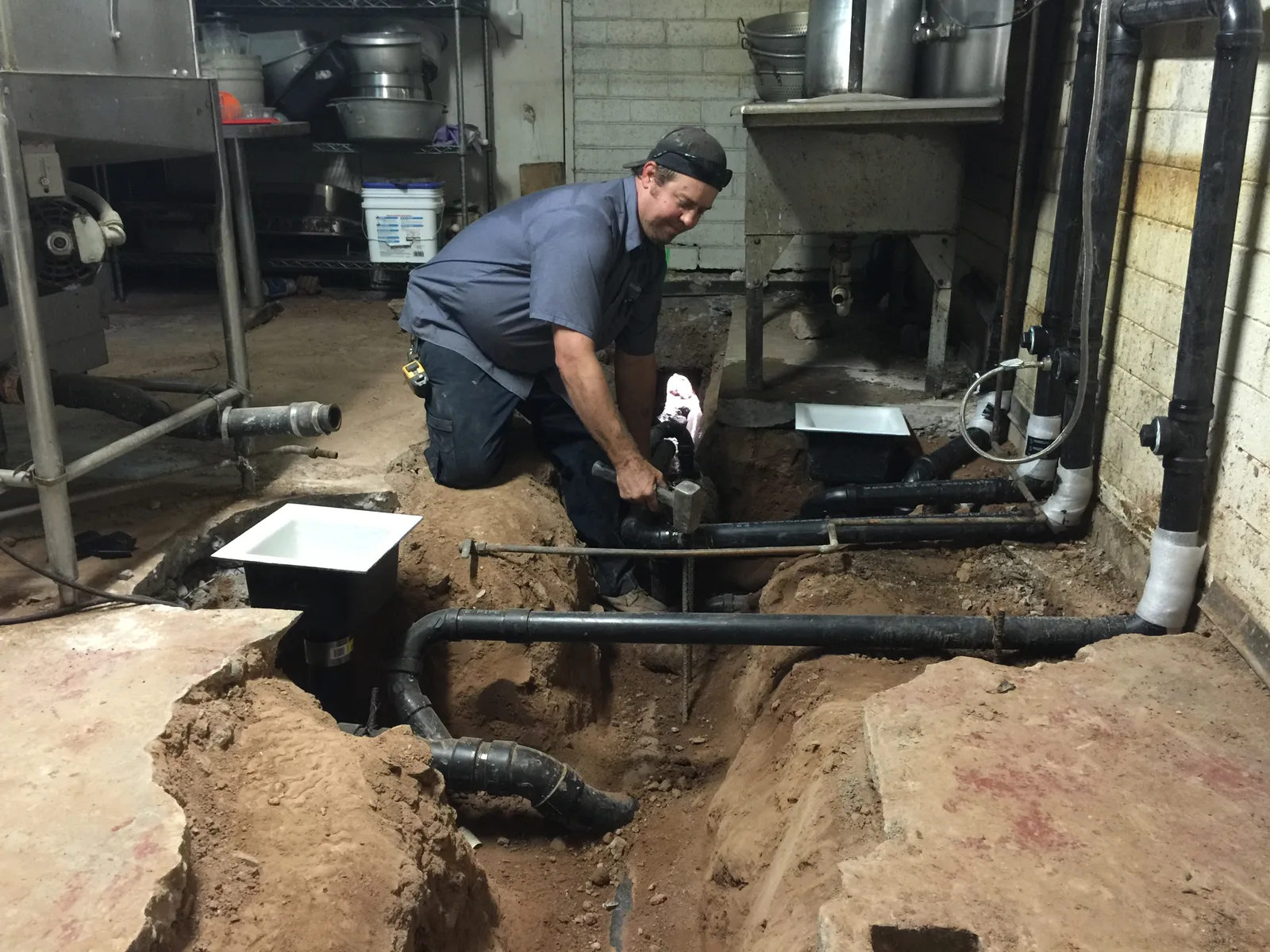
Sewer Pipe Bursting in Phoenix
New HDPE pulled through the old line, done to the code's size, camera and test rules. We tell you when the line is a candidate and when it should be dug.
Pipe bursting pulls new HDPE pipe through an old sewer while breaking the old pipe apart. HQ offers it for lines that qualify, but we usually recommend excavation. The 2024 IPC limits bursting to gravity piping of 6 inches or smaller, replaced with the same nominal size, and requires camera surveys before and after.
The rules that apply
Each rule links to the official text we read it from. Cities change these, so check the source before a big decision. Last checked 2026-10-11.
Size limit and same-size replacement
Phoenix (2024 IPC)Section 716.2 limits pipe bursting of building sewer and building drain piping to gravity piping of 6 inches and smaller. The replacement pipe must be the same nominal size as the existing pipe.
Source: 2024 IPC Sec. 716.2, as accepted in PhoenixCamera survey before the work
Phoenix (2024 IPC)The existing piping to be replaced is inspected internally by a recorded video camera survey, with notations of the position of cleanouts and the depth of connections to the existing piping.
Source: 2024 IPC Sec. 716.3Replacement pipe is HDPE at SDR 17
Phoenix (2024 IPC)The replacement pipe is high-density polyethylene (HDPE) with a standard dimension ratio of 17, in compliance with ASTM F714. Fittings connected to it are HDPE meeting ASTM D2683.
Source: 2024 IPC Secs. 716.4 and 716.5Review and pressure test
ICC commentary on IPC 716ICC's commentary on Section 716 says cleanouts are required where the old line had none, and the finished pipe is surveyed on video, reviewed and approved by the code official before the pressure test under Section 312.
Source: ICC CodeNotes on IPC Section 716Gravity sewer test
2024 IPCA gravity sewer test plugs the building sewer at its connection to the public sewer, fills it, and holds a 10-foot head of water for 15 minutes.
Source: 2024 IPC Sec. 312.7No Phoenix amendment to Section 716
PhoenixThe City of Phoenix amendments to the 2024 IPC change Chapter 7 only at Section 704.1, so Section 716 applies as written. Phoenix also accepts the Uniform Plumbing Code, so ask which code your permit is under.
Source: City of Phoenix amendments to the 2024 IPCAlso: Phoenix PBCC, IBC Ch. 1 Sec. 101.4.3 (UPC or IPC applies, as amended)Replacing buried drain pipe is permitted work
PhoenixRemoving and replacing defective concealed drain pipe is new work that needs a permit, and sewer piping needs a rough-in or underground inspection before it is buried or concealed.
Source: Phoenix PBCC, IBC Ch. 1 Secs. 105.2 and 110.3.10.1Pits need a utility locate
ArizonaUnderground facility operators must mark their lines within two working days of the excavator's request, and the marks last fifteen working days.
Source: A.R.S. 40-360.22What is sewer pipe bursting?
Bursting replaces a sewer by pulling a new pipe through the old one. EPA describes it this way: an expansion head is pulled through the existing pipe, typically by a cable and winch, and pushes the old pipe outward until it breaks apart. The head pulls the new pipeline in behind it, filling the space the old pipe leaves. The crew digs an entry pit and an exit pit instead of a trench along the whole line. The new pipe is HDPE, joined by fusion into one continuous run. ICC notes that joint-free pipe helps keep roots out.
What does the code require?
Four things: size, pipe, cameras and a test. Section 716 of the 2024 IPC, which Phoenix accepts, limits bursting to gravity building sewer and building drain piping of 6 inches and smaller, and the new pipe must be the same nominal size. The replacement is HDPE at SDR 17, meeting ASTM F714. A recorded camera survey comes before the work, noting cleanouts and the depth of connections. ICC's commentary adds that the finished pipe is surveyed and reviewed by the code official before a pressure test under Section 312, and that cleanouts are added where the old line had none. Phoenix's amendments leave Section 716 as written.
The same-size rule matters. Pipe bursting is known for installing a larger pipe, and EPA says up-sizing is possible. But for a building sewer under the IPC, the replacement must match the old nominal size, so the upsizing benefit is off the table. Ask any contractor which code and which size the permit will list.
Where does bursting work, and where does it fail?
It suits a line in moderately compactable soil with room for the pits and no fragile utilities alongside. EPA lists the limits: difficulties can arise from expansive soils, nearby service lines and a collapsed pipe. Ground displacement is a concern where the pipe is shallow, where deteriorated utilities sit within two to three pipe diameters, and typical pneumatic bursting can produce noticeable vibration at the surface. EPA also notes bursting needs flow bypass or diversion and an insertion pit. For homes and businesses with other buried lines close by, such as water, gas or irrigation, those are the details that decide the job. We locate everything first, because Arizona law requires it before digging and the marks last fifteen working days.
Why does HQ usually recommend digging?
Because a dug sewer is inspected with the pipe in view. Phoenix requires an underground inspection before sewer piping is buried. When we replace a line by excavation, the inspector sees the new pipe, the bed, the joints and the slope, and the line gets a water test before backfill. With bursting, the old pipe is broken up in the ground and the new pipe is verified by camera and a pressure test. That is code-compliant, and it is a reasonable repair for the right line. It is still a different level of look than the open trench.
We offer bursting. We recommend digging. We want to talk to you about which one your line needs, and we will use your camera video to do it. HQ holds an Arizona A-12 license for sewers, drains and pipe laying, so replacing a sewer by excavation is work we are set up for.
What does HQ do on a sewer replacement?
In this order:
- 1Camera the line. We clean it if needed and record a sewer camera inspection. The recording is the pre-installation survey the code asks for, and you keep a copy.
- 2Locate and measure. We mark the line's location and depth, check pipe size against the 6-inch limit, and find nearby utilities.
- 3Pick the method with you. Dig and replace, burst, or line. See trenchless sewer repair and pipe bursting versus lining.
- 4Permit and locate. The plumbing permit, a right-of-way permit if the work reaches the street, and the utility locate.
- 5Do the work, test it and film it. Cleanouts where the old line had none, then the video and the test.
- 6Hand over the record. Video, permit and test results.
When is bursting the wrong answer?
When the line is over 6 inches, when the pipe has collapsed or runs close to other buried lines, when the grade needs correcting, or when the line has to move to a new route. Bursting follows the old path, so it generally cannot fix a pipe that sits at the wrong slope or in the wrong place. A line that needs a different route needs a trench. And if the real problem is roots or grease in a sound pipe, cleaning is the answer. For more on lining as the alternative, see sewer pipe lining.
How do you start?
Call with your address, your city, the pipe size if you know it, and any camera video you have. HQ offers 24/7 emergency service for backups, free estimates and upfront pricing before work starts. For the broader picture, see sewer repair and who pays for the sewer line in Phoenix.
Pipe bursting vs pipe lining: which sewer repair do I need?
Choose pipe lining (CIPP) when the old sewer pipe is still mostly intact, since a resin liner cures inside it to form a new pipe. Choose pipe bursting when the pipe is collapsed, badly broken, or needs upsizing. A camera inspection decides which fits.
Read full answer: Pipe bursting vs pipe lining: which sewer repair do I need?Is trenchless sewer repair allowed by plumbing code?
Yes. The 2024 IPC accepted in Phoenix includes pipe bursting, relining and cured-in-place repair. Sections 716 and 717 require recorded camera surveys for bursting and relining; Section 718 specifies standards for cured-in-place repairs. Defective pipe can require excavation first. Confirm the applicable code and permit requirements.
Read full answer: Is trenchless sewer repair allowed by plumbing code?Trenchless sewer repair vs digging: what's the difference?
Trenchless sewer repair renews or replaces a pipe through small access pits using methods like CIPP lining or pipe bursting, so most of the line stays buried. Traditional digging trenches the full length of the pipe. Trenchless protects landscaping and is often done in about a day.
Read full answer: Trenchless sewer repair vs digging: what's the difference?What factors affect the cost of replacing a sewer line?
Sewer line cost is driven by the length and depth of the run, pipe diameter and material, what sits on top (slab, driveway, mature trees, street), and the repair method chosen. Trenchless lining or bursting versus open-cut digging, plus permits, surface restoration, and any public right-of-way work, all move the final price.
Read full answer: What factors affect the cost of replacing a sewer line?Do I need a permit to dig in the street right-of-way to fix my sewer or water line in Phoenix?
Yes. Digging in the public right-of-way to reach your sewer or water service needs a City of Phoenix excavation and barricade permit from the Street Transportation Department, on top of your plumbing permit. You also must call Arizona 811 first. This work is normally done by a licensed contractor.
Read full answer: Do I need a permit to dig in the street right-of-way to fix my sewer or water line in Phoenix?In Phoenix, who is responsible for the sewer line to the city main?
You are. In Phoenix, the property owner is responsible for the sewer line from the house to the public main, under City Code Chapter 28. The one exception: for single-family and duplex homes, the city repairs broken sewer piping in the public right-of-way. A clog in your line is always your cost.
Read full answer: In Phoenix, who is responsible for the sewer line to the city main?Sources
- 2024 International Plumbing Code, Chapter 7 (Section 716), as accepted in Phoenix
- 2024 International Plumbing Code, Chapter 3 (Sec. 312.7, gravity sewer test)
- City of Phoenix: Amendments to the 2024 International Plumbing Code
- City of Phoenix: 2024 IBC Chapter 1 Administrative Amendments (Sec. 105.2, 110.3.10.1)
- A.R.S. 40-360.22, Excavations; locating underground facilities
- U.S. EPA Water Technology Fact Sheet: Pipe Bursting
- U.S. EPA: Collection Systems O&M Fact Sheet, Trenchless Sewer Rehabilitation (EPA 832-F-99-032)
- ICC CodeNotes: Replacement of Underground Building Sewers and Building Drains in the I-Codes
Weighing Pipe Bursting?
Talk to a real dispatcher who knows commercial work. Upfront pricing before work starts, 24/7 for emergencies.