
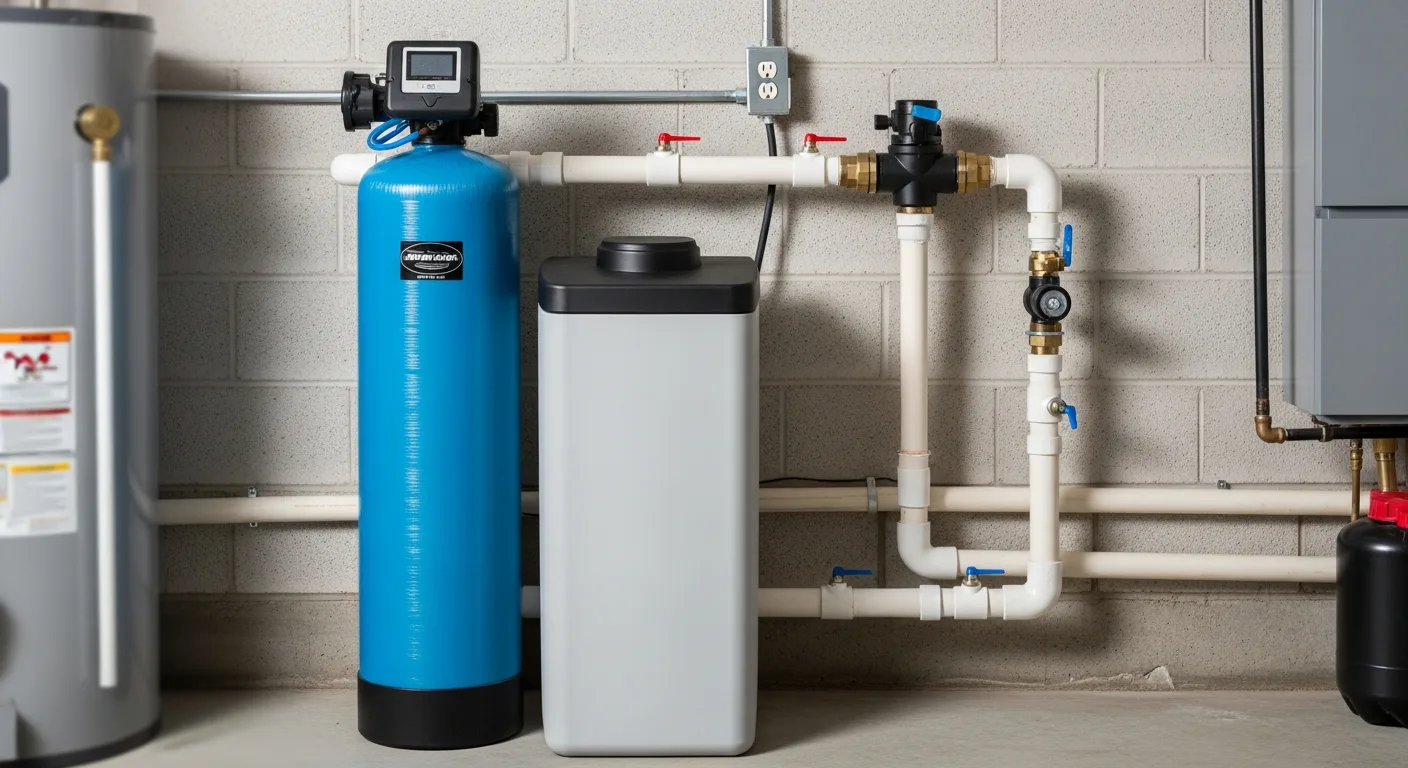
Commercial Reverse Osmosis Installation in Phoenix
A 5-stage under-sink RO system with an optional UV stage and its own faucet, installed right, with stone counters drilled by a fabricator.
We install 5-stage under-sink reverse osmosis systems for offices, cafes and small kitchens, with an optional UV stage and a dedicated RO faucet. A food business in Maricopa County also needs a testable high-hazard backflow preventer, such as an RPZ, immediately upstream of the RO system and no copper downstream. Filters follow the manufacturer's schedule.
The rules that apply
Each rule links to the official text we read it from. Cities change these, so check the source before a big decision. Last checked 2026-10-04.
Backflow preventer upstream of RO
Maricopa County (food establishments)An approved, testable, high-hazard continuous pressure backflow preventer, such as an RPZ, must be provided immediately upstream from any RO system in a permitted food business.
Source: Maricopa County Plan Review Construction Guide, Water Softeners and Reverse OsmosisNo copper or brass downstream of RO water
Maricopa County (food establishments)Copper and copper alloys such as brass may not be in contact with food that has a pH below 6, including water from an RO system. Copper or copper alloy piping or connections cannot be installed downstream of the RPZ or the RO system, and a re-mineralized RO system requires water sampling.
Source: Maricopa County Plan Review Construction GuideA water and ice store with RO needs its own permit
Maricopa CountyA business selling RO water gets an Eating and Drinking permit, may not wash bottles for customers, and needs approved backflow prevention assemblies. A bottled water permit is required to bottle water.
Source: Maricopa County Plan Review Minimum Requirements, Water and Ice StoresPhoenix water is harder than many RO specs allow
PhoenixThe city's 2025 report lists total hardness of 172 to 302 ppm (10 to 17.6 grains per gallon), total dissolved solids of 464 to 716 ppm and pH of 6.6 to 8.8. These are aesthetic parameters, not health standards.
Source: City of Phoenix 2025 Water Quality ReportRO uses water to make water
Federal (EPA WaterSense)A typical point-of-use RO system sends five gallons or more of reject water to the drain for every gallon it produces. WaterSense-labeled units must send 2.3 gallons or less. EPA says filtration may be enough in some cases.
Source: EPA WaterSense: Point-of-Use Reverse Osmosis SystemsWhat we install
A commercial under-sink RO install is the same hardware as a home unit, in a different setting: a 5-stage filter set, a storage tank, a dedicated faucet and a reject line to the drain. We install 5-stage systems with an optional UV stage, and we put the filters and tank where a staff member can reach them without emptying a cabinet. The tank and filters sit under the sink, and the RO faucet sits on the counter or the sink deck.
It suits a break room, a cafe's drinking-water tap, a dental or medical front office, a salon or a small kitchen that wants drinking water without hauling bottles. It does not feed a dish machine, an ice machine or a coffee brewer unless the manufacturer says so. For ice machines, see restaurant ice machine water filtration.
The extra faucet and the stone counter
An RO system needs its own faucet. If your sink has a spare hole for a soap dispenser or sprayer, the faucet can use it. If not, a hole has to be drilled. Granite, quartz and other stone counters are a special case. We bring in a stone fabricator to drill the hole, because a cracked slab costs far more than the system. Tell us the counter material when you call, so we can plan the visit.
The county rule for food businesses
If you serve food or drink, Maricopa County's plan review guide has two RO rules. First, an approved, testable, high-hazard continuous pressure backflow preventer, such as an RPZ, goes immediately upstream from any RO system. Second, copper and brass cannot touch water from an RO system, so nothing downstream of the RPZ or the RO unit can be copper or brass.
That second rule catches DIY installs. Brass faucets, brass fittings and copper stubs are everywhere in a commercial sink, and none of them can sit on the RO side. We plumb the RO line with approved materials and a faucet that fits the rule. If the system re-mineralizes the water, the county requires water sampling. See soda and ice machine backflow for the other devices the county asks for, and plan review requirements.
Phoenix water and what it does to an RO system
Phoenix's 2025 report lists total hardness of 10 to 17.6 grains per gallon, and pH as high as 8.8. That matters because manufacturers set limits. One manufacturer's installation manual lists a maximum hardness of 10 grains per gallon at 6.9 pH, and says membrane life depends mostly on the pH and hardness of the supply. If supply pH is 6.8 to 7.7, the membrane may last well over a year, but it may last as little as 6 months when pH is 8.5 to 10, because a higher pH weakens it.
So the honest sizing question for a Phoenix business is whether the incoming water is inside the unit's limits. If hardness is above the spec sheet, a softener or a different pretreatment ahead of the RO is worth considering. See reverse osmosis versus a water softener and our water softening page. Another thing to check on the label is the maximum chlorine, and the pre-filters do that job.
Filter and membrane intervals
Follow the manual for your model, and write the install date on the housings. The same manufacturer's manual says to replace the pre-filter and post-filter cartridges at least every 6 months of use, sooner if they clog, and to replace the membrane when output or taste changes. Other makers publish different numbers, and this is why we leave the manual with you. Our guide on RO filter replacement explains the signs.
One warning from a filter maker's sanitizing bulletin: never run a chlorine-based sanitizing cartridge through a system with the RO membrane still installed. The membrane is chlorine-sensitive. Remove it first, sanitize, then flush at least five gallons before putting it back.
What to expect on install day
We check the supply pressure and the sink first, set the faucet, connect the supply with a proper fitting, run the reject line to the drain with an air gap where the unit calls for it, then flush and test. The manufacturer's manual notes it can take 1 to 4 hours before the maximum flow is available at the faucet. Learn more in what to expect from an RO install.
When RO is the wrong answer
EPA says RO wastes water and that filtration may be enough in some cases. If your complaint is chlorine taste or sediment, a carbon filter may do it for far less water. If the problem is scale on equipment, RO at one tap does nothing for the dish machine. And if the water is for coffee or ice, follow the equipment maker, since some say to avoid softened or demineralized water. Ask us before you buy; we will tell you if a simpler filter does the job. See whether RO is worth it.
Getting a quote
Tell us the sink, the counter material and what the water is for. We offer free estimates and upfront pricing before work starts, and we are licensed and insured.
Services and tools
Does my business need a commercial reverse osmosis system?
Likely yes if water taste or scale affects your product or equipment. Restaurants, cafes, labs, medical offices, and car washes use commercial reverse osmosis for clean-tasting water and spot-free results. In Phoenix's hard water, RO with pretreatment protects gear, prevents scale, and keeps equipment warranties intact.
Read full answer: Does my business need a commercial reverse osmosis system?How often do reverse osmosis filters need to be replaced?
Replace the sediment and carbon pre-filters about every 6 to 12 months, the RO membrane about every 2 to 3 years, and the final carbon polishing filter about every 12 months. These are typical ranges. Follow your maker's schedule, and change parts sooner in Phoenix, where hard water shortens filter life.
Read full answer: How often do reverse osmosis filters need to be replaced?What is involved in installing a reverse osmosis system?
An under-sink reverse osmosis install mounts a multi-stage unit and storage tank in the sink cabinet, adds a dedicated faucet, taps the cold supply with a feed valve, and connects the reject line to the drain. It takes a few hours, then the system is flushed and the water tested.
Read full answer: What is involved in installing a reverse osmosis system?Is a reverse osmosis system worth it?
Often yes, for drinking water. A reverse osmosis system forces water through a membrane to strip lead, arsenic, PFAS, and dissolved solids the EPA flags. It is a point-of-use filter for the kitchen tap, not a whole-house fix. It does waste reject water and removes good minerals too.
Read full answer: Is a reverse osmosis system worth it?Sources
- Maricopa County Environmental Services: Plan Review Construction Guide, Food Establishments (Rev. 09/04/2026)
- Maricopa County Environmental Services: Plan Review Minimum Requirements for Food Establishments (Rev. 09/02/2026)
- City of Phoenix: 2025 Water Quality Report
- EPA WaterSense: Point-of-Use Reverse Osmosis Systems
- Whirlpool Water Solutions: Reverse osmosis system installation and operation manual (WHER25)
- Pentair Everpure: Sanitizing bulletin EV701783
Want Cleaner Water at the Tap?
Talk to a real dispatcher who knows commercial work. Upfront pricing before work starts, 24/7 for emergencies.