
Commercial Drywell Cleaning in Phoenix and the Valley
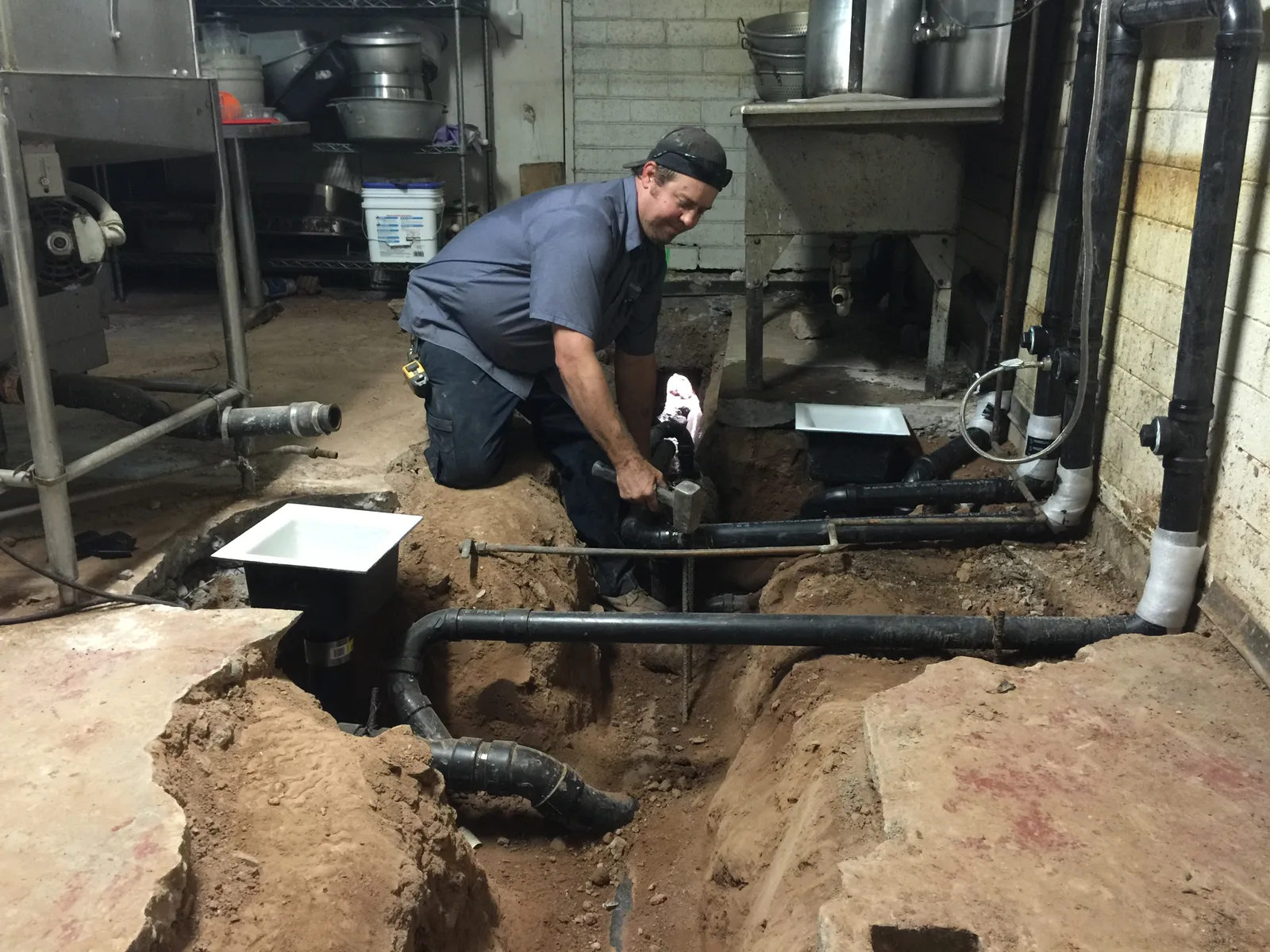
Sludge builds up on top of the leach rock until the well stops taking water. We clean it off so the drywell drains down again.
HQ cleans commercial drywells across the Valley. We hold an Arizona A-12 license, the contractor class whose scope names dry wells. A drywell stops draining when sludge builds up on top of the leach rock, so we clean that layer off until the well drains down again. Free estimates.
The rules that apply
Each rule links to the official text we read it from. Cities change these, so check the source before a big decision. Last checked 2026-10-11.
Which license class names dry wells
ArizonaThe Registrar of Contractors scope for A-12 (Sewers, Drains and Pipe Laying) covers the laying of pipe for storm drains and the installation of septic tanks, leach lines and dry wells, with the related excavating and backfilling. The A-4 (Drilling) scope names constructing dry wells. The C-37 plumbing scope lists septic tanks, leaching lines and roof leaders, and does not name dry wells.
Source: A.A.C. R4-9-102, commercial contractor license classifications and scopesA drywell is an injection well the owner reports
ArizonaADEQ treats a stormwater drywell as a Class V injection well authorized by rule. The owner or operator submits inventory information in myDEQ, and failing to do it on time prohibits injecting into the well. Cleaning the well does not replace that filing.
Source: A.A.C. R18-9-I652, injection well inventoryAlso: ADEQ: UIC Class V well inventoryWhen ADEQ says to inspect and when to remove sediment
ArizonaADEQ guidance says to inspect at least annually, or whenever water stays on the drainage area or basin longer than 36 hours. In paved areas, sediment comes out when it fills 10 percent of the settling chamber's effective capacity, and in landscaped areas at 25 percent. Keep inspection and maintenance records.
Source: ADEQ guidance for drywell design, installation, operation, maintenance and inspectionOwner cleans on a schedule and keeps records
PhoenixThe owner has to maintain retention basins and drywells, and the city's manual says the regular drywell maintenance schedule cannot be longer than every three years. Records are kept for five years and shown to the city on request.
Source: Phoenix City Code 32C-103Also: Phoenix Stormwater Policies and Standards ManualClean at least every three years, replace if it will not drain
Maricopa CountyIn unincorporated Maricopa County the owner cleans each drywell at least every three years. A drywell that stops draining its retention basin within 36 hours has to be replaced or refurbished by the owner.
Source: Maricopa County Drainage Policies and Standards, Standard 6.10Inspect yearly and after 36 hours of ponding
ChandlerChandler's design manual has the owner inspect drywells every year, or whenever ponding lasts 36 hours, using the ADEQ checklist. Cleaning triggers are tied to how full the interception chamber is, and City Code 45-8 makes failing to maintain the system a code violation.
Source: Chandler Engineering and Design Standards Manual, Sec. 3.6.12Also: Chandler City Code 45-8 (maintenance duty and violations)What does HQ do when a drywell stops draining?
We clean the sludge off the top of the leach rock. A drywell works because stormwater settles in a chamber and then soaks down through a column of gravel, the leach rock, into the ground. Over the years the chamber collects silt, oil film and trash. Eventually a layer of sludge sits on the leach rock and seals it. Often the rock underneath is still fine. The water just cannot reach it.
So the job is simple to describe. We open the well, take the sludge off the top of the rock, and keep working until the well drains down. The goal is a drywell that takes water again, not a clean-looking chamber. We hold an Arizona A-12 license, the class whose scope names dry wells.
Why do commercial drywells stop draining?
Because of what washes in from the lot. Every storm carries fine dirt, tire dust, leaves and oil from the pavement to the grate. A catch basin ahead of the well catches most of the coarse material, but only if somebody keeps that basin emptied. When the basin fills, the leftover goes straight into the drywell.
ADEQ's guidance puts a number on it: in paved areas, sediment should come out when it fills 10 percent of the settling chamber's effective capacity. That is not much sludge. A lot that has not had its basins cleaned in three or four monsoon seasons is usually well past it.
The other thing that kills drywells is the wrong water. ADEQ says drywells should take only stormwater and urban surface runoff. A drywell that has been taking truck wash water, a leaking dumpster or a floor drain someone tied in is a different problem, and cleaning alone will not hold.
How often should a commercial drywell be cleaned?
At least every three years, and sooner if water stands. Phoenix's stormwater manual says the regular maintenance schedule cannot be longer than every three years. Maricopa County says the same for drywells in unincorporated areas. ADEQ wants an inspection at least once a year, and again any time water sits longer than 36 hours.
The three-year number is a ceiling, not a target. A strip center with big trees and a dirt lot next door can fill a chamber faster than an office park with clean paving. The inspection tells you which one you are. Keep the record, because Phoenix requires five years of maintenance records and will ask for them.
Who is allowed to work on a drywell?
A contractor whose license class covers it. Arizona's Registrar of Contractors lists dry wells in the scope of the A-12 license (sewers, drains and pipe laying) and the A-4 license (drilling). The plumbing classification's scope lists septic tanks, leaching lines and roof leaders. It does not name dry wells. Before you sign a bid for drywell work, ask the contractor which ROC classification they hold for it, and look the license up. For more on how Arizona's license classes work, see A.R.S. 32-1101.
HQ holds the A-12. Phoenix and the county both put the upkeep duty on the owner, so the license class on the work order is part of the record you keep.
Does cleaning replace the ADEQ registration?
No. Cleaning keeps the well working. The ADEQ Class V inventory is the owner's filing, and the rule is R18-9-I652. If you are not sure your wells are in myDEQ, check that before the next city inspection. Our FAQ on drywell registration walks through it.
When cleaning is not the answer
If the well will not take water even after the sludge is off, the leach rock or the soil around it has failed. That is a replacement and design question, and a civil engineer decides what goes back. The county's standards say a drywell that cannot drain its basin within 36 hours must be replaced or refurbished by the owner. Our plugged drywell FAQ covers how to tell the difference.
Also check upstream before you pay for a drywell cleaning. If the catch basin is packed or the storm line is blocked, the drywell is not getting the water at all, and the pooling you see has another cause. That is why a standing-water call starts at the grate. The whole sequence is on our parking lot and retention basin drainage page.
And if the water backing up is inside the building, from restroom lines, kitchen drains or a floor drain, that is the sanitary side. That is a job for commercial drain cleaning, not a drywell.
How to book
Tell us the address, how long water stands after rain and when the wells were last cleaned. We give free estimates, and you get the price upfront before work starts. After a monsoon storm that leaves a lot flooded, we are available 24/7.
Services and tools
What is a drywell and how do commercial sites use one?
A drywell is a bored shaft, usually with a settling chamber on top, that lets stormwater soak into the ground above the water table. Commercial sites in Arizona use them to drain retention basins and parking lots. Arizona treats them as Class V injection wells, and they should take stormwater only.
Read full answer: What is a drywell and how do commercial sites use one?How do you inspect and maintain a commercial drywell?
ADEQ's guidance calls for an inspection at least once a year, and again whenever water stands in the drainage area or basin longer than 36 hours. Clean out silt when it fills 10 percent of the settling chamber in paved areas, and keep records of every inspection and cleaning.
Read full answer: How do you inspect and maintain a commercial drywell?Can a plugged drywell be cleaned or must it be replaced?
A drywell may improve after sediment and obstructions are removed, but performance needs testing. Water remaining beyond the applicable drain-down benchmark warrants inspection, not automatic replacement. An engineer determines whether cleaning, refurbishment or replacement is appropriate; abandoned wells need proper closure.
Read full answer: Can a plugged drywell be cleaned or must it be replaced?Do drywells still need to be registered in Arizona?
Stormwater drywells generally need inventory registration as Class V injection wells. ADEQ administers Arizona’s UIC program from October 15, 2025, with wells registered and managed in myDEQ. Check the well’s classification, exemptions and jurisdiction with ADEQ; tribal-land programs can remain under EPA authority.
Read full answer: Do drywells still need to be registered in Arizona?Why is my retention basin not draining?
The usual causes are silt and debris blocking inlets or drywell chambers, a drywell that has lost capacity, or soil that no longer absorbs water. Check the inlets and drywell covers first. If water still stands after 36 hours, a civil engineer needs to test the drainage rate and design the fix.
Read full answer: Why is my retention basin not draining?Sources
- A.A.C. R4-9-102, Commercial contractor license classifications and scopes of work
- ADEQ: Guidance for design, installation, operation, maintenance and inspection of drywells (PDF)
- ADEQ: UIC Class V well inventory (drywell registration)
- A.A.C. R18-9-I652, Injection well inventory
- Phoenix City Code 32C-103, Prohibited and permitted practices
- City of Phoenix Stormwater Policies and Standards Manual (PDF)
- Maricopa County Drainage Policies and Standards (PDF)
- City of Chandler Engineering and Design Standards Manual (PDF)
- Chandler City Code 45-8, Post-construction stormwater
Related commercial services
What clearing the basin alone leaves behind, why we jet the whole run to the retention area, and what the Valley cities expect owners to keep up.
The 36-hour rule, who owns the fix, a step-by-step check from the grate to the drywell, and when the problem belongs to a civil engineer.
Drywell Not Draining?
Talk to a real dispatcher who knows commercial work. Upfront pricing before work starts, 24/7 for emergencies.