
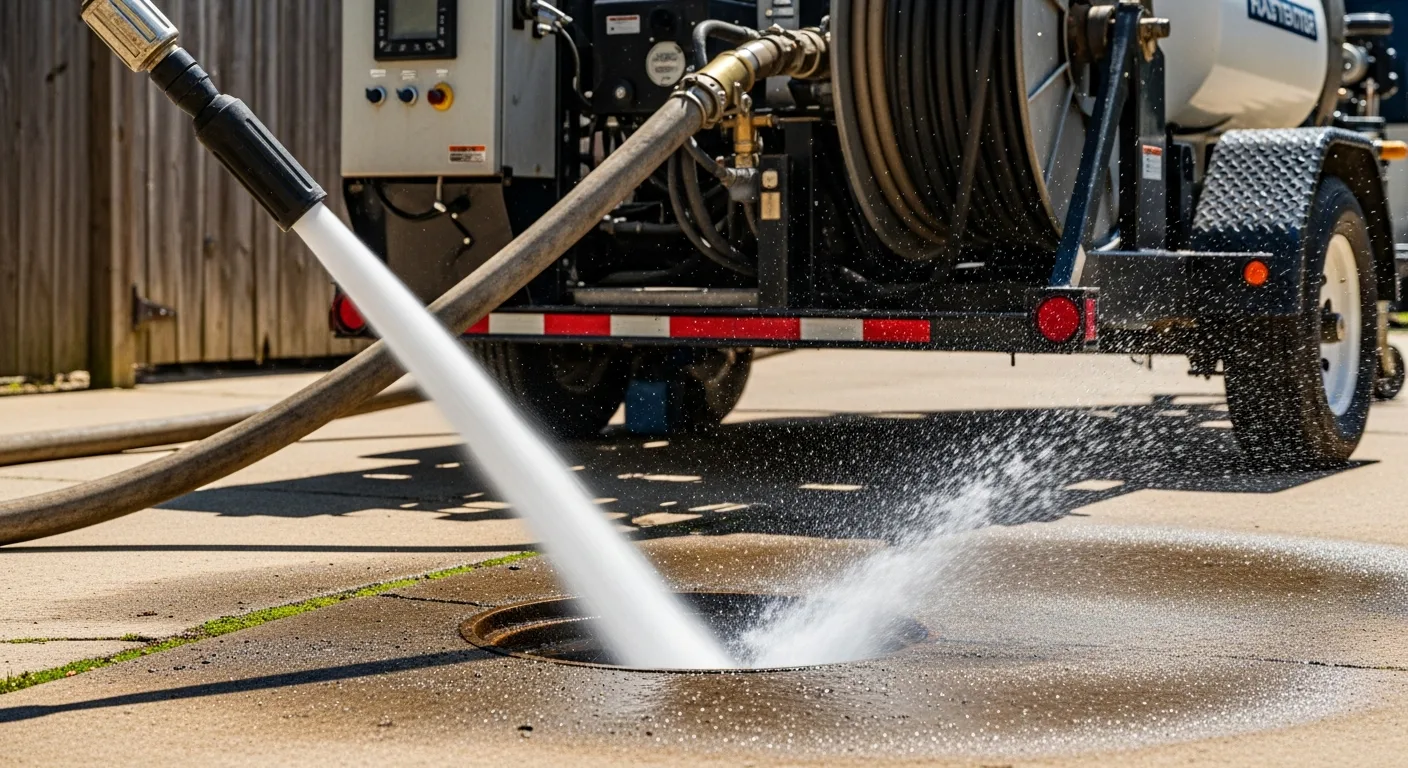
Catch Basin Cleaning and Storm Line Jetting in Phoenix
We pull the debris out of the basin, then jet the line to the retention area and flush it. That is how a parking lot drains.
HQ cleans catch basins and jets the storm line behind them. We take the debris out of the basin, then jet the line all the way to the retention area and flush it out. Clearing the grate alone leaves the blockage downstream, and the lot floods again. We hold an Arizona A-12 license.
The rules that apply
Each rule links to the official text we read it from. Cities change these, so check the source before a big decision. Last checked 2026-10-11.
Owner keeps stormwater controls working
PhoenixA person must maintain best management practices and post-construction stormwater controls, including retention and detention basins, drywells and storage structures. Maintenance records are kept for five years and shown to the city on request.
Source: Phoenix City Code 32C-103Also: City of Phoenix: Stormwater Post-Construction ProgramOnly stormwater goes into the storm system
PhoenixNothing may be released to a retention or detention basin or the public storm drain system unless it is composed entirely of stormwater, apart from the listed exceptions. Wash water from cleaning a lot is not on the list, so where debris and rinse water go is part of the job.
Source: Phoenix City Code 32C-103Silt triggers and a yearly look
ChandlerChandler's design manual ties drywell cleaning to how full the interception chamber is (10 percent in paved areas), has drywells inspected yearly or whenever ponding lasts 36 hours, and calls for silt removal in retention basins once it is deeper than 6 inches.
Source: Chandler Engineering and Design Standards Manual, Sec. 3.6.12Retained water drains within 36 hours
Maricopa CountyRetained on-site runoff has to be disposed of within 36 hours by percolation, drywells or an approved drainage way. The county gives vector control as the reason, and the standards say retention basins are privately maintained.
Source: Maricopa County Drainage Policies and Standards, Standard 6.10Also: Maricopa County Environmental Services: drainage facilities and mosquitoesWhen a catch basin sump stops catching
Industry guidanceStudies summarized by the Stormwater Center show that once a catch basin sump is more than 60 percent full, its ability to capture new sediment drops sharply. Fast water can then stir up what already settled and push it downstream in one pulse.
Source: Stormwater Center: catch basin cleaning, schedules and effectivenessWhich license class covers storm drain pipe
ArizonaThe A-12 (Sewers, Drains and Pipe Laying) scope covers installing and repairing projects involving the laying of pipe for storm drains. The C-37 plumbing scope covers plumbing within property lines, including roof leaders.
Source: A.A.C. R4-9-102, commercial contractor license classifications and scopesWhat does HQ do on a catch basin job?
We clear the basin, then we jet the whole line behind it. Two steps, in that order. First the debris comes out of the basin so it does not get pushed down the pipe. Then we run the jetter through the storm line all the way to the retention area and flush it out. That second step is the one that gets a parking lot to drain.
Clearing a grate by itself looks like progress. The pond at the inlet drops for a minute. But whatever blocked the pipe is still in the pipe, and the next hard rain finds it. We hold an Arizona A-12 license, the class built around storm drain pipe, and this is the work it covers.
Why does a lot flood when the catch basin looks clean?
Because the blockage is usually past the basin. A catch basin is a box under a grate with a sump below the outlet pipe. Sediment settles in that sump, and the cleaner water leaves through the outlet and runs down a storm line toward the retention area or a drywell. Silt, roots and packed sand build up in that line over time, one monsoon after another.
The Stormwater Center reports that once a sump is more than 60 percent full, it stops catching sediment well and a fast storm can flush the old material downstream in a pulse. That pulse is exactly what plugs the line and the inlet to the retention basin. Our catch basin FAQ goes through how the sump works.
How often does a commercial catch basin need cleaning?
At least once a year for a look, and more often on a dusty or tree-heavy site. No Valley city writes one number that fits every lot. Chandler's manual has drywells inspected yearly and cleaned on a fill trigger. Phoenix's code makes the owner keep the controls working and keep five years of records. The Stormwater Center's 60 percent sump figure is the practical test.
Two timing points. Right before the monsoon, in late spring, is the cheapest time to catch a problem. Right after a storm that left water standing is the other: if the lot held water for more than 36 hours, treat that as the signal, because both Phoenix and Maricopa County use 36 hours as the line for retention.
Why jet the line all the way to the retention area?
Because the retention area is where the line is supposed to deliver. If you jet only the first twenty feet, you move the plug, not remove it. We follow the run to the basin or the drywell inlet and flush it out so the full path is open. In a lot with several catch basins feeding one line, we work the whole system, not each grate on its own.
For the sanitary side of a building, we jet and camera lines too. A storm line is a separate system with different rules. Our FAQ on storm and sanitary lines explains why they must never be connected.
What happens to the debris and rinse water?
That is a fair question to ask any contractor. Phoenix's code allows only stormwater into a retention basin or the storm drain system, with a short list of exceptions. Silt and wash water from cleaning are not on that list. A catch basin job should end with the material hauled away and the line flushed in a way that does not turn the retention basin into the dump site. Ask for that in writing before you sign.
When a catch basin cleaning is the wrong fix
If the basin and line are clear and the lot still holds water, the problem is farther down: the drywells in the basin, the soil, or a design that was undersized. Our drywell cleaning page covers the first. The second and third belong to a civil engineer, and we will say so rather than clean something that is not the cause. The step-by-step check is on the parking lot and retention basin drainage page.
If the water backing up is in a restroom or kitchen, that is a sanitary line. Start with commercial drain cleaning or hydro jetting.
How to book
Tell us the address, how many grates the lot has and where water stands. We give free estimates, and you get the price upfront before work starts. HQ is licensed and insured and takes emergency calls 24/7, including after a monsoon storm.
Services and tools
What is a catch basin and how often should it be cleaned?
A catch basin is a box under a grate that collects parking lot runoff and lets sediment settle in a sump before water moves on. Inspect it at least yearly and clean it before the sump is about 60 percent full. Busy commercial sites may need cleaning more often.
Read full answer: What is a catch basin and how often should it be cleaned?Why does my parking lot flood after a monsoon storm?
Usually because water cannot get out as fast as it arrives. Common causes are clogged inlets and catch basins, a retention basin or drywell that is full or slow, and paved surfaces that shed all the rain at once. Check inlets first, then time how long the basin takes to drain.
Read full answer: Why does my parking lot flood after a monsoon storm?Who is responsible for parking lot drainage?
The property owner, unless the lease moves the job to a tenant. In Phoenix the city code puts the duty to maintain private stormwater controls, such as basins and drywells, on whoever owns or controls the property. Public facilities can also lie within easements on a lot; confirm actual ownership and recorded maintenance duties.
Read full answer: Who is responsible for parking lot drainage?Can you hose a dumpster pad into the storm drain?
Usually not. Phoenix code bars releasing anything into a public storm drain that is not entirely stormwater, with a short list of exceptions, and commercial wash water is not on that list. Block the drain, collect the wash water and send it to the sanitary sewer through an approved point or to a permitted hauler.
Read full answer: Can you hose a dumpster pad into the storm drain?Do storm drains and sanitary sewers connect?
The cited Valley systems normally keep stormwater and sanitary wastewater separate. Unauthorized connections can violate plumbing and discharge rules. Combined-system provisions, approved local exceptions and legal nonconforming connections require a jurisdiction-specific check; do not assume every link is lawful or unlawful.
Read full answer: Do storm drains and sanitary sewers connect?Sources
- Stormwater Center: Catch basin cleaning, schedules and effectiveness
- Phoenix City Code 32C-103, Prohibited and permitted practices
- City of Phoenix: Stormwater Post-Construction Program
- City of Chandler Engineering and Design Standards Manual (PDF)
- Maricopa County Drainage Policies and Standards (PDF)
- Maricopa County Environmental Services: Drainage Facilities and Mosquitoes (PDF)
- A.A.C. R4-9-102, Commercial contractor license classifications and scopes of work
Related commercial services
Why drywells stop draining, how often Phoenix and the county say to clean them, and which Arizona license class names dry wells.
The 36-hour rule, who owns the fix, a step-by-step check from the grate to the drywell, and when the problem belongs to a civil engineer.
Lot Flooding at the Grates?
Talk to a real dispatcher who knows commercial work. Upfront pricing before work starts, 24/7 for emergencies.