
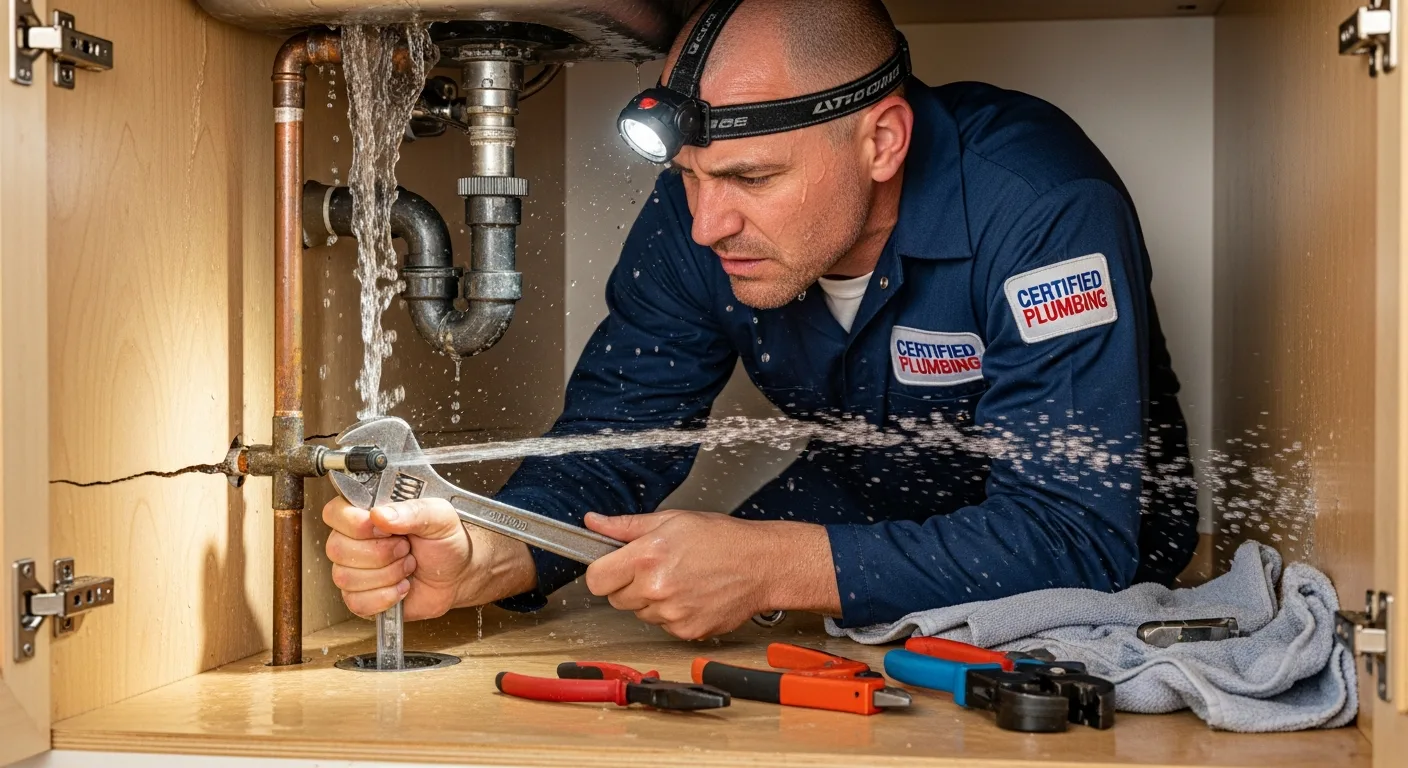
Water Leaking in a Restaurant and Nobody Can Tell Where It Starts
Wet floor, damp wall or a drip from the ceiling in a restaurant and no clear source. How we isolate the line, find the leak and document it for your account.
When a restaurant has water where it should not be and no obvious source, we trace it by opening up the lines and fixtures and isolating sections with shut-off valves until the leak is narrowed to one spot. Then we repair or write a proposal. Photos and sign-off are provided where the site requires them.
What was wrong
A restaurant kitchen has water in every direction: sinks, dish machines, ice machines, steam tables, hand sinks, mop sinks, floor drains and the supply lines feeding them all. When the floor is wet and there is no obvious drip, the source could be a supply line, a drain, a fixture or something behind the equipment.
The stakes are practical. Wet floors are a slip hazard, standing water can harm a health inspection, and a hidden leak keeps running while you work around it.
How we find the cause
We start by narrowing the list. Is it clean water or drain water? Is it constant, or does it only appear when a particular fixture runs? Those two answers cut the search in half before we touch a tool.
From there the tech opens up the lines and fixtures and checks each in turn, using shut-off valves to isolate one section at a time. When closing a valve stops the leak, we know which run it is on. Running water through one fixture at a time shows which drain connection is leaking. If the leak is in a drain line, we may camera it rather than open a wall. The method is isolation, inspection and testing under flow, so the answer comes from the pipes themselves.
What fixes it
Once the leak is located, a failed fixture, valve or connector is replaced. A leaking pipe section is cut out and replaced. If the pipe is inside a wall, under a slab or behind fixed equipment, we stop the water with a temporary fix if it is safe, then write a proposal for the permanent repair. Larger repairs wait for written approval before work starts.
For sites that require it, we document the visit with before-and-after photos and an on-site sign-off, so the facility manager or account has a record.
What to know before you call
If you can, shut off the fixture or equipment you suspect, and take photos of where the water shows up and the time you first noticed it. Keep staff out of wet areas. If the water bill has jumped, a meter check with the building quiet tells you whether a leak is running; our meter leak test guide walks through it. Tell us who approves work on the account and whether the work order has a not-to-exceed limit so the visit does not stall at the finish.
Last reviewed 2026-10-05. This page describes a pattern we see on service calls; your building, fixtures and city rules decide the details.
Services that fix it
Questions people ask
Seeing This at Your Place?
Call or send the details. 24/7 emergency service, licensed and insured, free estimates, price up front.